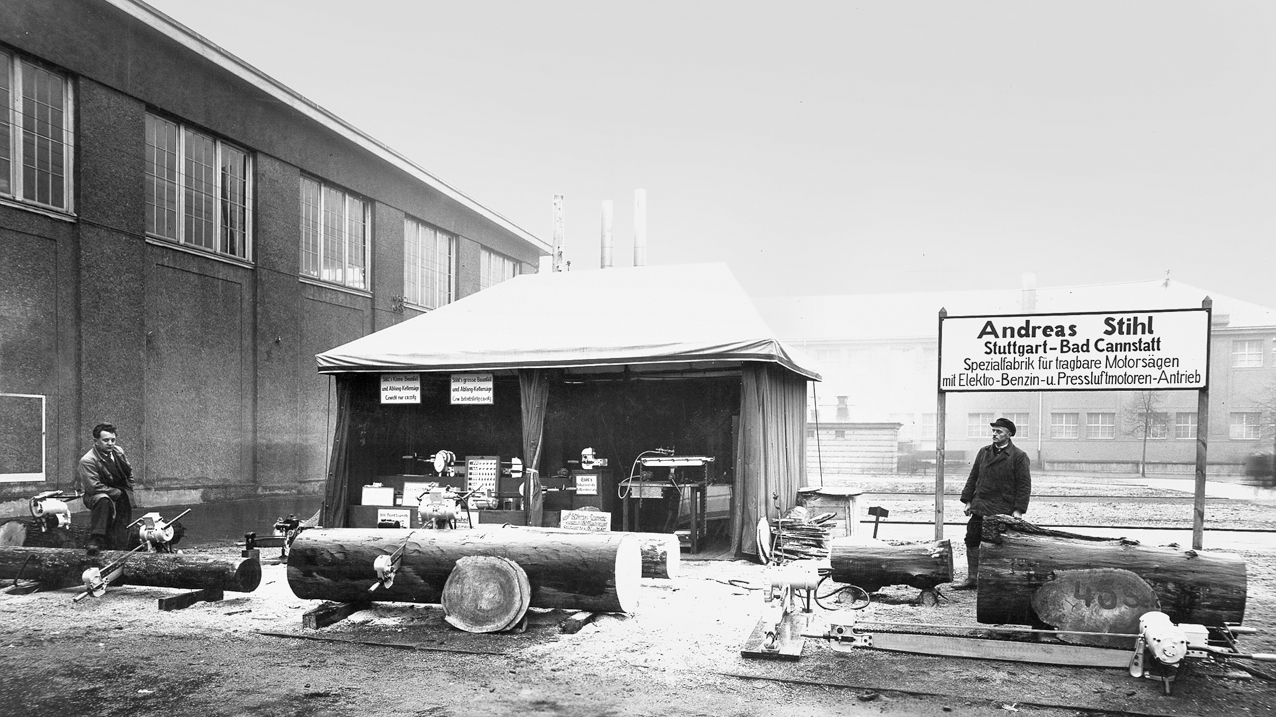

Dynamic chainsaws, softly humming battery power tools – do you have an ear for music, and specifically a musical appreciation for the sound of STIHL? Simply match the STIHL power tool with the right sound.
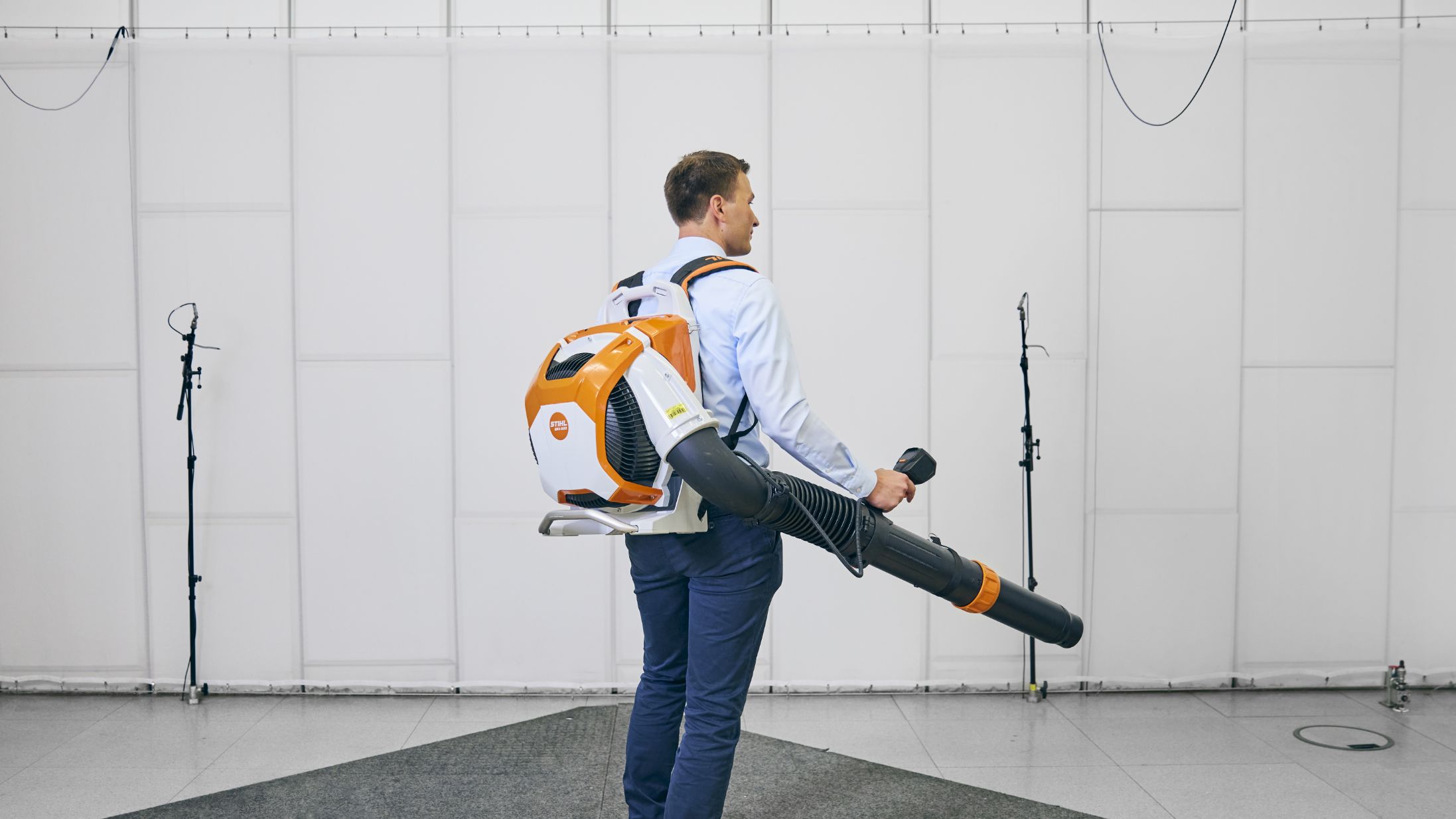
The soundtrack of technology
A quiet chainsaw? Sounds like a good idea. After all, science has confirmed that noise is harmful to health. And quiet tools are continually getting more popular. Spoiler Alert: The world’s first (and only) quiet STIHL chainsaw in 1995 was not a commercial success. The company’s sound measurement room demonstrates that distinctive audio is nevertheless now an essential quality feature of STIHL power tools.
Lively. Dynamic. Powerful. High-performing. That’s how a STIHL chainsaw is supposed to sound. “Our devices sound high quality. Nothing should rattle, clatter, or disturb. If anything is off, we have to get to work,” says Marc Rifaut, Head of the Systems, Acoustics and Vibrations Group at STIHL since 2023. Tracing noise disturbances often reminds him of detective work: Hunting down the tiniest crackle requires an ear for detail.

What’s that Sound?
How do different STIHL power tools sound? And can you hear the first and only quiet chainsaw? Listen to the samples, then try to correctly match the products and sound snippets.
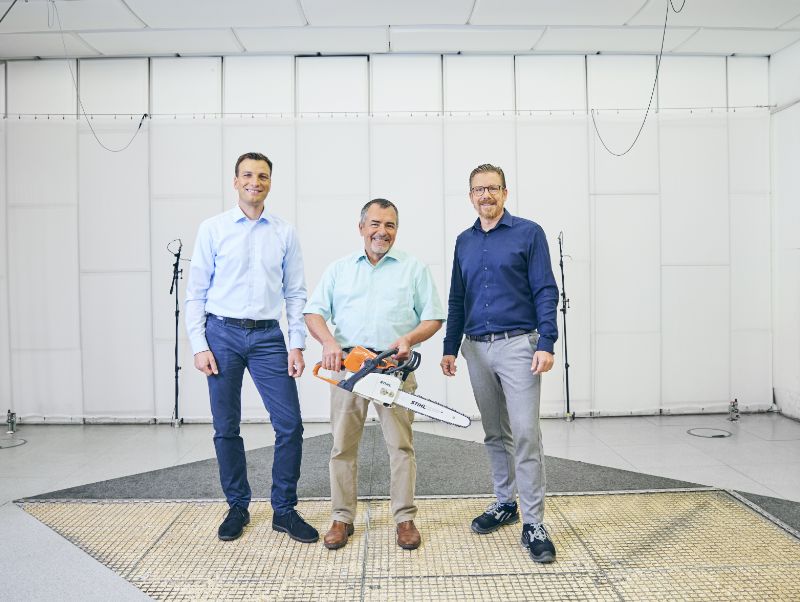
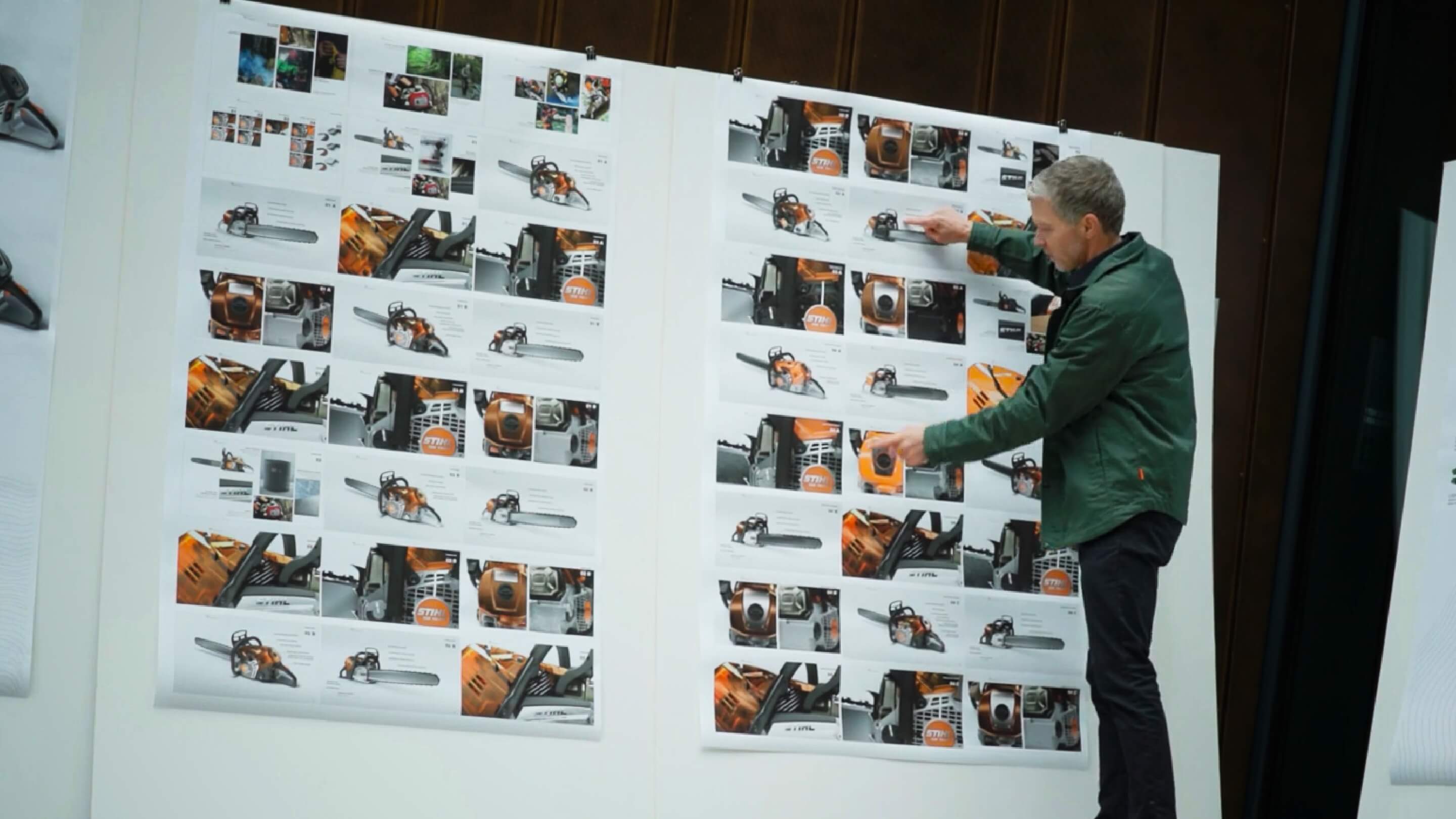
Sound experts together, from left: Dominik Wengner, Johannes Menzel, and Marc Rifaut.
Meticulousness and perfectionism
The eight engineers and five mechanics working on sound development approach their task with a high level of meticulousness and perfectionism. Their analysis and optimization is supported by a range of tools including state-of-the-art measurement technology which can be used to localize disturbing noises, as well as noise profiles determined in user surveys. “There are clear guidelines for how STIHL power tools should sound, and as development engineers we follow those guidelines in what we do,” explains Marc Rifaut.

Marc Rifaut Group Manager Systems, Acoustics & Vibrations at STIHL“We work in an area that has many influencing factors. As soon as something is changed in terms of speed or a component, we immediately revisit it – because we have to evaluate the acoustic impact of those changes.”
Right from the start
Where is the unwanted noise coming from? Is it a component vibrating in resonance and radiating sound through the structure? Or is it a bearing that is not running smoothly? Guided by these questions Dominik Wengner, who has been working as a development engineer in the Systems, Acoustics and Vibrations department since 2017, specifically addresses individual device components. If the cause cannot be rectified directly, passive measures can be applied, for example the addition of absorbent, i.e. damping, materials. “We always find in-house STIHL solutions here. The company’s sound and vibration experts sit right here in our department,” adds Dominik Wengner proudly. Because acoustic measures can affect the overall concept of a STIHL power tool, the team around Rifaut and Wengner is involved in development processes from the very beginning.
Sound does not equal volume
Physical phenomenon or subjective sensation? Sound refers to measurable air pressure vibrations and is not equivalent to volume under any circumstances. Whether sound is perceived as disturbing, or even distressing, is a highly personal matter and primarily psychological. So it stands to reason that the loud roar of a chainsaw could even trigger feelings of well-being.
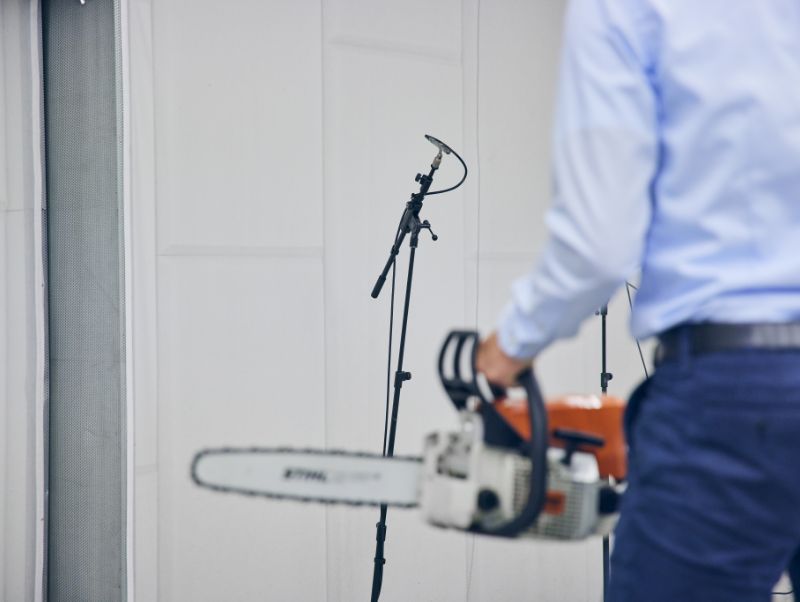
A complex area: Sound and volume are two separate things – and loud sounds are not always automatically noise.
A swimming pool for sound
No STIHL power tools can bypass the sound measurement room. Multiple times in the course of creation they will come through here, the “heart of sound development,” for thorough testing with state-of-the-art measurement and analysis technology – and sometimes also after they are ready for series production. Battery-powered tools must also undergo testing in the sound measurement room. Not because they are noisy, but because disagreeable background noise can diminish the perception of quality, Dominik Wengner explains: “In a petrol chainsaw the noise of the combustion engine covers all other sound like a blanket.” Not so with battery power; here, other noises can suddenly come to the fore, such as a whistling fan or mechanical sounds.
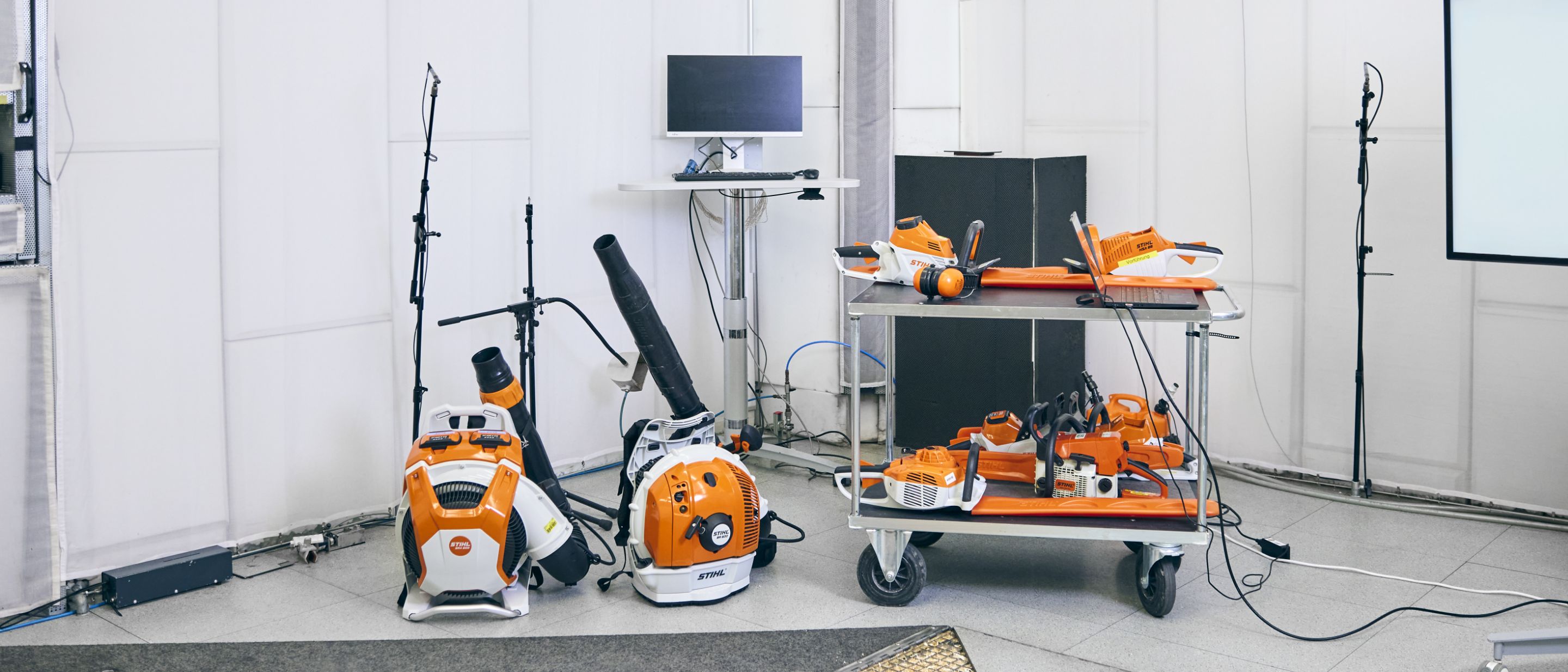
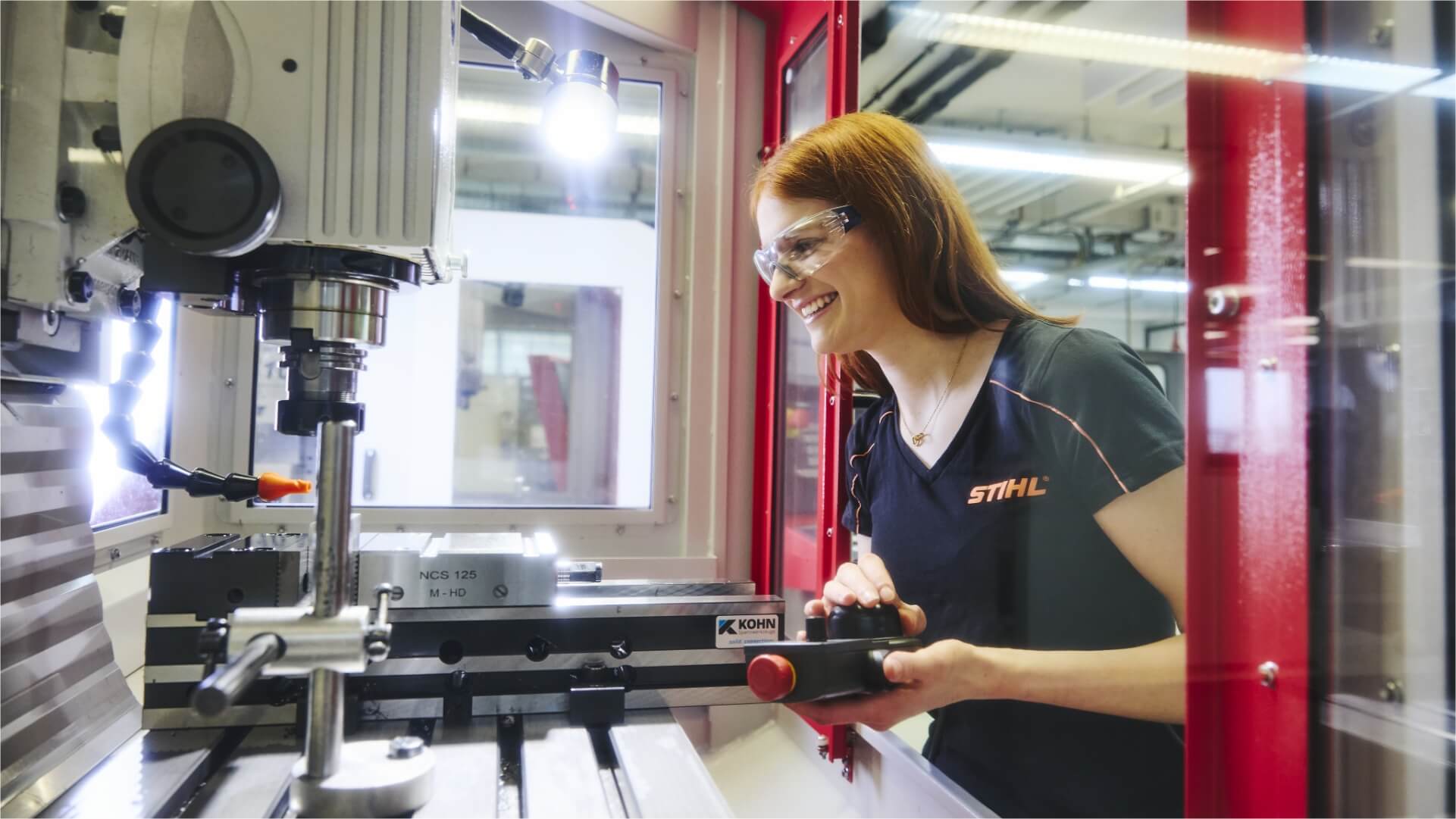
The acoustic properties of STIHL power tools are tested in the sound measurement room.
The acoustic-foam-lined room stands on a 36-ton concrete foundation supported on elastomer plates, which ensure it is isolated from the rest of the structure. As Dominik Wengner describes it, “the room is literally floating within the building.” Anyone entering this test room immediately finds themselves in an extraordinary acoustic situation. Because of its foam cladding, the room is very anechoic: Rather than reflecting sound, the walls simply swallow it up. With the construction of the development center in 2004, the room was integrated and has since ensured consistent measurement conditions.
“Even though we are surrounded by numerous test benches, there are no unwanted noises in here,” Dominik Wengner explains cheerfully.
Unmistakable sound profile
This was not the situation before 2004, recalls Johannes Menzel, who joined STIHL in 1990 and led the Sound and Vibration development department from 1994 to 2023. Back then people would drive a workshop bus out to the open air and carry out noise measurements in it. However, because the measurement technology components of the time were much more complicated, this was a somewhat elaborate and therefore rather rare undertaking. The first sound measurement room was built in the early 1980s (or possibly before then) in Plant 1, inside what had previously been Mia Stihl’s hen house. It was during this era that the distinctive sound profile of STIHL chainsaws emerged. In fact it was developed in close dialog with users from the pro segment. “Back then they just had the best instinct for the products they worked with,” says Johannes Menzel, who in the early 1990s had played a key role in the development of the 023 L, the world’s first – and still to this day only – quiet chainsaw.

Dominik Wengner Development Engineer in Systems, Acoustics and Vibrations at STIHL Group“STIHL has been the global market leader for chainsaws since 1971 – and we are working to keep it that way.”
STIHL 1995 also described the advantages of the 023 L in short advertising clips. Here is a compilation of quiet persuasion.
The 023 L
Designed by STIHL in the early 1990s to serve the hobby market. As such it is developed for users who do not wish to wear hearing protection while using power tools. STIHL starts by commissioning an expert report; the goal is to determine how much the noise level needs to be reduced before it is possible to work without hearing protection. The result: 92 dB sound pressure – about as quiet as an electric saw back then. To hit this number, Johannes Menzel and his team must examine every single sound source of the chainsaw and test each component. It takes around three years to develop the tool, for which “Blue Angel” ecolabel approval is also pursued. So without further ado the team travels to the Federal Environment Agency in Bonn and arranges a comparison of saws: The 023 L and an electric saw go head to head. The outcome is persuasive and impressive. The ecolabel is awarded after all requirements have been verified, and press coverage in 1995 hails the 023 L as a “whisper saw.” It’s only the customer who isn’t keen to embrace the new tool.
92
dB (A) is the maximum sound pressure achieved by the STIHL 023 L, making it the quietest chainsaw in the world. “Conventional” chainsaws have a sound pressure level of 107 dB(A) in Europe.
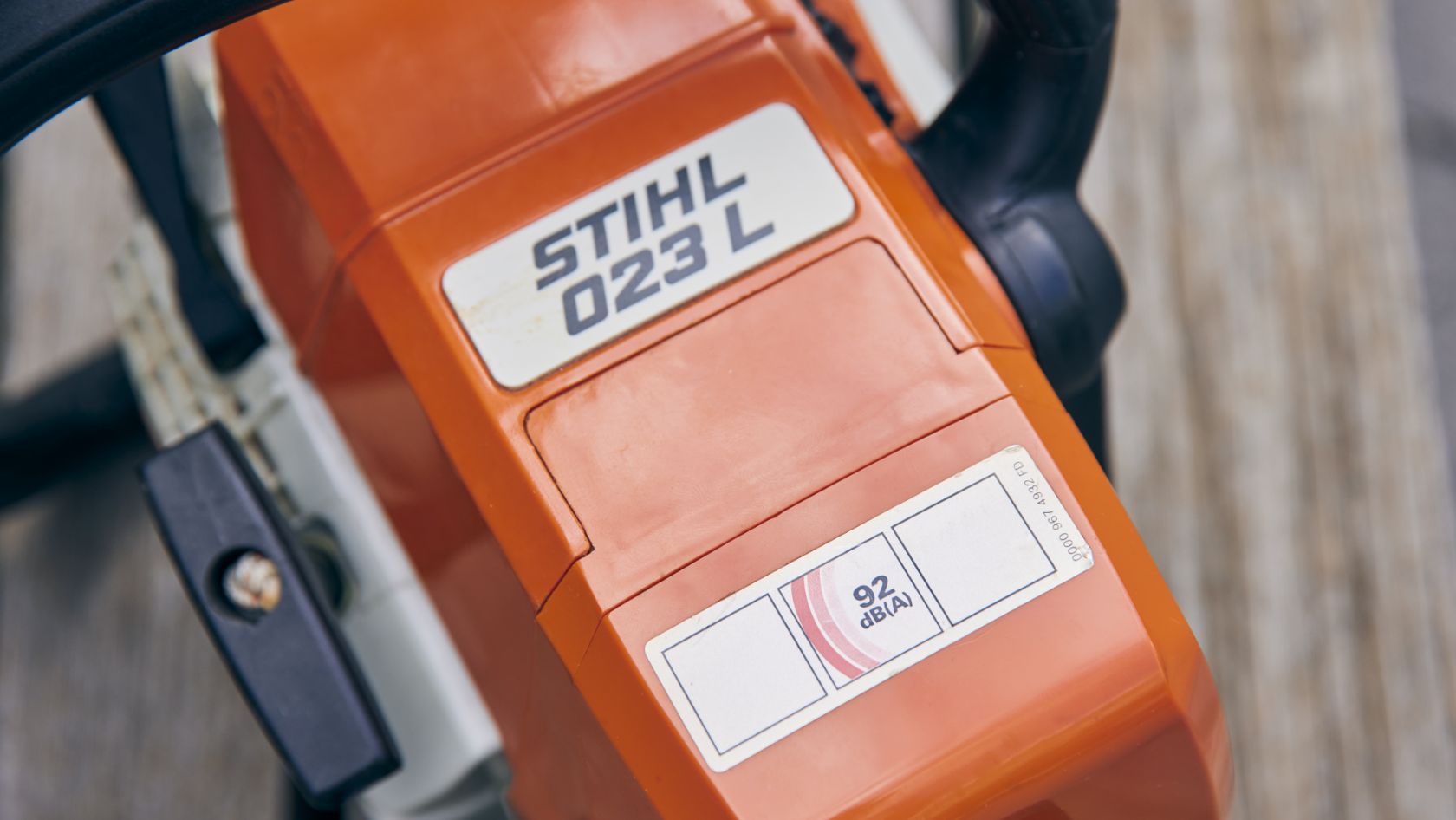
In the mid-1990s STIHL moved with the times and introduced a quiet chainsaw, the 023 L, to the market.
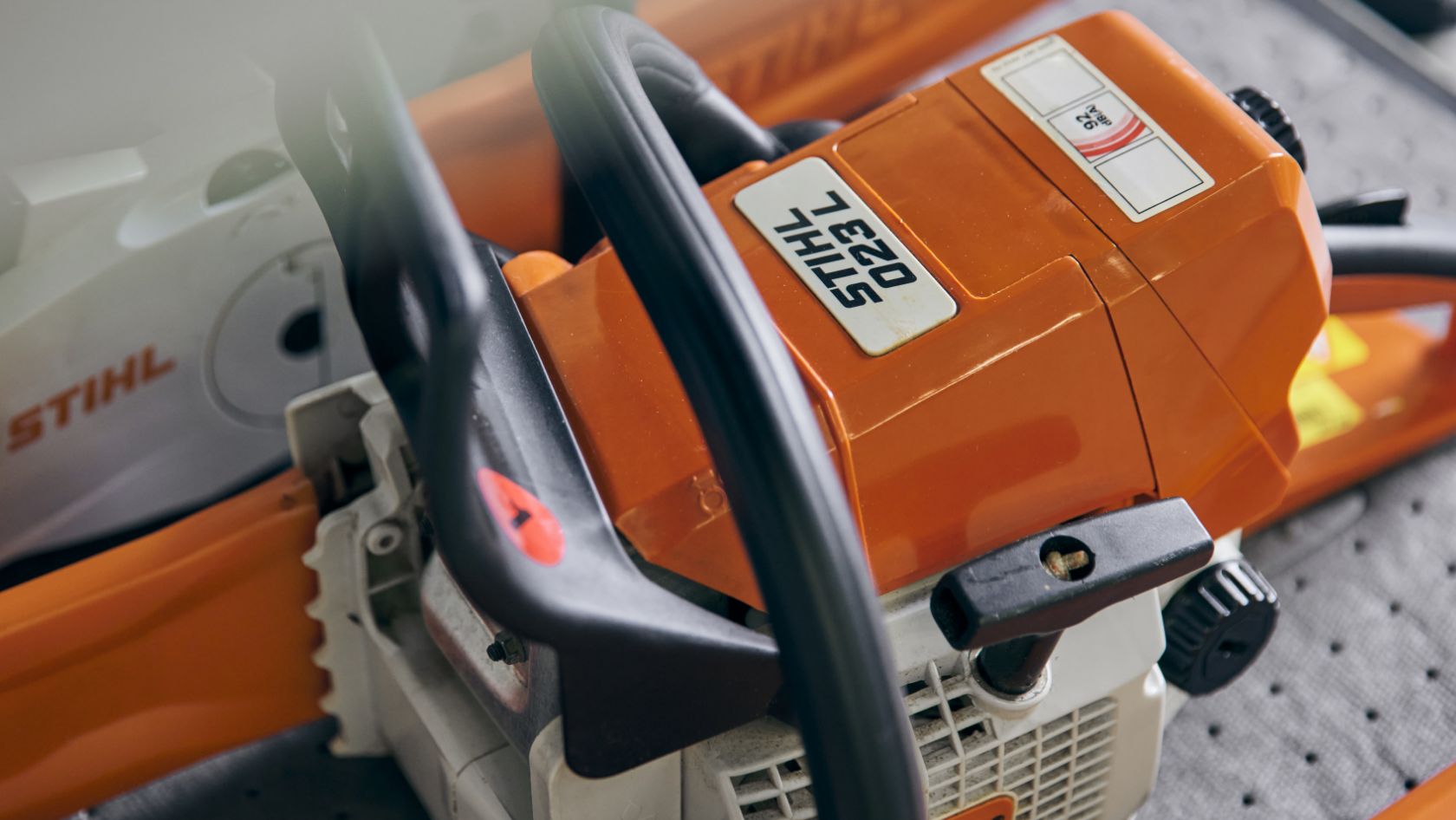
Unfortunately, the tool did not win over customers at that time. It apparently did not sound sufficiently high-performance.

STIHL applies for the “Blue Angel” ecolabel for its quiet chainsaw in 1995. Valid from August 30, 1995 to December 31, 2000, it is issued with the endorsement “due to reduced noise and low emissions”.
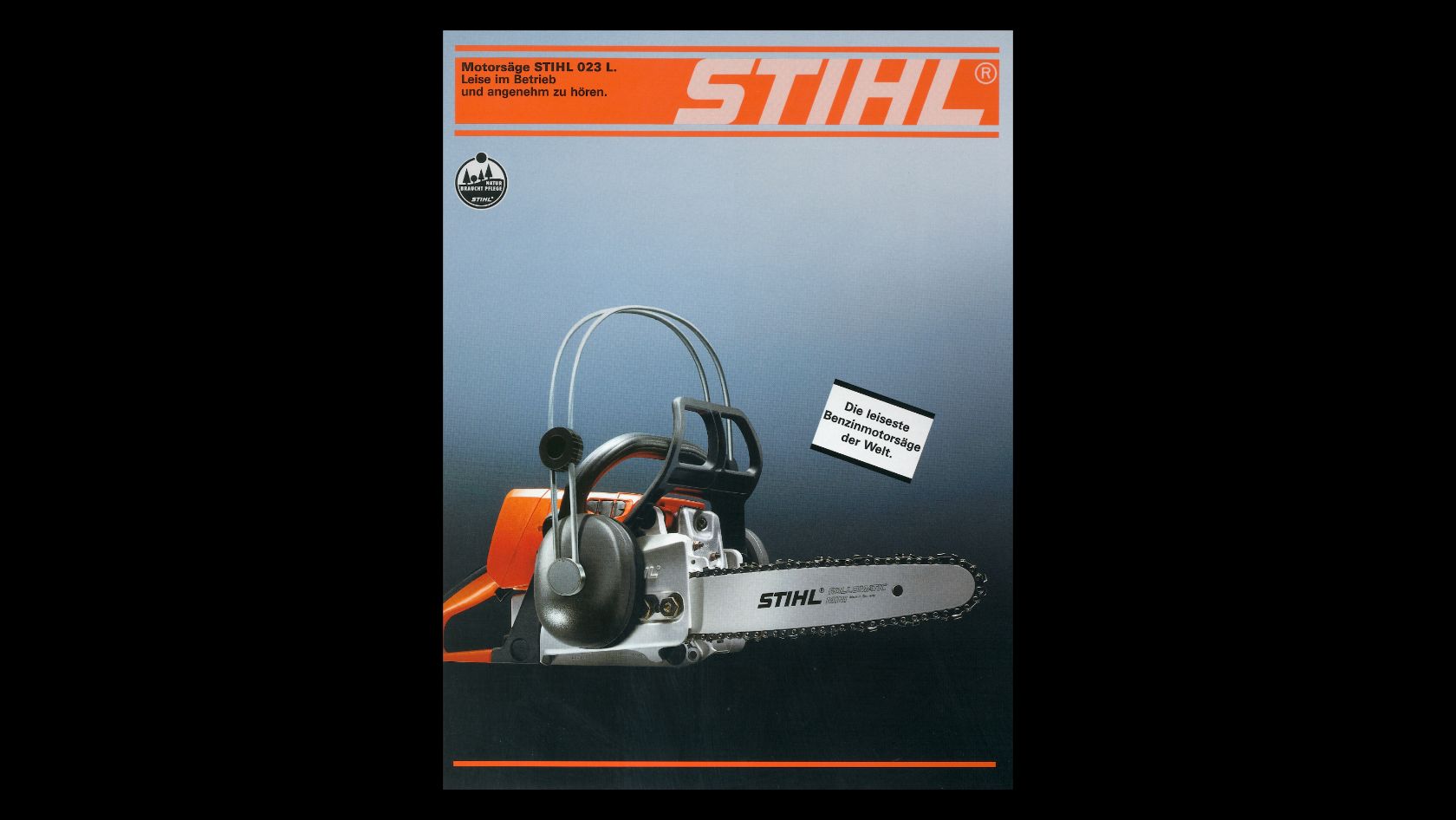
The 1995 brochure for the quiet petrol chainsaw.
Quiet or light?
Sensitivity to noise has increased significantly in recent decades, at least in Europe and especially in urban areas, explains Dominik Wengner. “There is now scientific evidence about the harmful effects of noise on health. This also influences our development work.” Today there is a clear focus on battery power tools, which are quieter by default and are particularly popular among domestic users. In the professional segment on the other hand, volume is not a dominant factor motivating customers to purchase: With chainsaws, product performance and weight take precedence.
108
dB (A) is the maximum sound pressure level for a chainsaw in the USA. In Europe, there are no such limit values, though there is a declaration requirement.

Johannes Menzel Head of STIHL Sound and Vibration Division until 2023“If you want to reduce sound output you have to build bigger, and that means the tool weighs more and costs more. Pros would have to pay extra plus carry it through the forest.”
Like an electric typewriter
Less sound power, more weight? In 1995, this issue did not seem to be decisive for the sluggish sales of the 023 L. Initial user feedback on the hobby tool indicated a high level of satisfaction: “I felt relaxed, not stressed by noise.” Or as it says in the acceptance tests that Johannes Menzel uncovers in his “old sound folder” for the saw, “the whisper-quiet sound more than compensates for the loss of power.” To understand how quiet the 023 L was, look at the comparisons made at the time: For example, at a distance of ten meters from the sawing site, the 023 L sounds as loud as an electric typewriter.
Unique and pioneering work
The mechanical performance of the quiet chainsaw is roughly comparable to the MSA 160 today, which checks in at around 85 dB sound pressure. The shortcoming of the saw in 1995 was primarily emotional: It just didn’t sound right. “Although people wanted a quiet saw, our saw just didn’t have that Formula 1 sound,” explains Johannes Menzel. Nonetheless: The 023 L remains a pioneering achievement and a one-off. Johannes Menzel did not spend long precoccupied with its failure: “I felt some regret about it, but the next challenges of my daily work were waiting – including a catalytic converter silencer, for instance. Battery power tools started being gradually introduced from the 2000s, and that was extremely enjoyable from a technical perspective.” For all that has changed, the Systems, Acoustics and Vibrations Group is more relevant today than ever when it comes to power tool development at STIHL.
Play the sound using the play button. Drag your selected product to the plus sign. Listen to the sound via the play button. Select a product and go to Answer.
That sounds really good! Go to the next sound.
Correct answer:
Unfortunately incorrect! Listen carefully to the next sound.
Correct answer:
Your score: 0/0