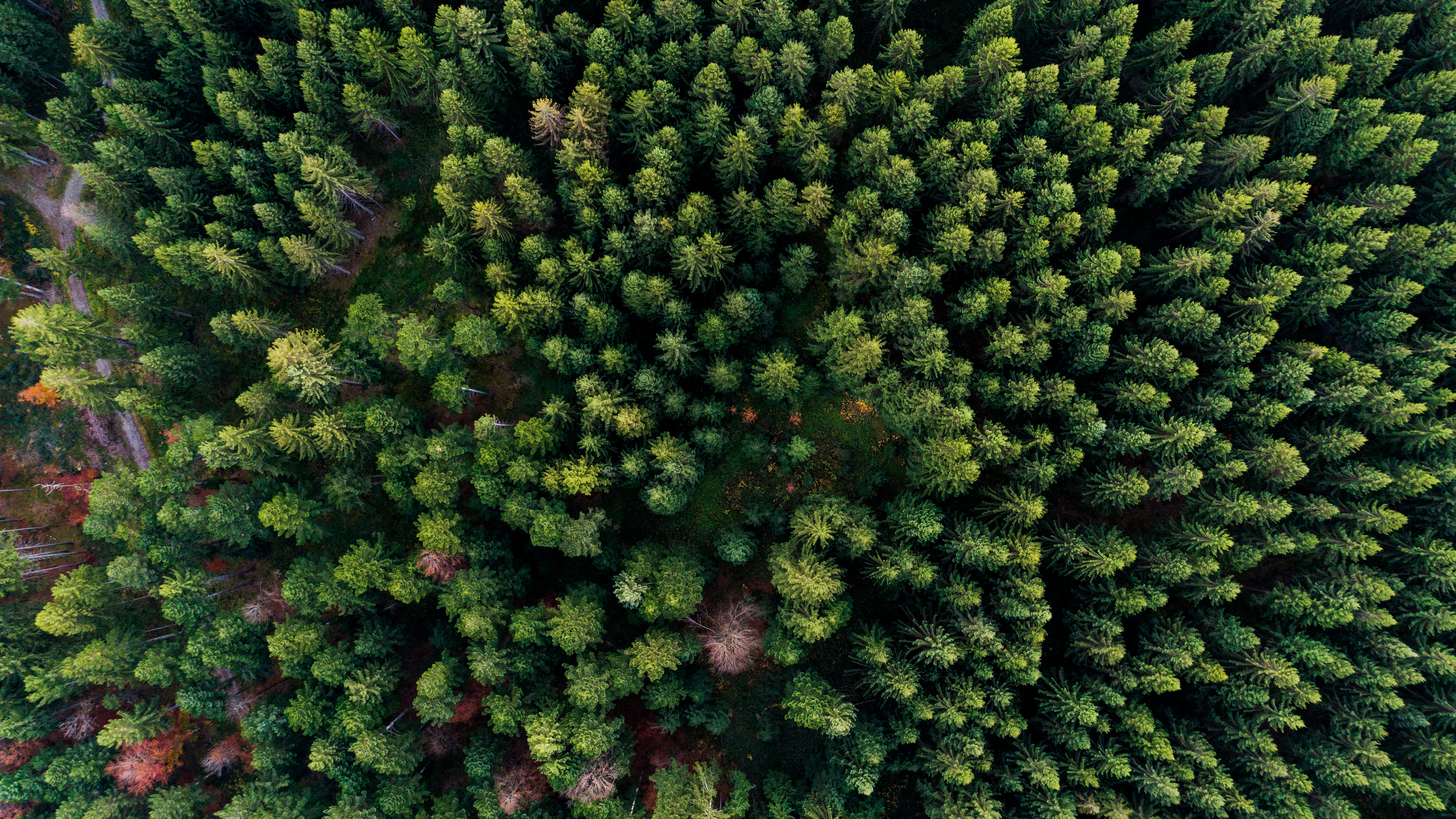

Shuffling the forest deck
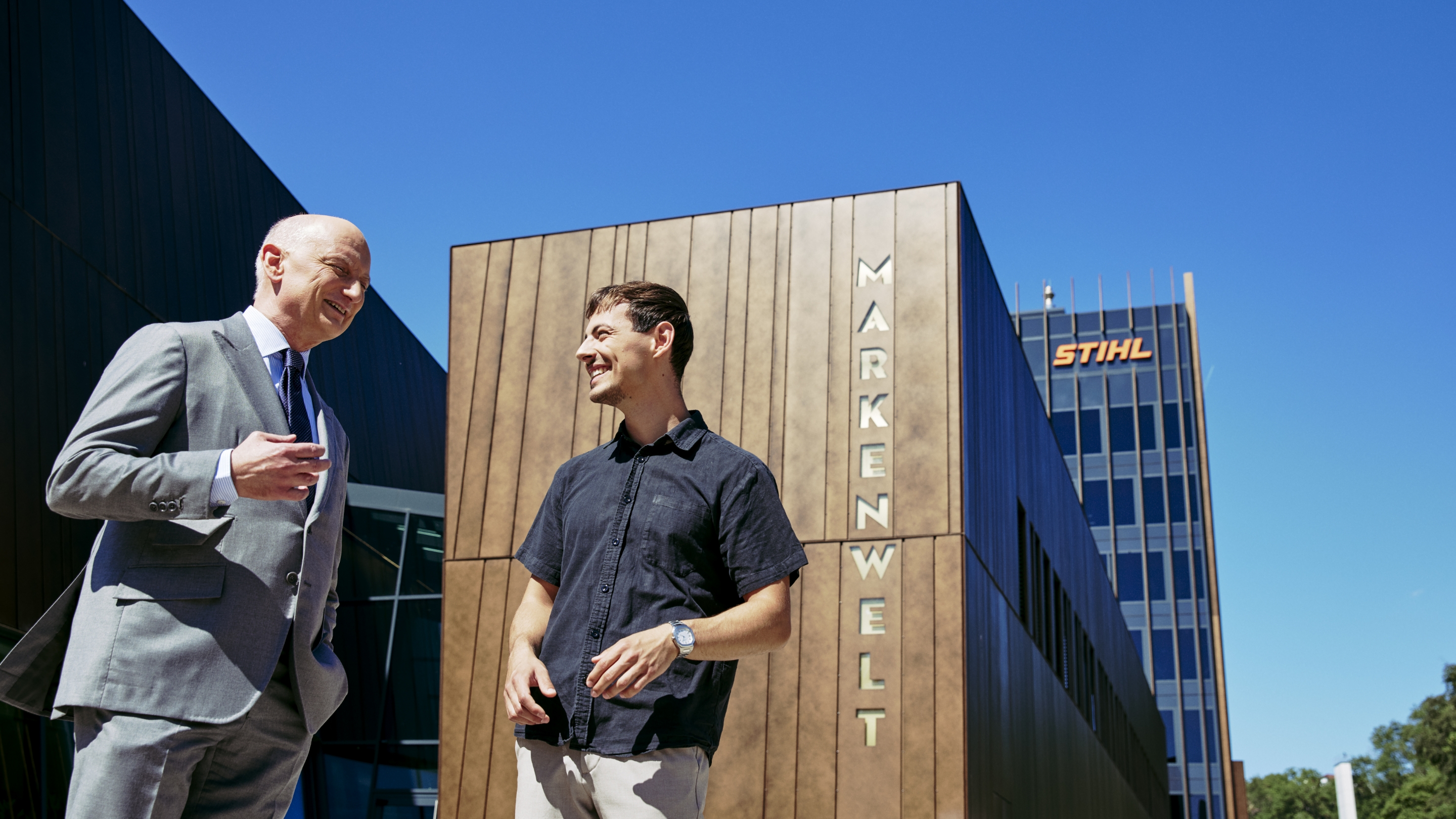
Sanctuary, fresh air, freshwater reserves and timber supply – what would humanity be without its forests? The “Haus des Waldes” (House of the Forest) in Stuttgart seeks to strengthen the connection between humans and the forest by means of events such as seminars, a nature experience trail and an exhibition. Forester Dr. Alexander Abt knows that the needs of the forest are evolving and nothing less than a full rethink of forestry practices is required to move us toward a climate-resilient forest.
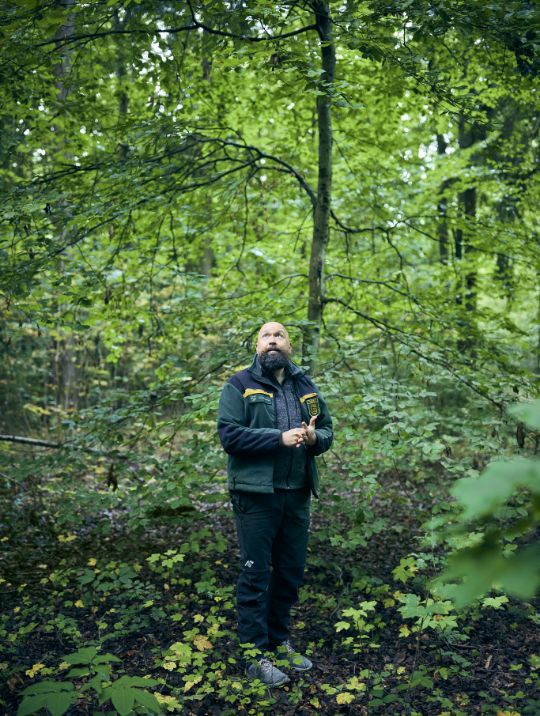
“Few people see it, but there is a real race happening down here,” says Dr. Alexander Abt almost conspiratorially, crouching down to inspect a few seedlings. Paulchen the dachshund stands amid sycamore, beech and fir plants, along with a hickory nut, on the ground of the state forest near Stuttgart-Degerloch – there is literally a miniature mixed forest ready to take off here. Dr. Abt refers to this as natural regeneration over just a few square meters. It is unclear which plant will win the race and grow all the way up to the overstory, with the result primarily dependent on how the climate continues to change. Having choices in place and being able to rely on one tree species or another gives the foresters and forestry consultants employed by state-owned forest operator ForstBW plenty to work with. Dr. Abt is convinced: We need this diversity. The forest of the future must be made up of many different tree species.
About the person
Dr. Alexander Abt is a passionate forester and a dedicated forestry consultant. He moved over to ForstBW when the public agency was established in 2020. Since then he has been responsible for ensuring that the concepts set out by the forest owner, the state of Baden-Württemberg, are implemented in the state forest. He is also responsible for developing concepts which prepare the forest to face the climate challenges of the future. These include, for example, testing new tree species in designated test areas.
Forestry expert Dr Alexander Abt explains in an interview how future-proof forestry can succeed and how to create climate-stable forests.
The ecological lens
Dr. Abt starts with the good news: “The summer of 2025 was good for the forest here. It’s rained a lot. We didn’t get as much beetle damage as we expected.” Also: Germany is one of the most heavily forested industrial states on the planet and it has the most natural and productive forests in Europe. Strict forest laws, certification systems, NGOs and lobbyists ensure that no harm comes to the forest in Germany.
Nevertheless, the forest has always given rise to ecological and economic debate: How much forestry maintenance is necessary? How much wood can be harvested? Dr. Abt believes the Germans have a rather irrational relationship with the forest. “In recent years we have viewed the forest solely through an ecological lens, which is correct to some extent – but the forest is more than just a habitat for animals. We need forests to store water in the event of heavy precipitation. We need it for protection from sound, mudslides and avalanches.” For Dr. Abt, it’s clear: The forest in Germany must be managed. And this requires a forestry approach that is evidence-based, meaning scientifically sound, and aligned with contemporary trends.
percent of Germany’s total land area is forest, which is a good situation.
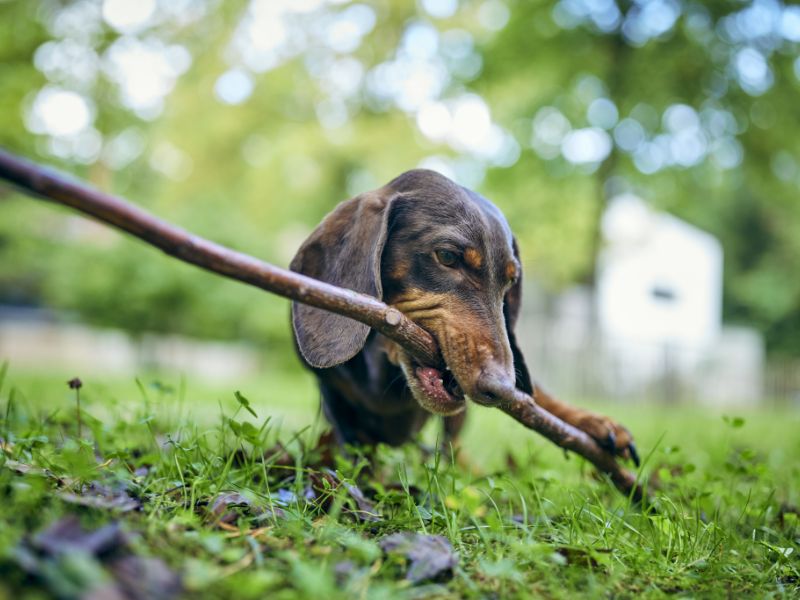
Dr. Alexander Abt has been working for AöR ForstBW since 2020. His dachshund Paulchen accompanies him on his walks through the forest.
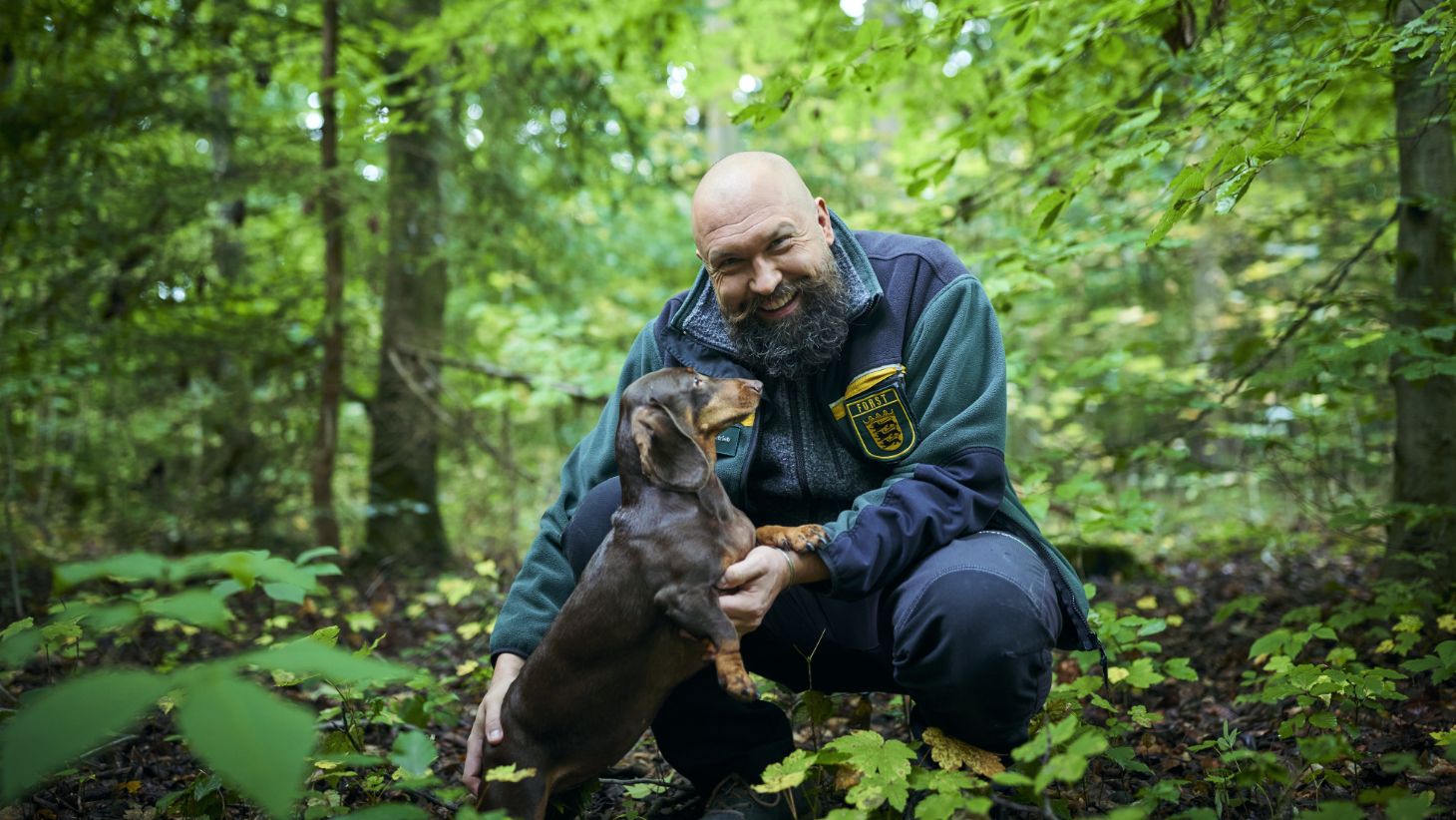
Dr. Alexander Abt Forestry researcher at ForstBW“A forest is always a mirror of society. We always shape our forests to be the way we need them as a society. That was the case in the Middle Ages, in the Renaissance and today as well.”
Probable outlook: Warm and dry
Still, there’s no avoiding the truth of it: The forest is an ailing patient. Diagnosis: Climate change. Its challenges also affect forestry of course. The exploration of probabilities is an important part of Dr. Abt’s work. “There are various scenarios for how the climate will change: Either the Gulf Stream collapses and it gets cold – a possible but rather unlikely scenario. It is more likely to get warmer and drier, with environmental disasters such as storms, heavy rain and freezing temperatures occurring at a much higher frequency and severity.”
Dr. Abt wants to ensure the Baden-Württemberg forest is prepared for these impending “harsh conditions,” as he describes them. “As they are today, our forests will most likely not be able to withstand the climate of the future. That’s why we need to change them.” The forests of the Mediterranean region can only offer limited guidance, as they hardly experience any freezing temperatures – but olive groves around Stuttgart are rather unlikely. Other solutions are needed. The good news is, foresters love to experiment.
Field maple, hornbeam and service tree
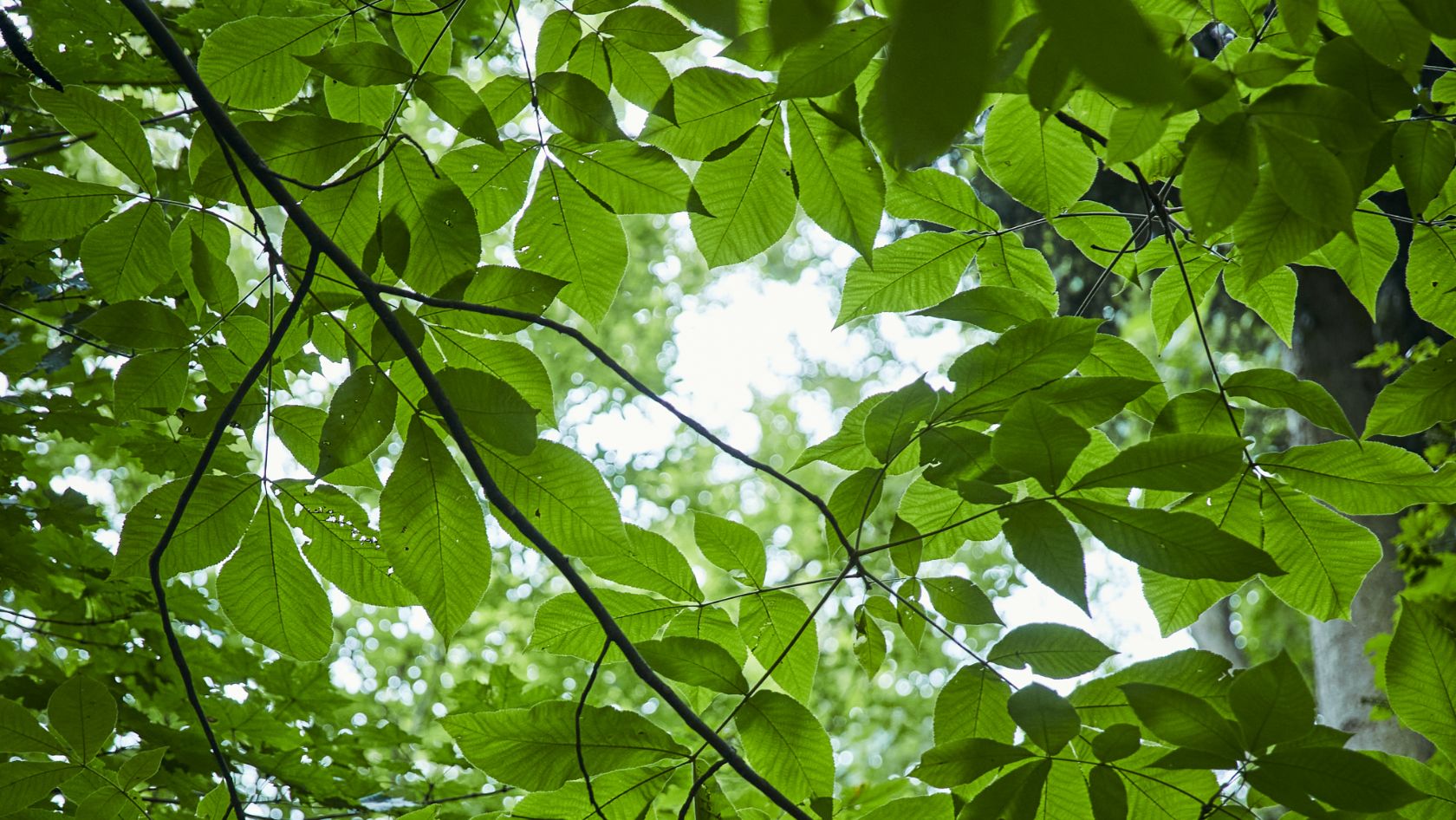
“I personally like the more exotic tree species. I find beech rather boring,” chuckles Dr. Abt. But choosing climate-stable forest building blocks, is obviously about more than just preferences and novelty. “We do need new tree species. But it makes sense to start by choosing from the lively array of tree species that we already have – field maple, hornbeam and Norway maple for example, as well as service tree,” says Dr. Abt. “These are fascinating tree species that even forestry experts have somewhat forgotten.” But non-native species from Asia and North America should not be disregarded, he emphasizes. They also have a place in the climate-stable forest of the future – as a supplement to the native portfolio. His hope: “If one tree species fails, a different species beside it can take up the newly available space.”
ForstBW
As a wholly owned subsidiary of the state of Baden-Württemberg, ForstBW is a public agency (Anstalt des öffentlichen Rechts, AöR). It is responsible for around 325,000 hectares of state forest. The forestry operation not only handles commercial management of the area, but also creates habitats for animals and plants. The local population also gets to enjoy recreational spaces in the state forest, complete with fresh air and clean water. It provides noise protection from motorways and industrial facilities and filters dust from the air. When it was reestablished as an AöR in 2020, ForstBW received the legal mandate to provide environmental education for everyone in Baden-Württemberg. The “Haus des Waldes” is one of the ways the forest operator fulfills this task.
Dr. Abt is confident that the forest of the future must include a variety of both native and non-native species. For example, he has a great appreciation for the shagbark hickory and the almost-forgotten service tree, which bears fruit that resembles small apples.
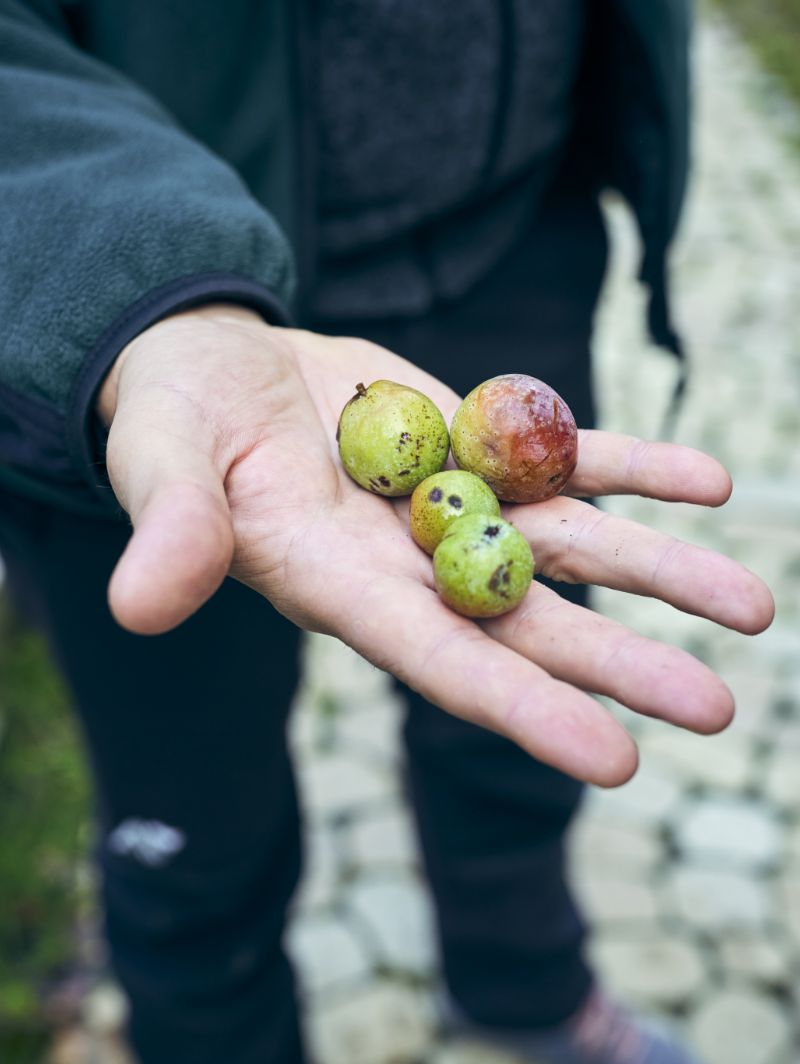
A valuable wood
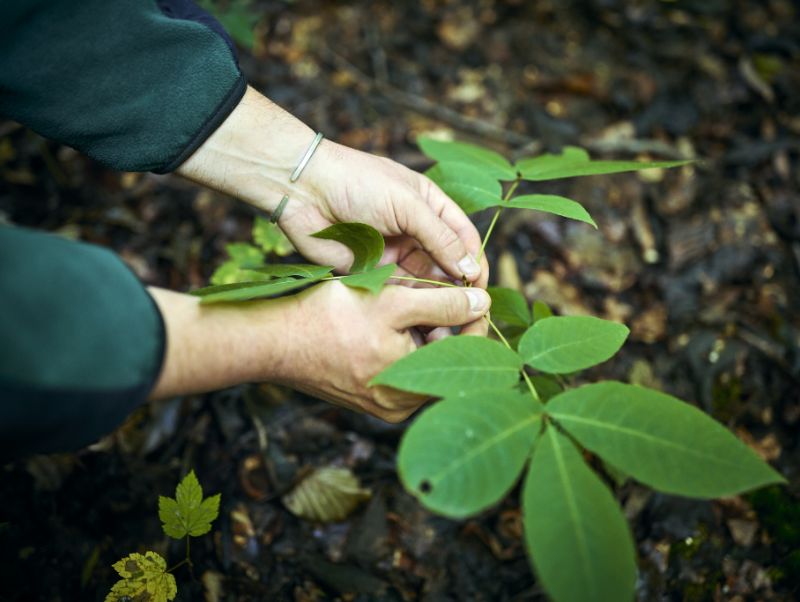
This category also includes the shagbark hickory from North America, which at first glance resembles a mix of walnut and chestnut. A few specimens of this unusual tree species have made it into the forest near Degerloch. How? Even Dr. Abt doesn’t know for sure. What is certain is that the impressive trees have been growing up to the heavens here for more than a hundred years – and apparently the foresters of yesteryear also enjoyed experimenting. Dr. Abt considers hickory to be a genuinely high-quality and valuable option. As such the ForstBW nurseries are growing specimens from the seeds of the hickory and making seedlings available to forest owners.
Forests need maintenance
Leaving the forest to itself and letting Mother Nature take over – Dr. Abt considers this is a rather naive idea. What many fail to recognize is that the supposedly “natural” landscape has actually long been a cultural landscape dominated by humans, and one which also fulfills important protective functions for them. No other German state has as much natural forest as Baden-Württemberg. “We are striving to fulfill the responsibility of producing a raw material while also providing a habitat for insects and fungi,” he emphasizes. Nevertheless, the forest needs to be maintained. “That means we need technical methods for cultivating this vision and managing the forest. We can’t do it without a chainsaw, brushcutter or shears.”
And forests need people who can manage them with know-how and expertise. ForstBW trains 100 new forest workers every year. “Our intention is to use modern technology, extensive expertise and quality training to empower our people to produce wood safely, efficiently and in a healthy way, so that they can work well into old age,” explains Dr. Abt.
percent of trees in Baden-Württemberg’s forests are native species.
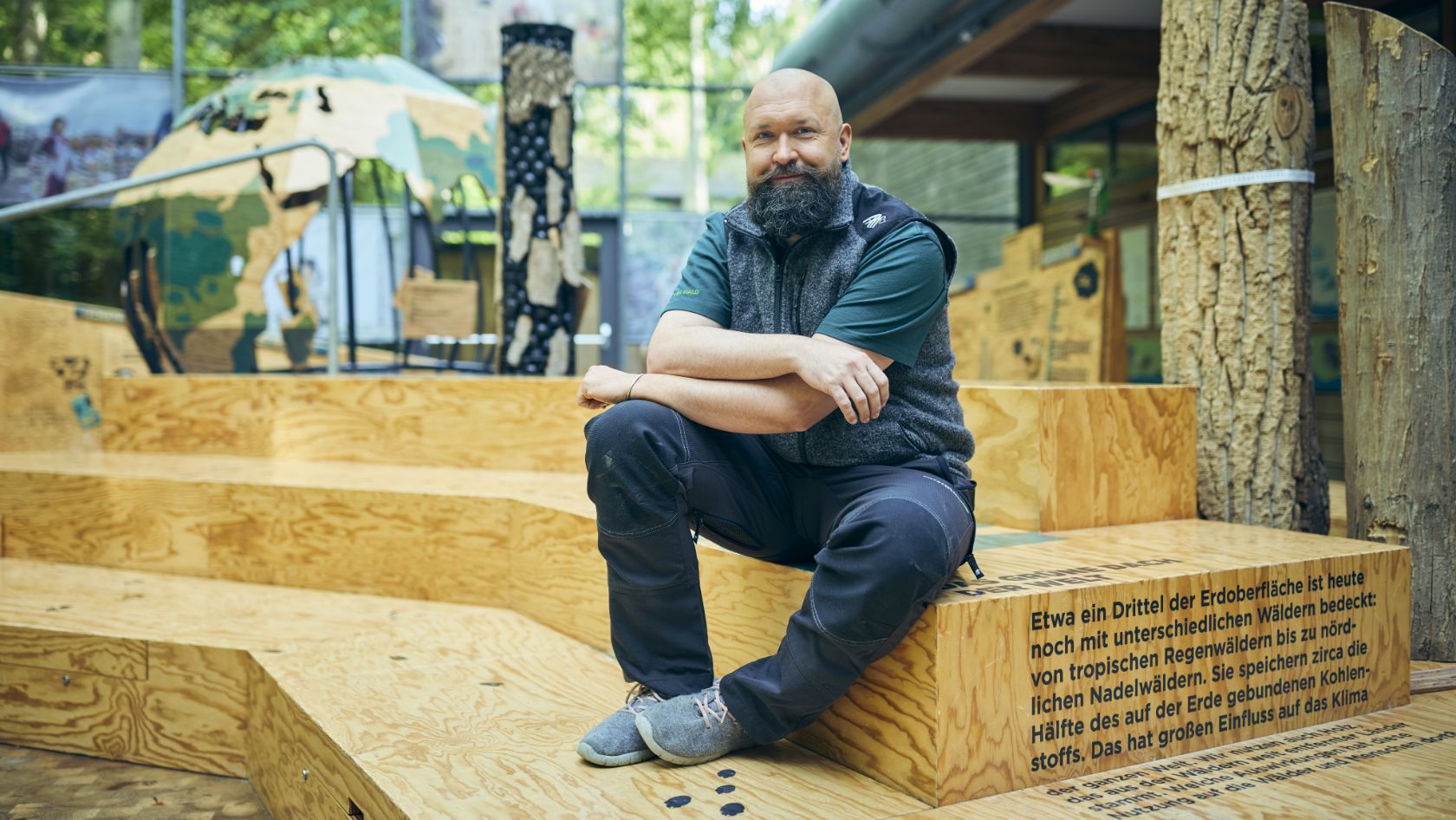
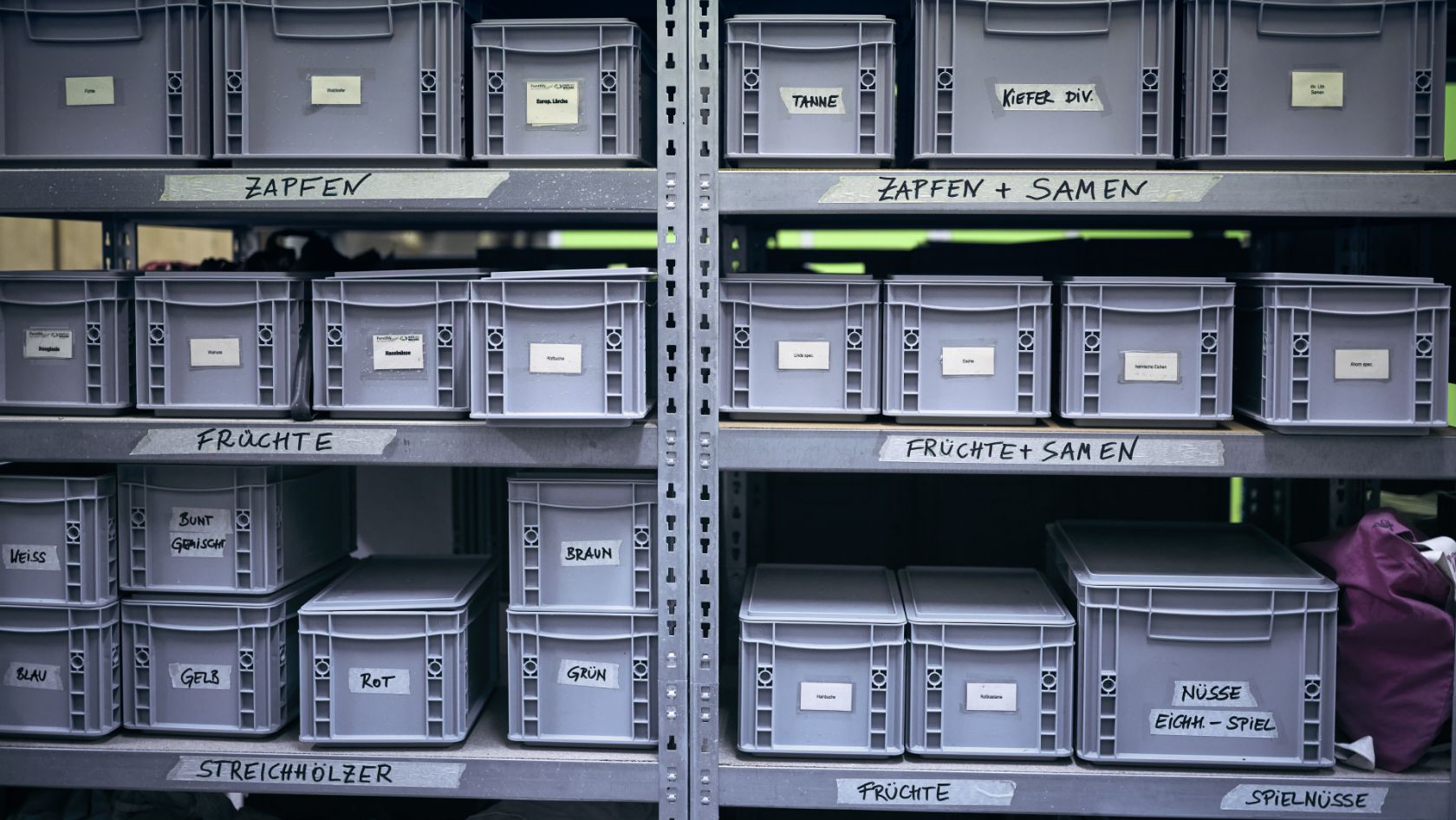
Dr. Alexander Abt Forestry researcher at ForstBW“Children in particular need to understand that resources are finite, and that the forest is a vulnerable habitat deserving of protection. Everyone can contribute to improving the forest through their behavior.”
An opportunity
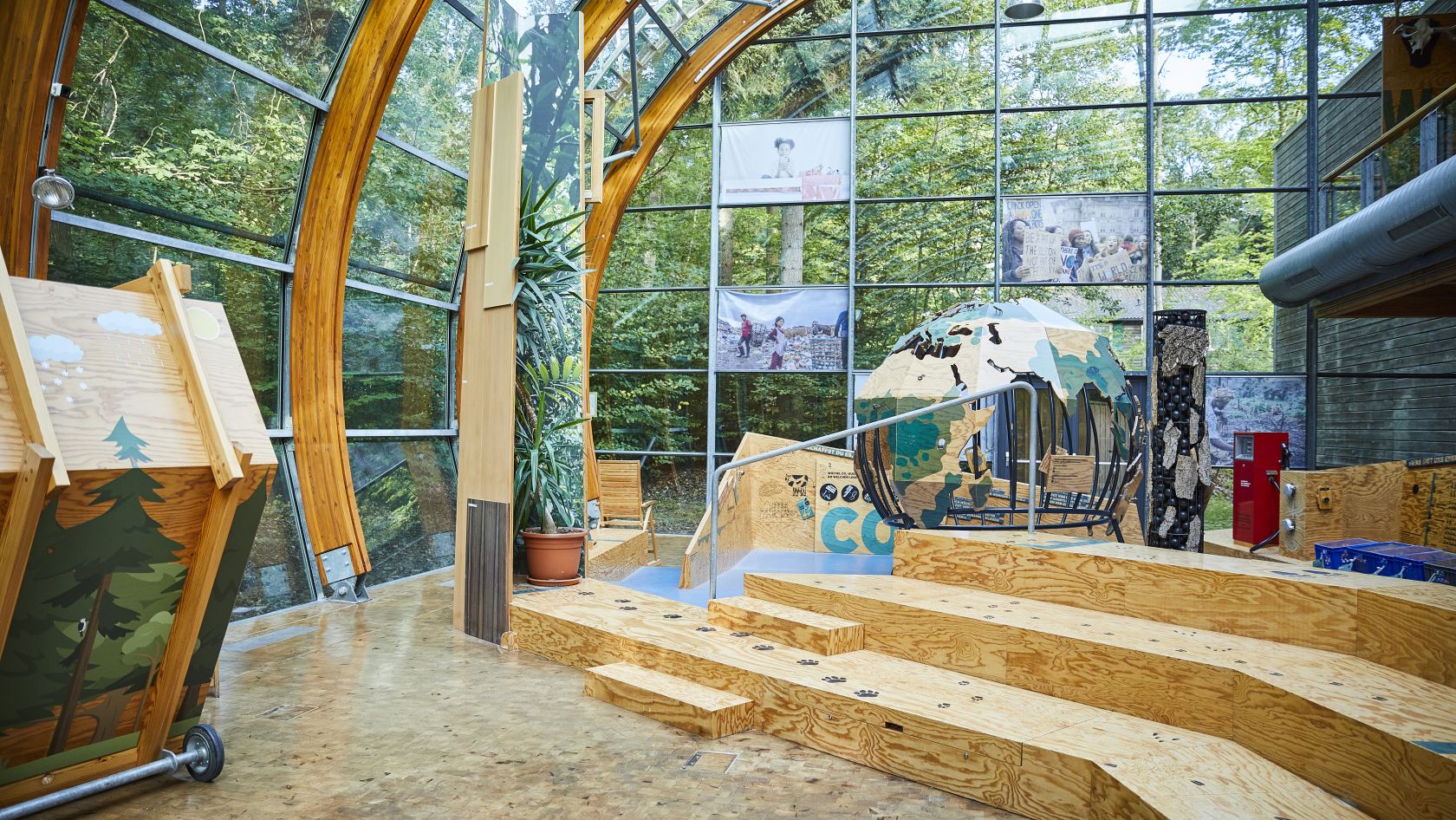
The “Haus des Waldes” also addresses something fundamental. Children in particular see the forest with new eyes – and sometimes for the first time. “Some young people come to the “Haus des Waldes” without having ever experienced a forest in all their 15 or 16 years. They are completely overwhelmed,” explains Dr. Abt. This is where environmental education comes in, with the aim of positively connecting people with the forest and making it comprehensible in all its diversity. “Children and young people need to understand that even their urban, digital lives are linked to the forest and its resources,” he concludes. The challenges for subsequent generations could not be greater. But Dr. Abt believes these challenges also offer an opportunity to do things a bit better than the previous generation – and his work is helping young people do just that.
“Haus des Waldes”
The “Haus des Waldes” in Stuttgart is the statewide center of excellence for forest education in Baden-Württemberg. It creates awareness of natural resources, particularly among children and young people, and encourages environmentally compatible, sustainable behavior. The “Haus des Waldes” attracts around 45,000 visitors every year. Around 90 seminars are offered here for a wide range of target groups, primarily schools. Today the facility is part of ForstBW, the largest forest operator in Baden-Württemberg. STIHL is also one of the supporters of the facility.