
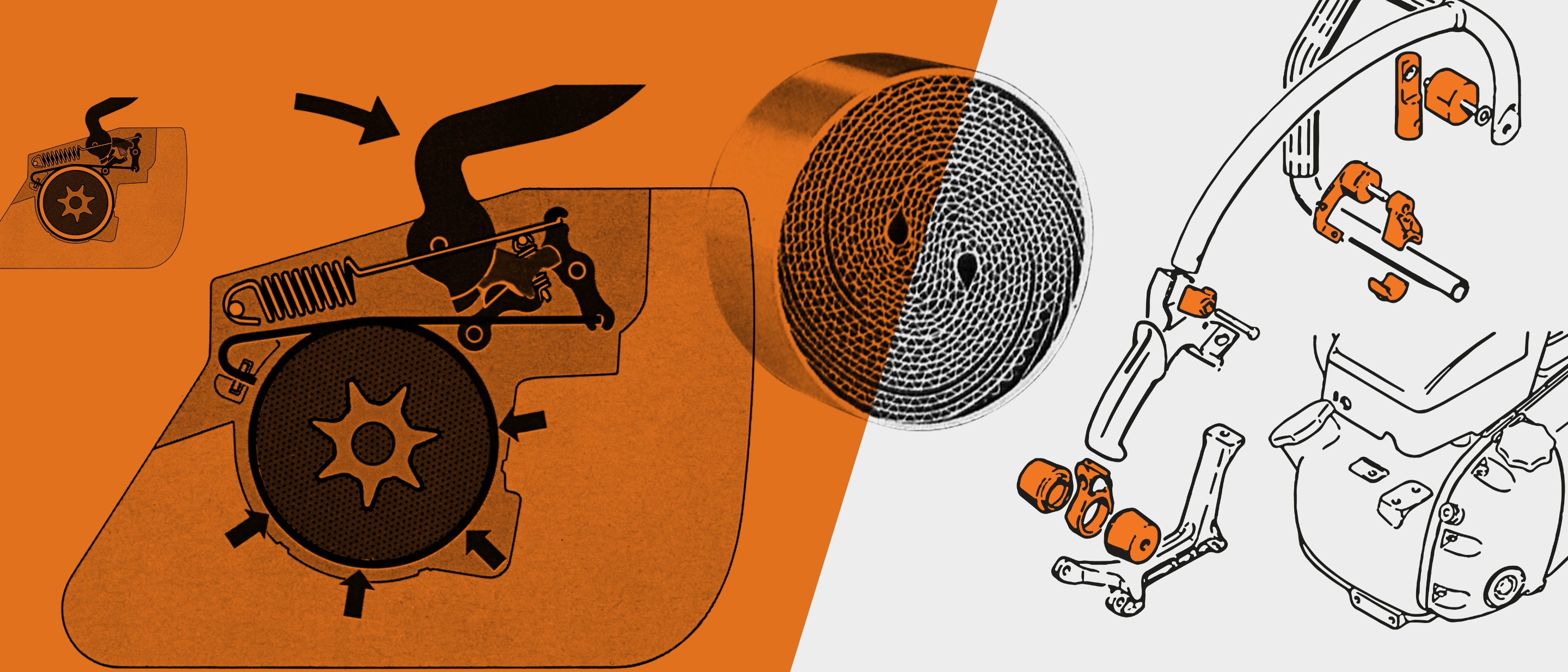
Groundbreaking Details
Vibrations dampened, emissions reduced, safety increased: At STIHL, supposedly minor improvements to already-successful products set standards for occupational safety, health and environmental compatibility. Examining the impact of QuickStop, catalytic converter, AV handles and MotoMix.
The first one-man gasoline chainsaw; the first electronic ignition system; the first saw chain with a self-lubricating effect – STIHL is responsible for some major innovations in chainsaw development. However, some of the company's less-obvious inventions have also had a significant impact.
A steady hand
Lightweight two-stroke engines create vibration. This is unavoidable. Anyone using older chainsaw models would always get a little rattled as they worked. When combined with cold conditions, this vibration could cause a temporary interruption of blood flow to the fingers, making them turn white. “Vibration white finger” is a disorder that was widespread among chainsaw operators – until 1964, when STIHL became the world's first chainsaw manufacturer to introduce an anti-vibration system. The original “AV handle” made use of a principle which is as simple as it is ingenious: The carrying and grip handles were separated from the vibrating machine and attached to it like a frame. The handlebars met the machine at only three points of contact, and these were equipped with vibration-dampening rubber buffers.
The protection of muscles and joints by the AV handle is a key achievement toward the health of users. Vibration white finger disease continued to become less common, particularly with the addition of heated handles, which were launched in 1973. While the anti-vibration system has been continuously optimized over the years – rather than rubber buffers, it now uses springs to absorb vibrations – the principle of the handle frame with three contact points and dampeners is still in use to this day.
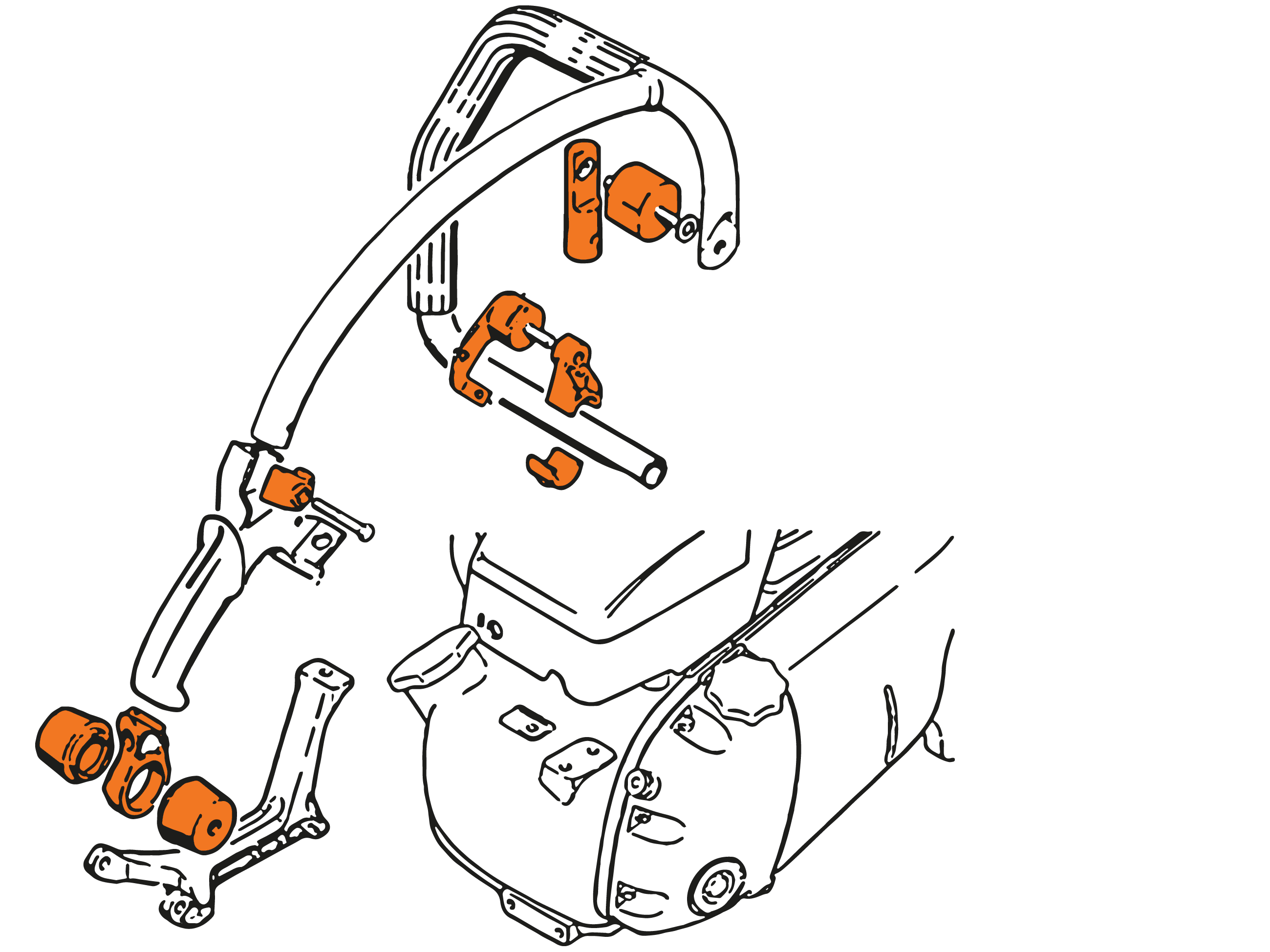
The STIHL AV handle is not welded to the chainsaw, but is screwed on at three points. The vibration-dampening rubber buffers are highlighted in orange in the drawing.
Gentle on the lower back
The notable effectiveness of the AV handle is described in a report from one user which was published in the “Holz und Motor” customer magazine in March 1965. It was written by a chainsaw operator who had been testing the STIHL Contra with AV handle for several months before the tool malfunctioned, they explained. For a few days the writer was obliged to work with a machine with a conventional handle – and he was not enthusiastic about it: “The relief provided by the AV handle was so noticeable because going back to working with the normal handle design was ‘hard on the lower back.’”
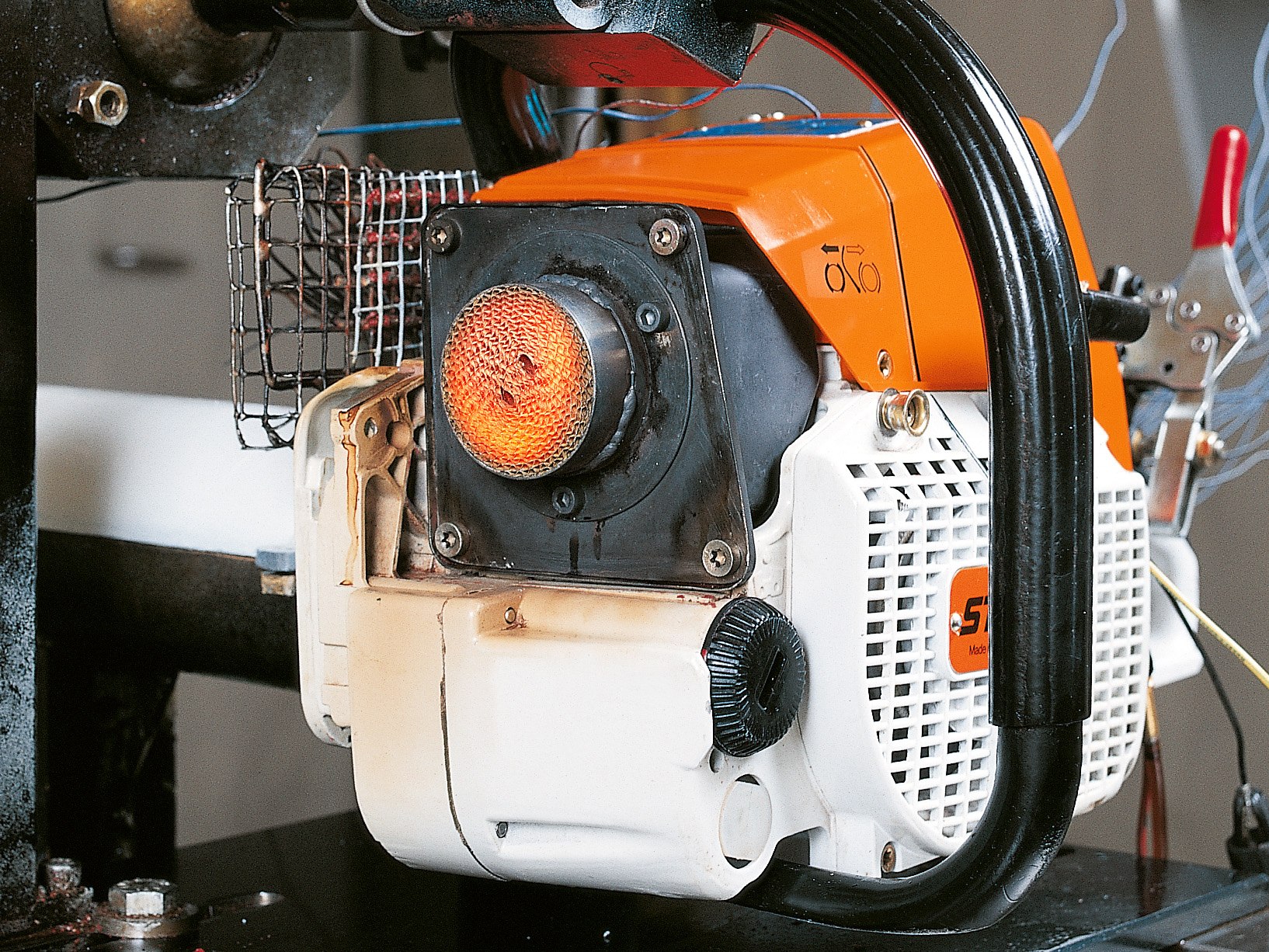
The STIHL catalytic converter – the round component on the machine – in a laboratory test. It glows red because the chemical exhaust gas combustion process triggers temperatures of up to 1,000 degrees Celsius. Cooling is provided by a jet tube that draws in fresh air.
The end of the blue exhaust plume
The health of those working with chainsaws is also central to another innovation: In 1988 STIHL developed the world’s first catalytic converter for two-stroke engines – “even though no one asked us to do it, and no one made us do it” as the company noted at the time when describing its pioneering preventive work in the “Blick ins Werk” employee magazine. The motivation for the catalytic converter was STIHL striving to “preventively reduce hazardous substances which have an as-yet-unclear impact on the human organism and the environment”.
square meters is the area that would be covered if the metal grids of the chainsaw catalytic converter were unfolded. When installed, the catalytic converter has a diameter of 5 centimeters.
The catalytic converter – which was not yet mandatory in cars at the time – was developed “to mitigate nuisance factors for chainsaw users, because – as they point out – a forestry worker cannot simply travel away from the exhaust fumes of his machine like a car driver can.” These “nuisance factors” included a blue plume of exhaust gas, odor, and sometimes irritation of the eyes and mucous membranes. The catalytic converter not only reduced these symptoms, but also cut hydrocarbon emissions by up to 80 percent.
Low-emission solutions for environmental compatibility
By reducing exhaust gases, a catalytic converter in a chainsaw protects not only people, but also the environment. STIHL went on to develop various additional systems for improved environmental compatibility. This includes the special fuel, MotoMix, first produced in 1990. The HT plus oil used in it “not only has excellent lubricating properties, but is also very quickly biodegradable,” as noted in the “Holz und Motor” customer magazine in 1990. The synthetic fuel is also free of harmful components found in conventional gasoline, such as benzene.
On the path to low-emission solutions
MotoMix 20 has been available since 2022: The fuel contains biogenic components such as wood residues from forestry, which reduces greenhouse gas emissions by a further 8 percent compared to MotoMix. The proportion of biogenic content used is always being increased. In 2026, the special fuel receives another update. MotoMix 100 is made entirely from bio-based raw materials and has been specially developed for 2-stroke engines. This development - and probably also e-fuels in the future - facilitates long-term greenhouse gas-neutral operation of appliances with combustion engines.
The MotoMix 100 special fuel consists entirely of bio-based raw materials. It will be launched in 2026 together with the anniversary saw MS 500i Centennial Edition.

MotoMix 20 powers chainsaws with naturally derived components such as wood residues.
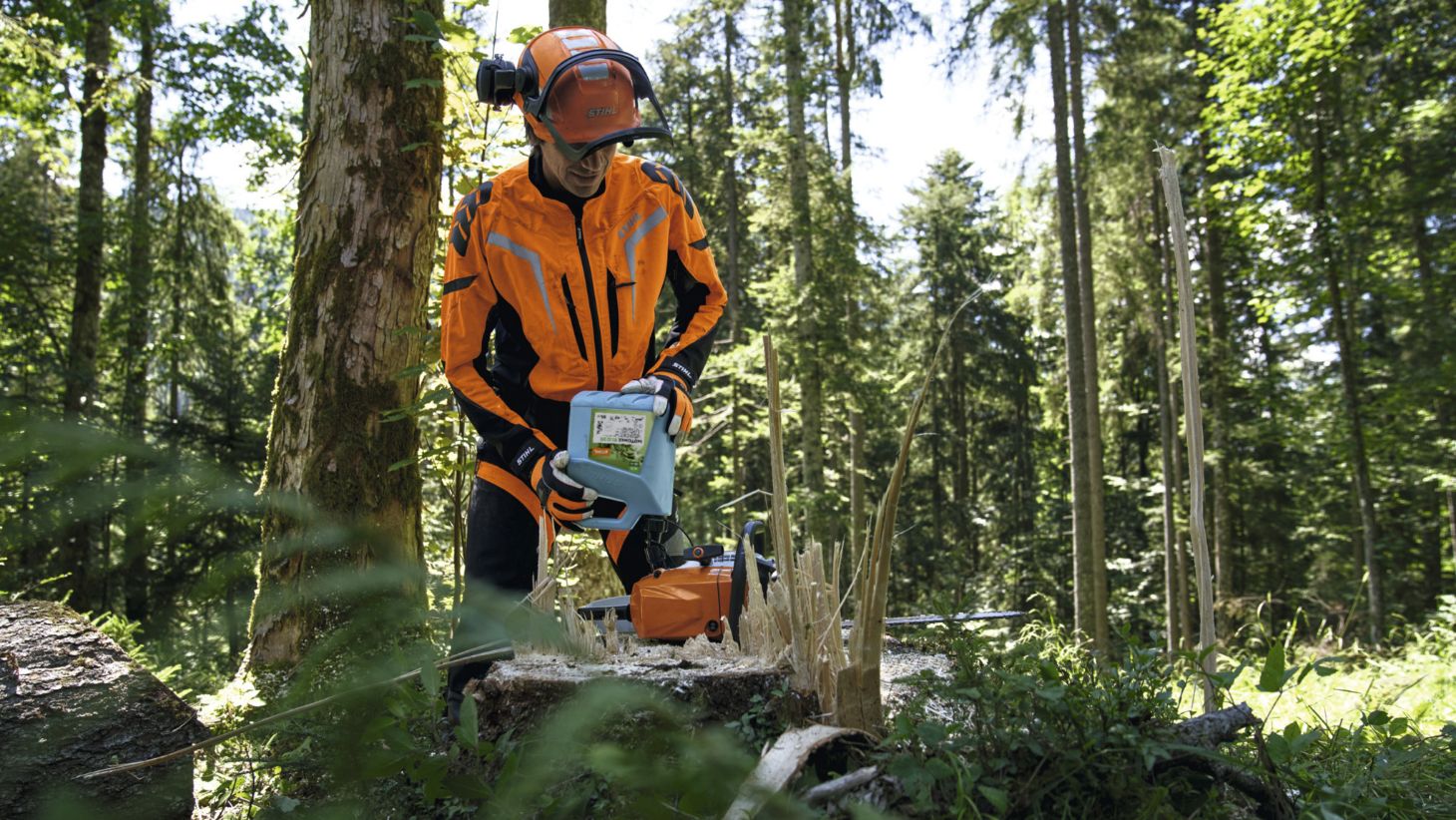
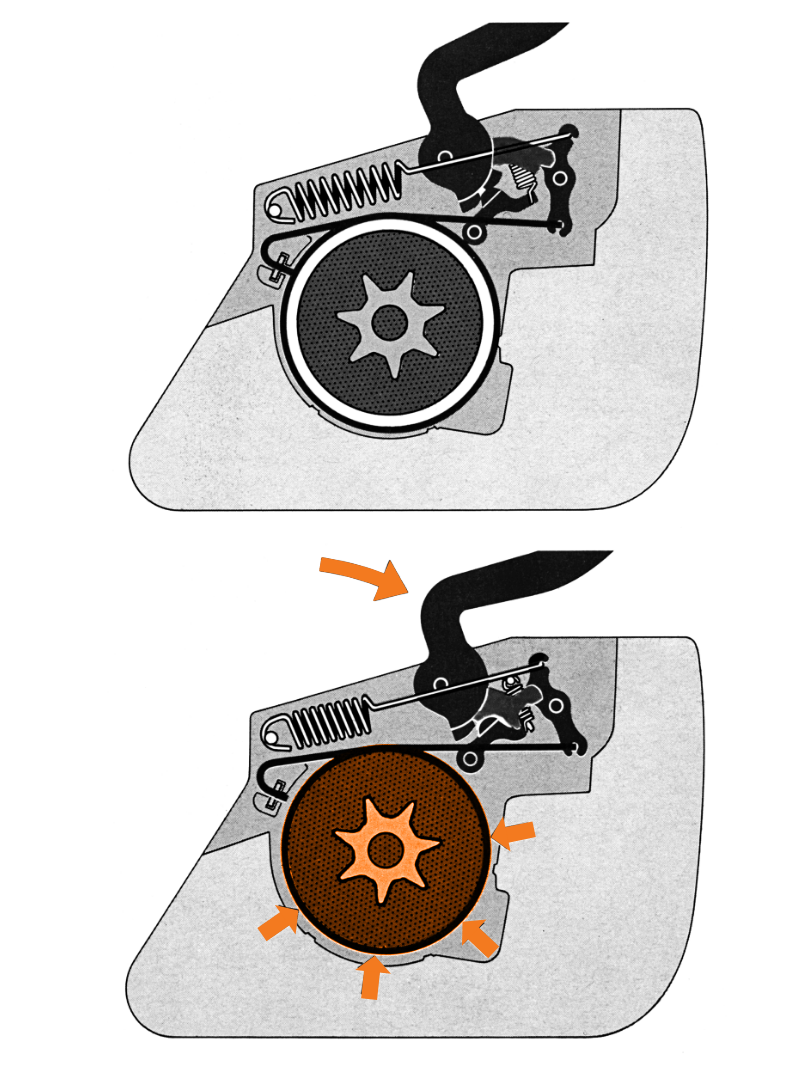
The QuickStop chain brake is very easy to use and ensures safety when dealing with chainsaws.
Safety first
STIHL set new standards for safety in 1972 with a world first: QuickStop. This was a chain brake – which was still manually activated at the time – which was incorporated into the 031 AV gasoline chainsaw, along with other important safety features such as throttle lock, hand guard, and AV handle. Ten years later STIHL followed-up with an automatic QuickStop chain brake.
This system is also extremely easy to use: Lever forward – chain stops; lever backward – chain runs. If there is kickback or the saw jumps, the lever automatically flips forward and the chain comes to a stop within a fraction of a second. This ease of handling is a remarkable development achievement considering the huge associated safety benefits.
These four examples illustrate that STIHL is particularly dedicated to safety and health, and demonstrates how the company has developed “minor” innovations that make chainsaw operation significantly easier. And here's a nice side effect: Nature has benefited too.