
Over the years STIHL has produced many tools and equipment no longer available today. Do you know them all? And more importantly: Can you identify them all? Test your image memory and knowledge of STIHL here.
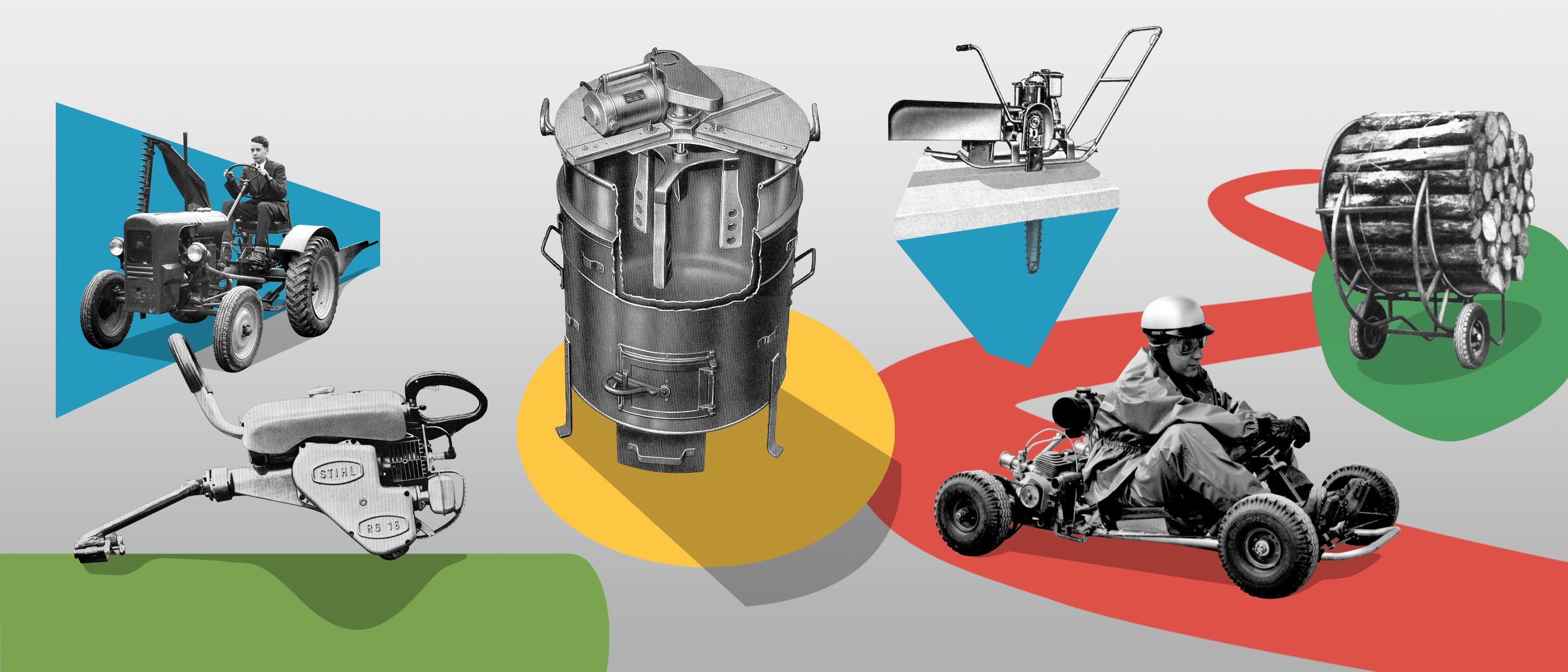
Unlikely hero products
They all have a place in the company history and have contributed to the present-day STIHL focus on core specialties: Surprising products, unexpected diversions into unfamiliar areas, pragmatic developments – projects arising from necessity or brought to life out of passion. Take a look inside the curiosity cabinet of past product heros.
A Clean Solution
Necessity is the mother of invention, so the saying goes. And so indeed, some of the STIHL power tools and machines through the ages have been developed due to economic pressures. A prime example of this is the washing machine. Yes, you read that right. In the advertising it is billed as the “housewife‘s friend”: “Big on performance – small on consumption…” and, very importantly, “… still reasonably priced.”
Of course it is not a fully automatic washing machine like those we have today, but a motor-driven agitating mechanism positioned above a washing drum. From 1932 these gadgets become a real sensation, partly because they can be paid for in installments. The company pivots to manufacturing these during the economic crisis because chainsaws are not selling well in Germany, and the export business is still in its early stages. Washing machines help bridge the shortfall. With demand for chainsaws rising again by the mid-1930s, the STIHL washing machine is already consigned to the history books by 1937.
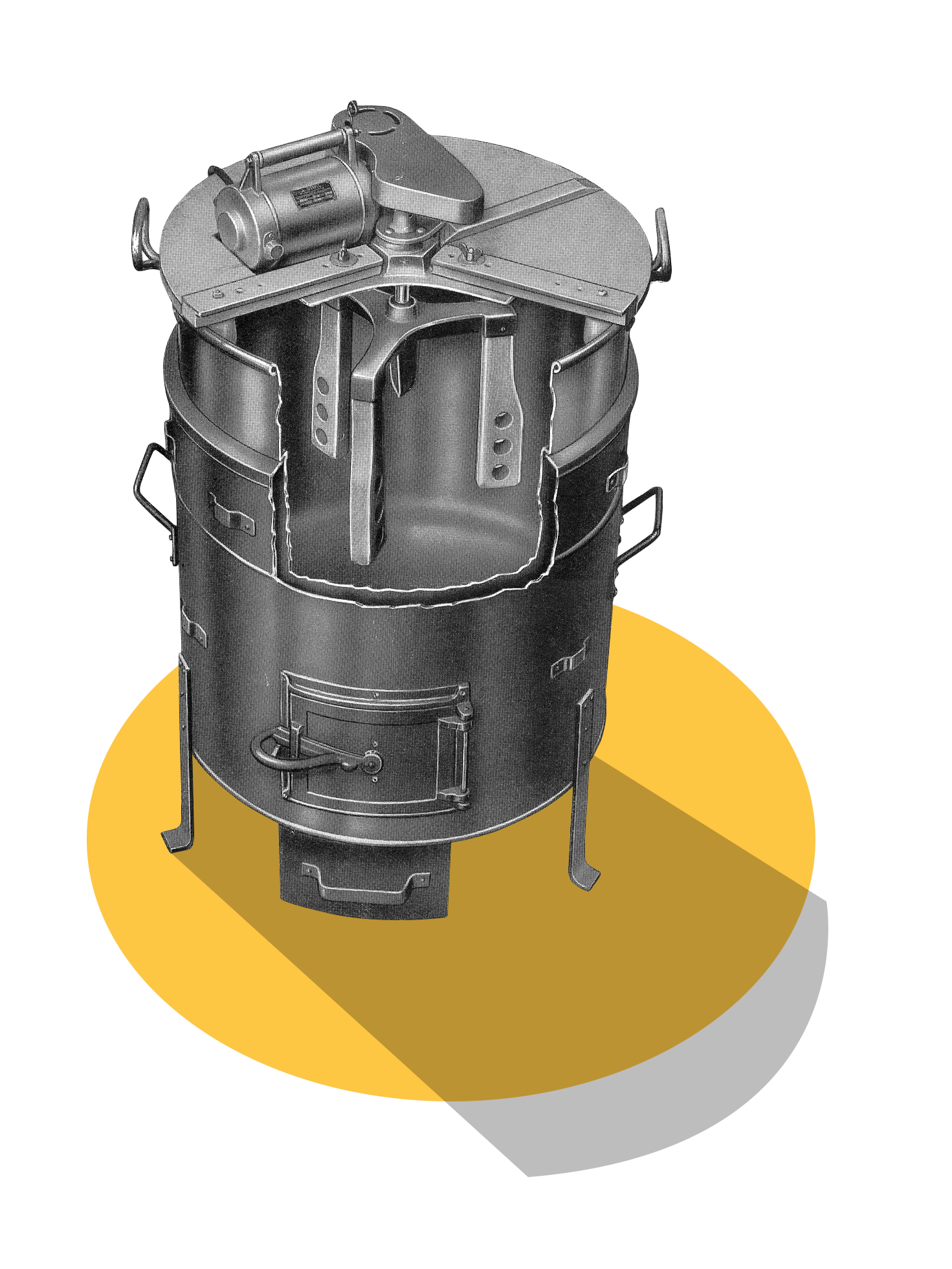
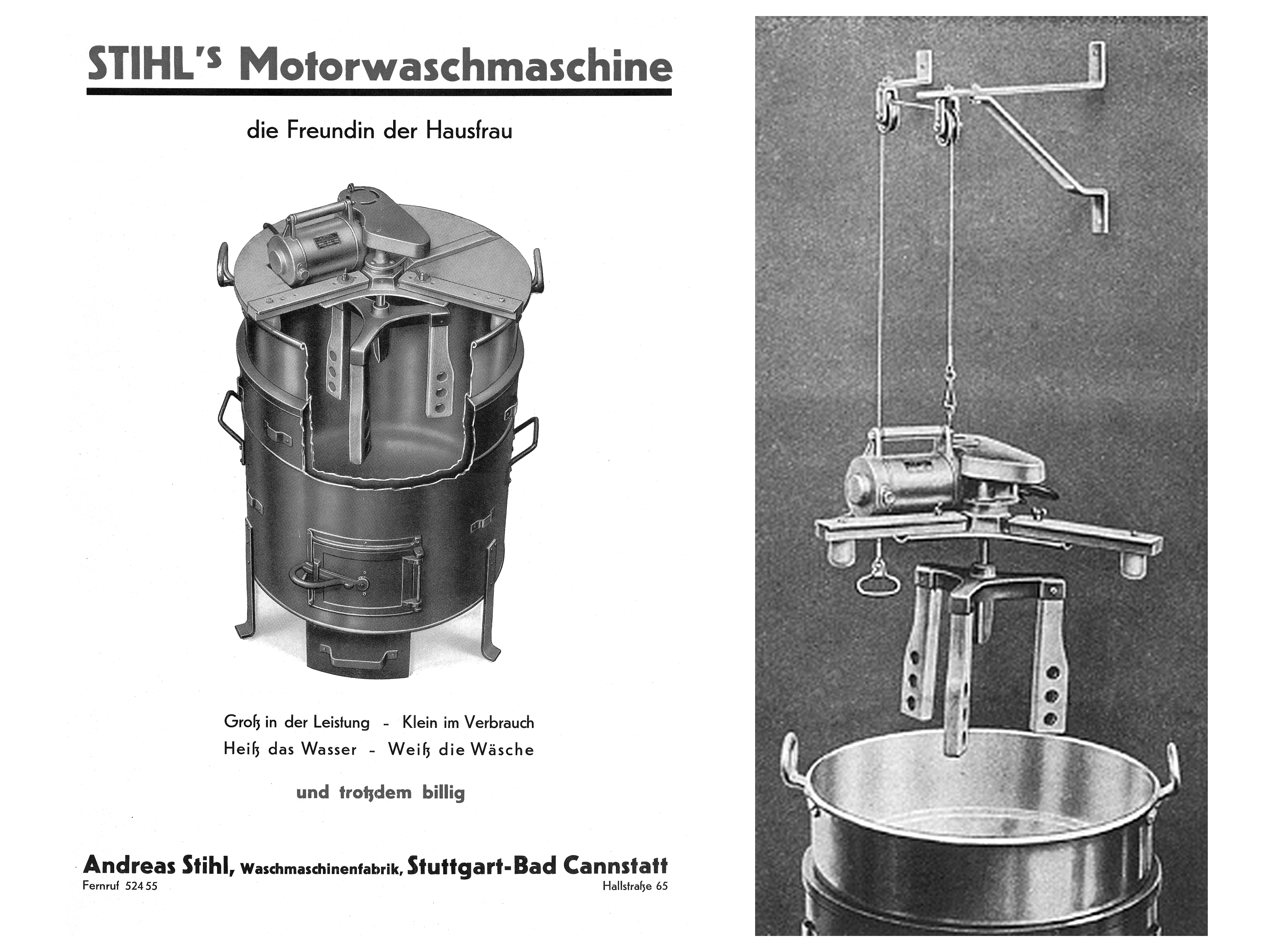
“The housewife’s friend” – STIHL’s motor-powered washing machine (1932).

Reveal STIHL
Can you recognize STIHL’s historical devices at first glance? Find out with our photo puzzle.
Heavy-duty equipment
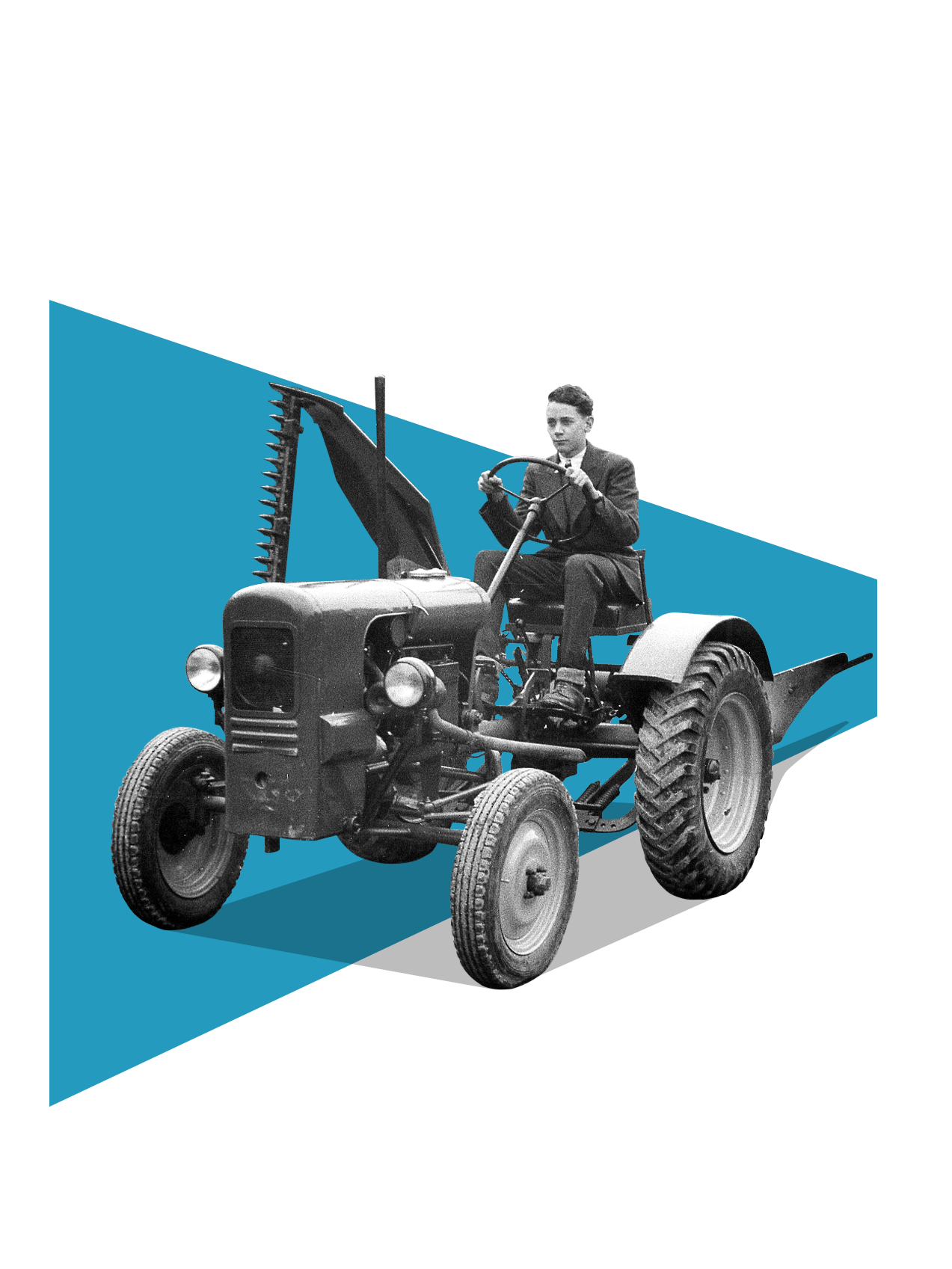
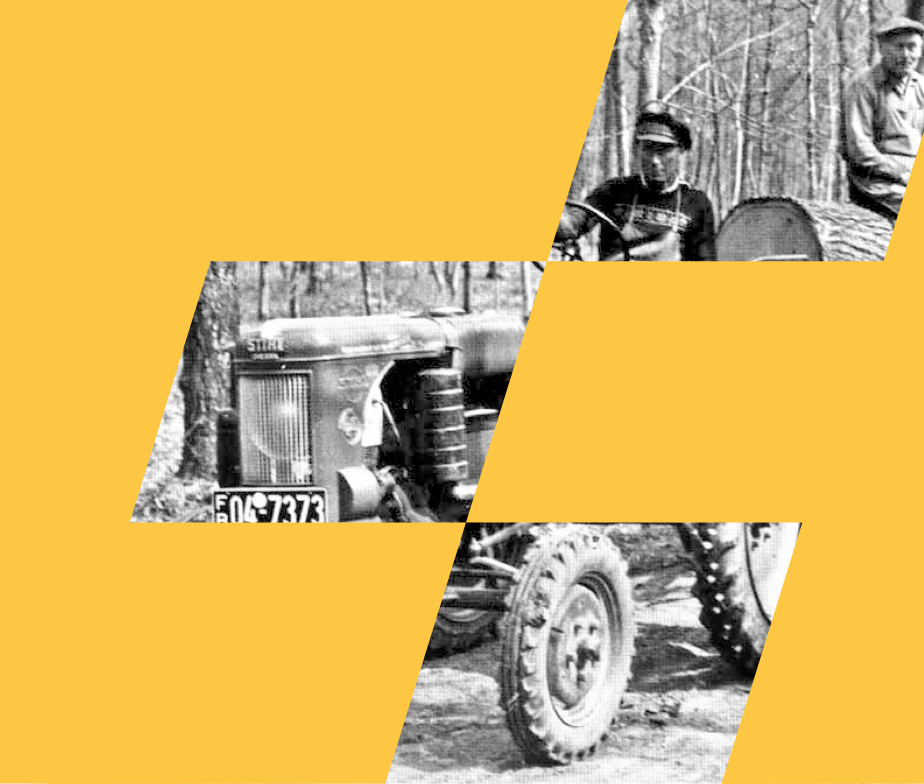
There is a somewhat longer availability period for the STIHL agricultural tractor, which is a lightweight, affordable, and versatile machine; the tractors are manufactured for 14 years, from 1949 to 1963. In the post-war period, it is once again due to declining chainsaw sales that Andreas Stihl is motivated to develop the tractor.
However, the tractors do not get off to quite the same smooth start as the washing machines. Even small tractors require a lot of production space – a whole new assembly hall is built specifically for this purpose – and they initially incur high development costs. To add to the frustrations, the first units sold are subject to complaints due to a malfunction of the oil pumps. After this is resolved tractor sales improve significantly. But then, in the second half of the 1950s, large tractor manufacturers start to dominate the market and tractors become a loss-making venture for STIHL. As a result they are phased out in 1963. Incidentally, an original STIHL tractor can still be inspected today at the STIHL Brand World.
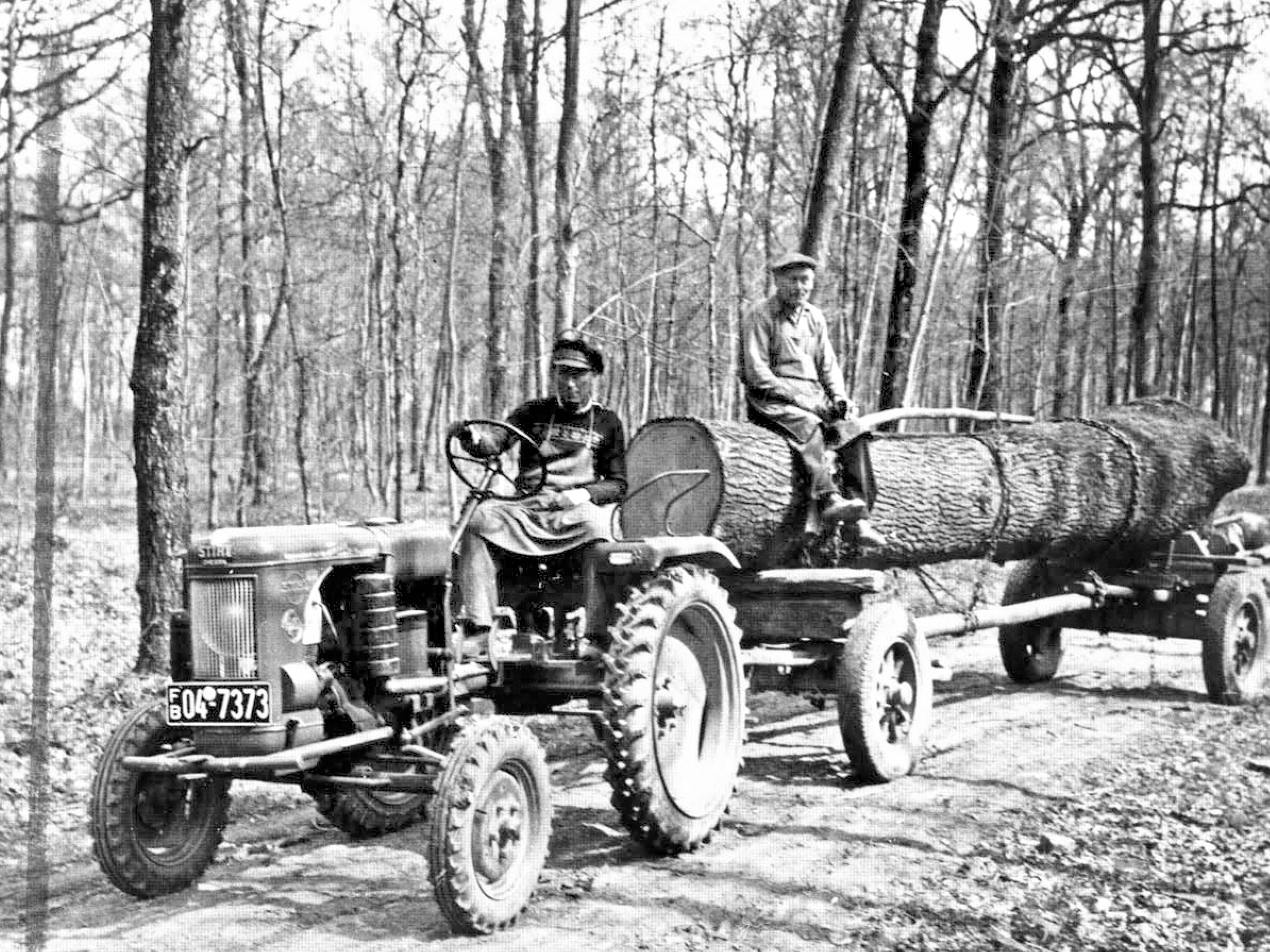
The tractor was soon put to use in forestry as well (undated, likely around 1950).
A fan of powerful engines
The tractors are probably not created solely out of necessity. The fact is, Andreas Stihl loves large and powerful engines, and tractors are a pet project for him. That is also why they continue to feature in the STIHL range for 14 years – until Eva and Hans Peter Stihl are able to persuade their father Andreas to let go of the tractors.
Rationalization in the forest
Closely associated with the tractor is the towing trailer which is produced in the 1960s. Forestry customers frequently buy it together with the small tractor and use it to transport timber from the forest. This product will also ultimately be a casualty of the STIHL focus on chainsaws, although it is discontinued a little later than the tractor. The towing trailer is promoted in the 1967 “Forestry Technology” catalog as a means of increasing profitability from plywood, posts and small-diameter wood.
This is essentially a trailer with a tipping body in a wide variety of versions. As part of a “rationalization concept” it allows for efficient sorting and bundling of wood even while still in the forest. This saves several work steps, and as such significant time and effort.
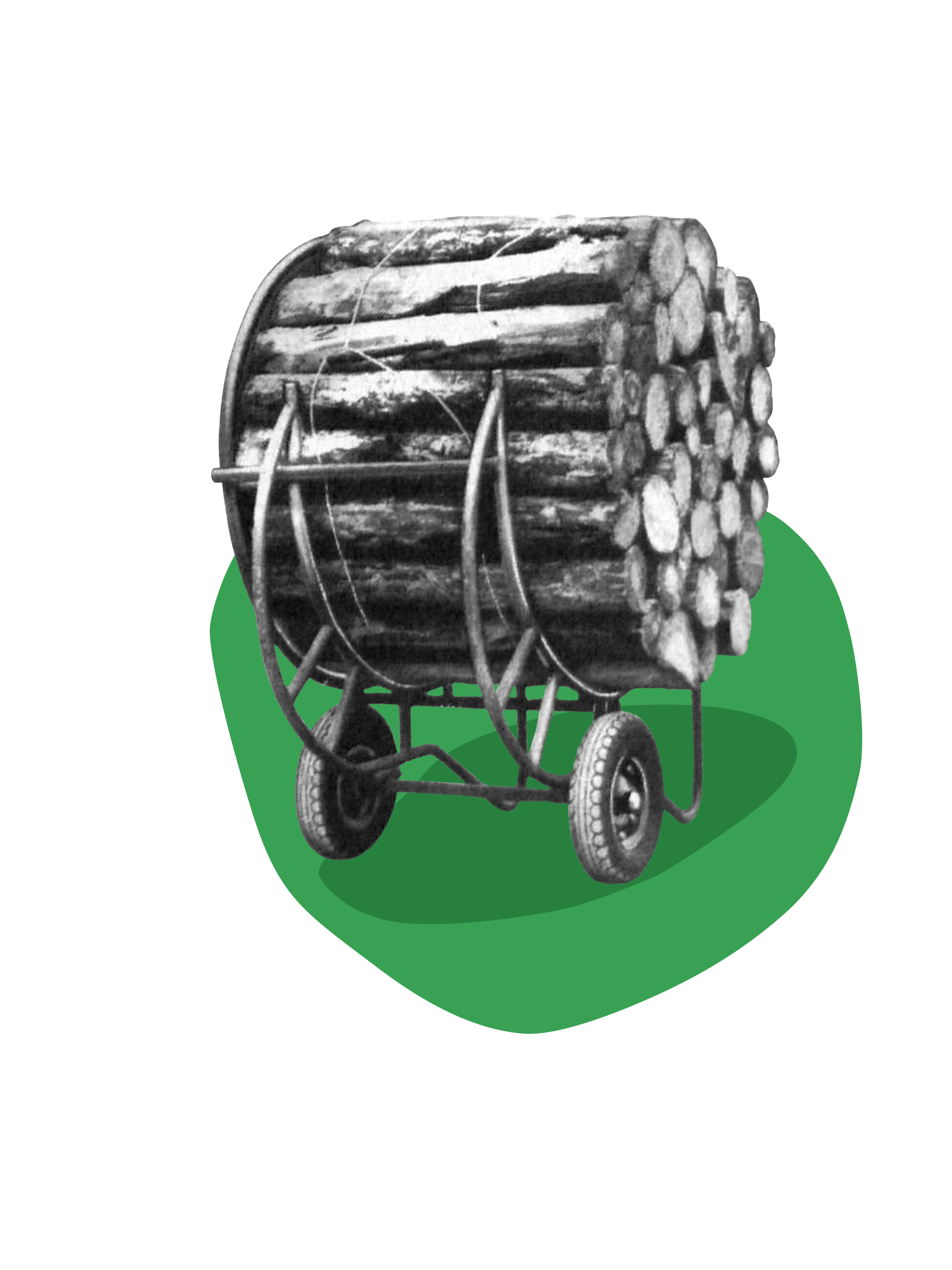
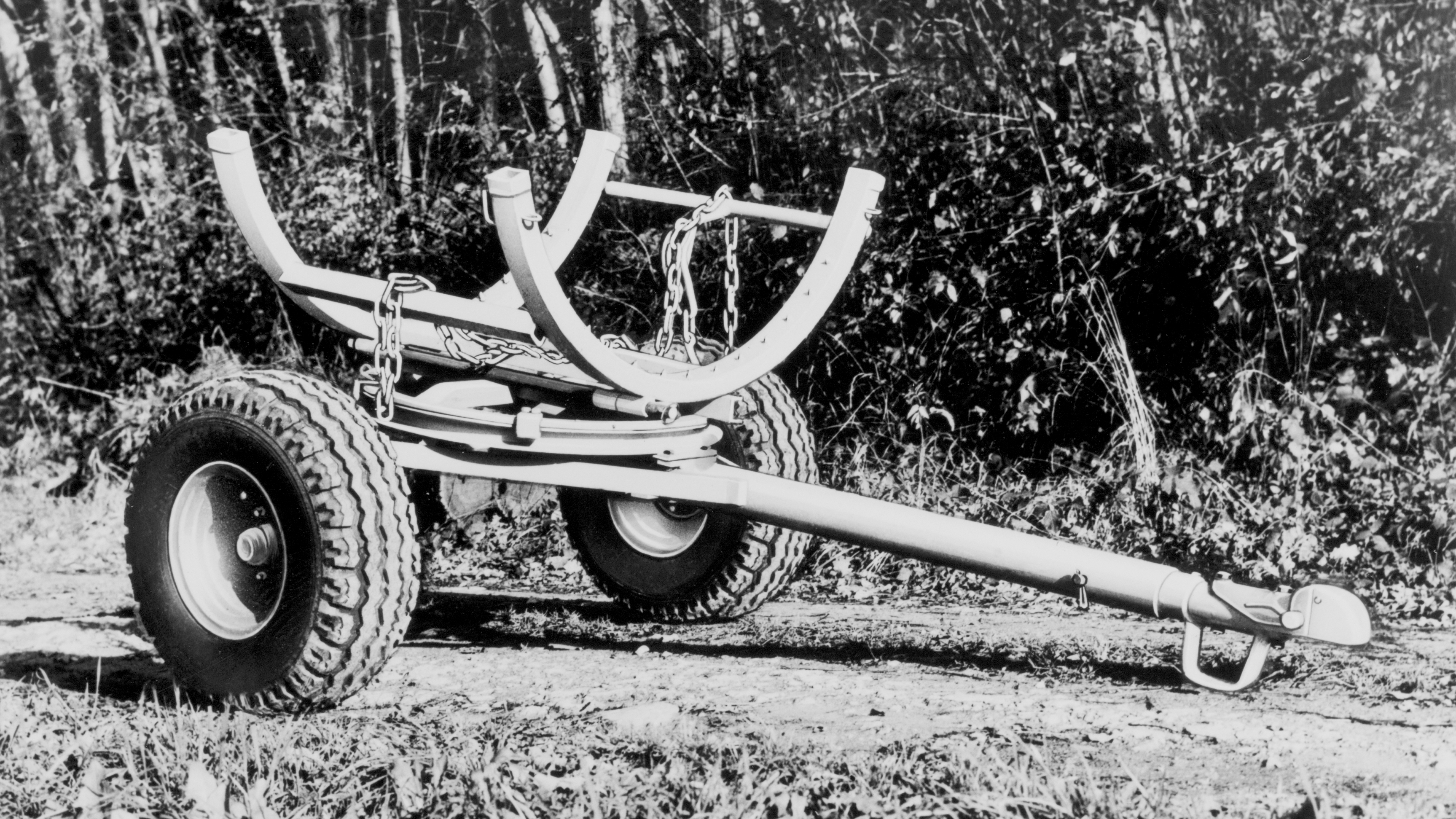
The forwarder is a symbol of efficient and profitable work in the forest (1967).
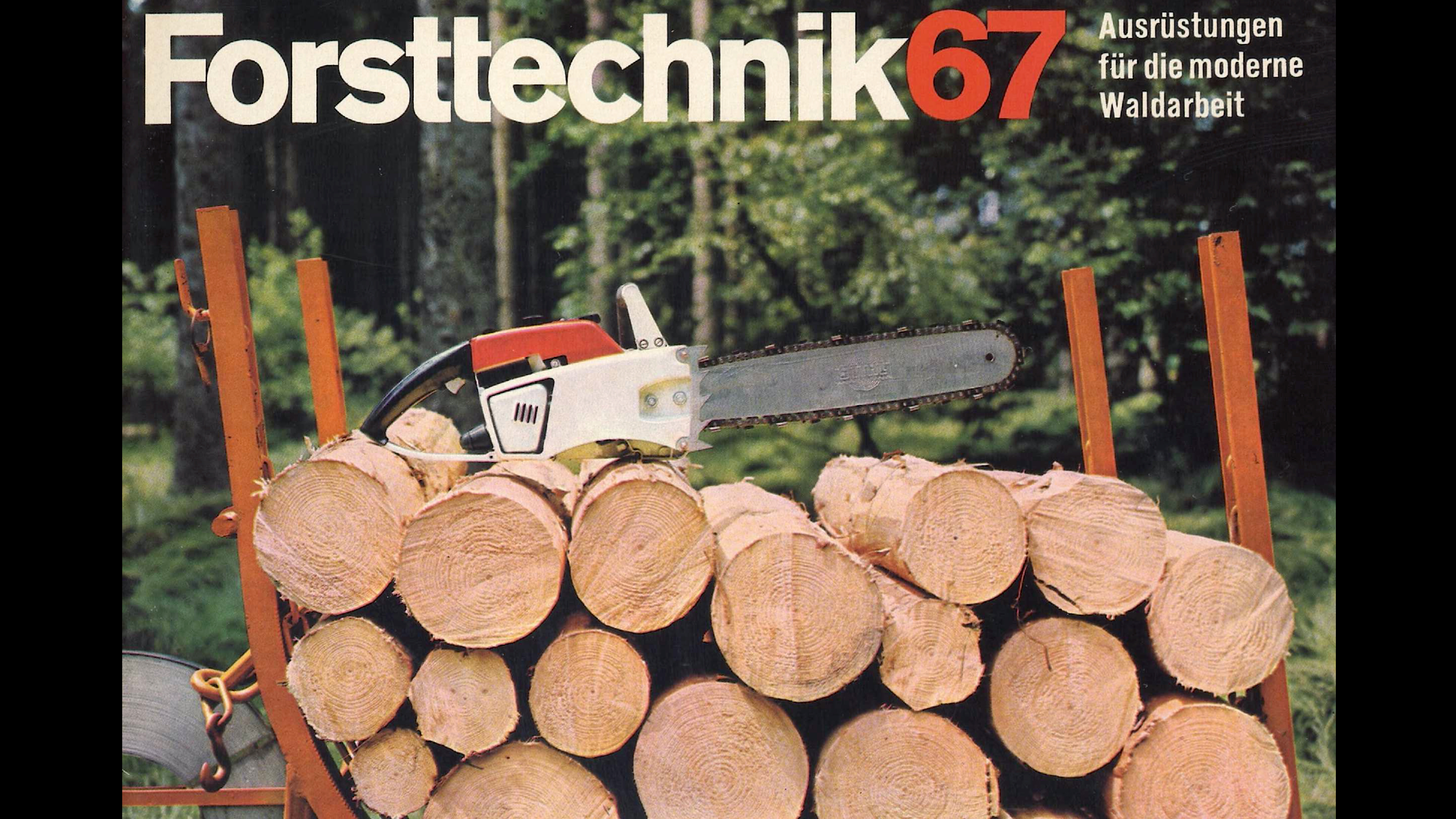
In 1967, STIHL publishes a catalog all about the forwarder.
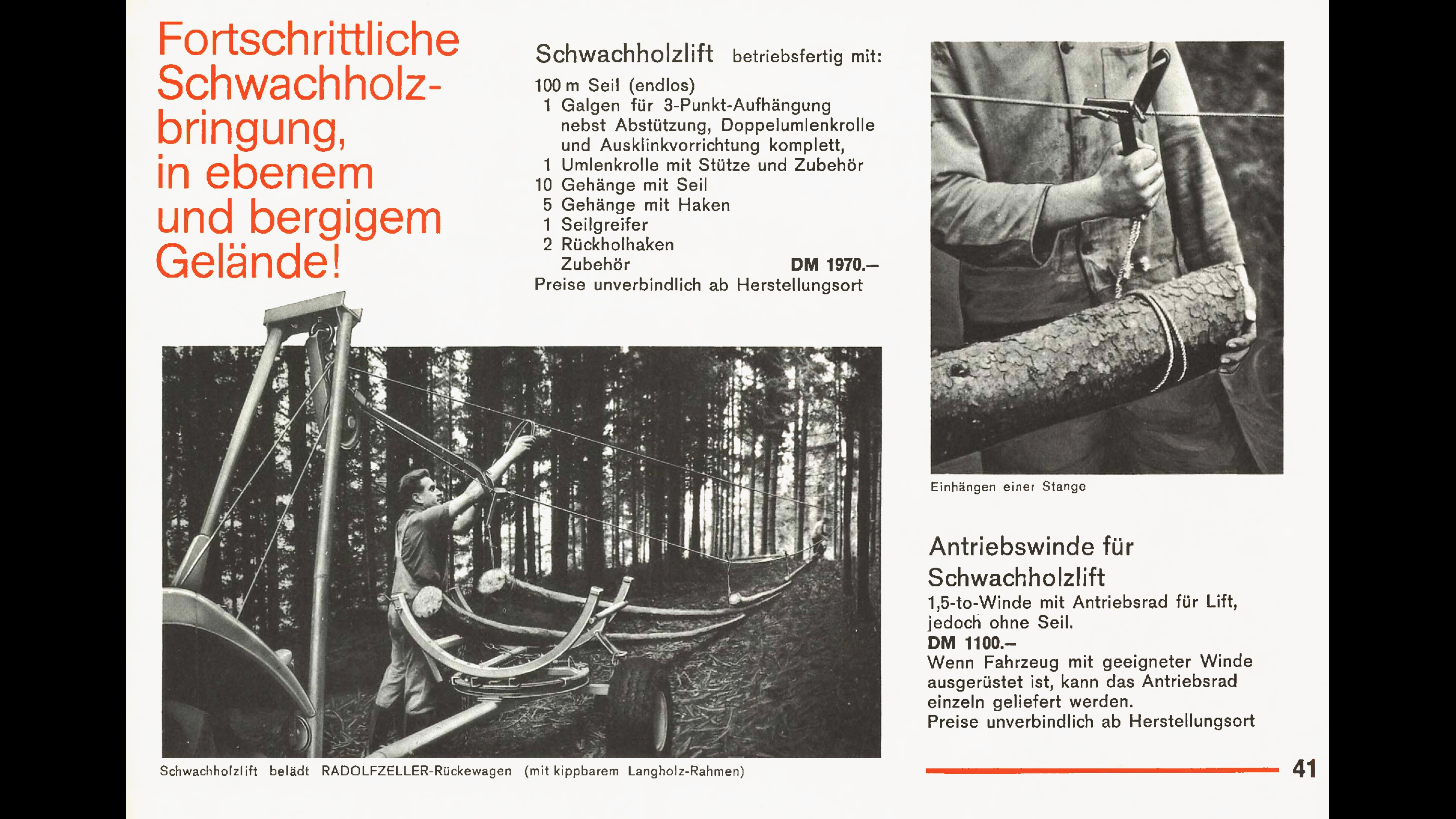
With the help of a so-called small timber lift, the forwarder can be loaded (1967).
Era of champions
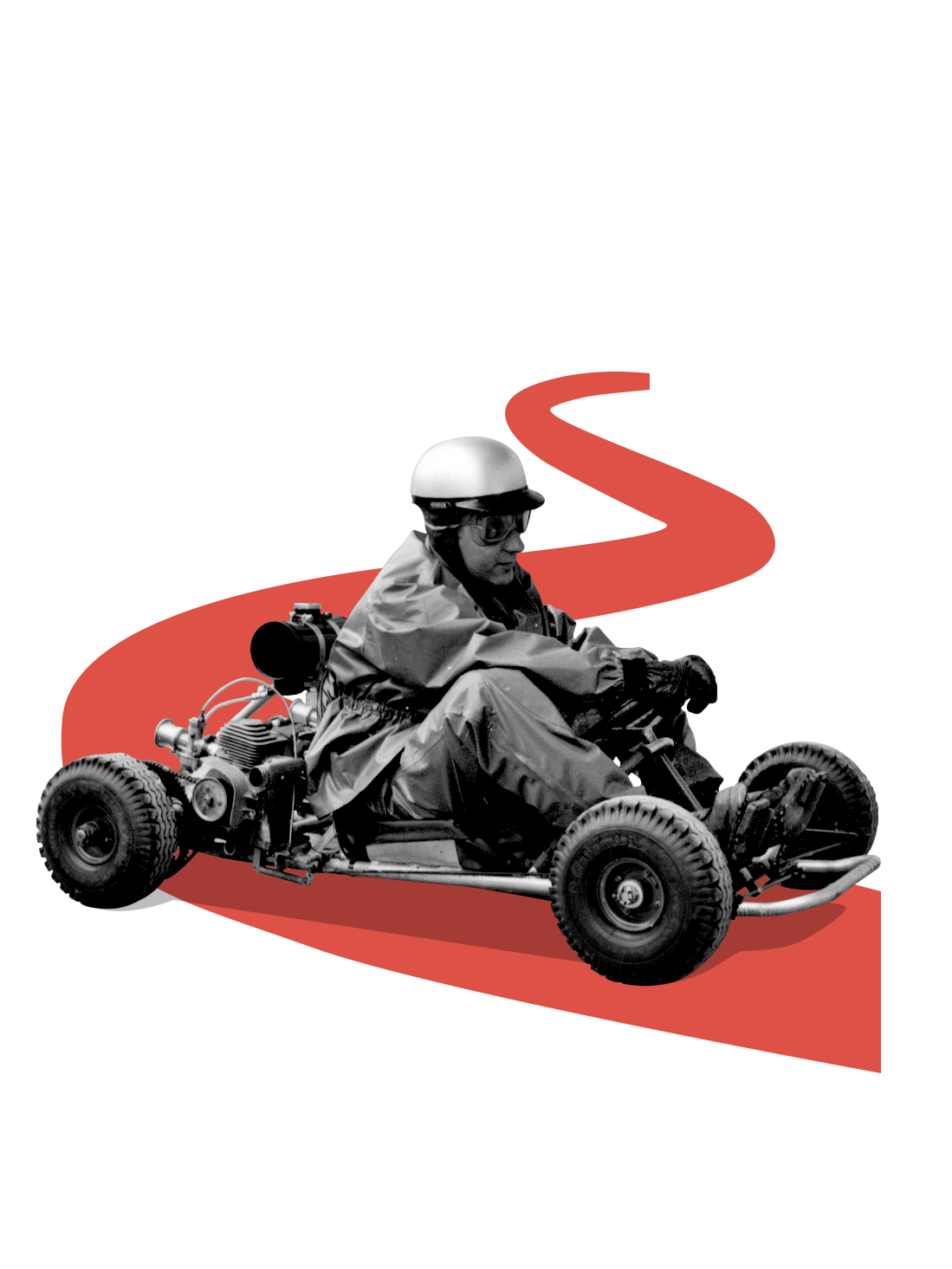
Another vehicle in the STIHL history of bygone heroes becomes a popular hobby within the Stihl family for a while: the go-kart. Hans Peter Stihl and his brother-in-law Willy Schetter are passionate go-kart drivers.
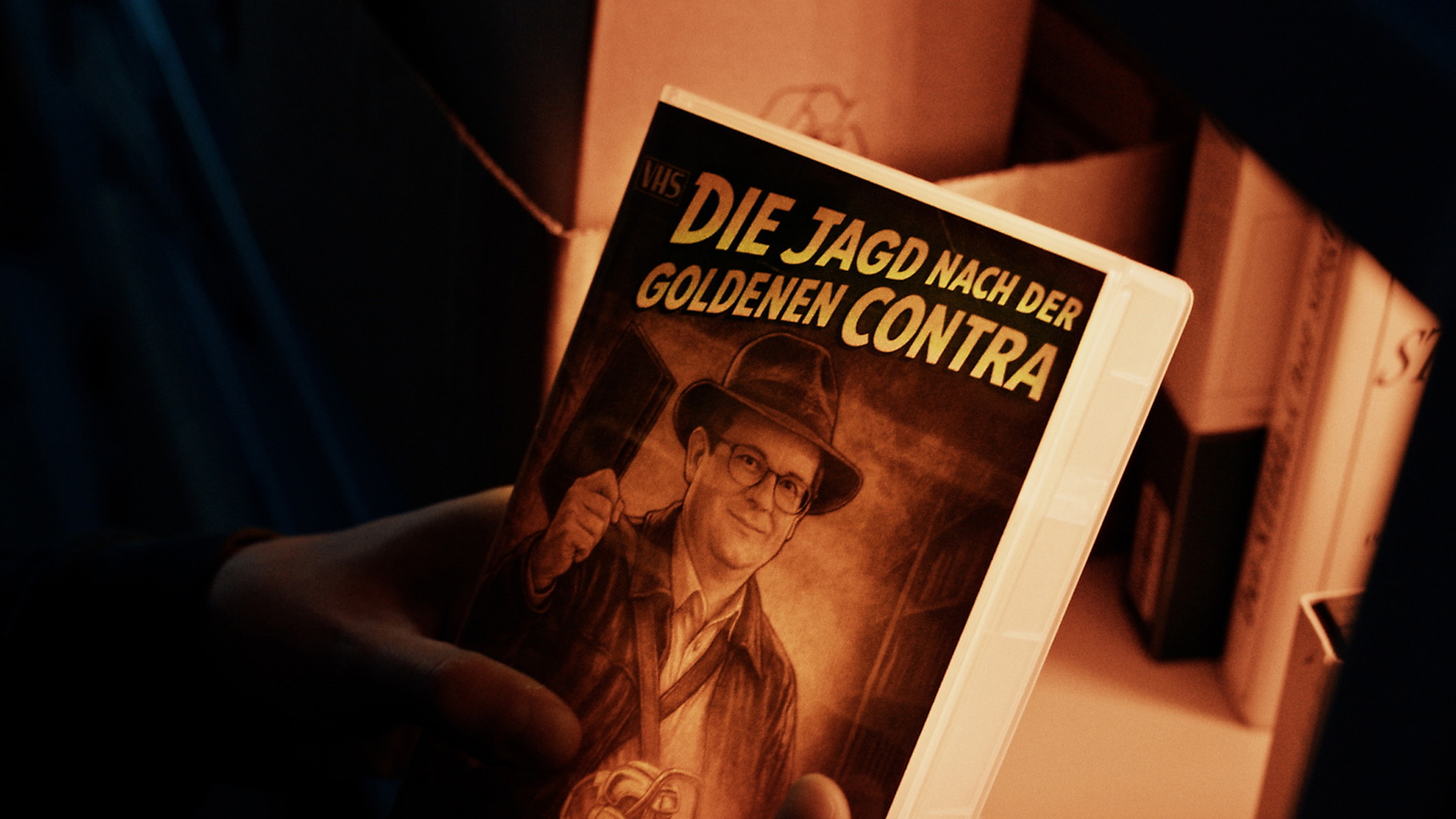
Enthusiasm for this new motorsport sweeps across Europe from the USA in 1959 – and STIHL is one of the first go-kart engine manufacturers in Germany. This involves a STIHL Contra engine being “boosted” according to a 1981 retrospective in the employee magazine “Blick ins Werk”.
2
×
Willy Schetter becomes German go-kart champion.
It is an exciting period of sporting achievements and high hopes – even though those hopes are often in vain. After an initial flurry, go-karting fades away and becomes increasingly specialized. By 1963 it is no longer an area of interest to STIHL. Instead the company prefers to focus on the thriving chainsaw business.
Even though go-karts draw the attention of STIHL for only a short time, the process of enhancing the engines is probably advantageous for the further development of the Contra. There is a good chance that other niche developments similarly have a positive impact on more enduring STIHL tools – even when they do not survive in their own right because their sales are too small or their functions stop being relevant.
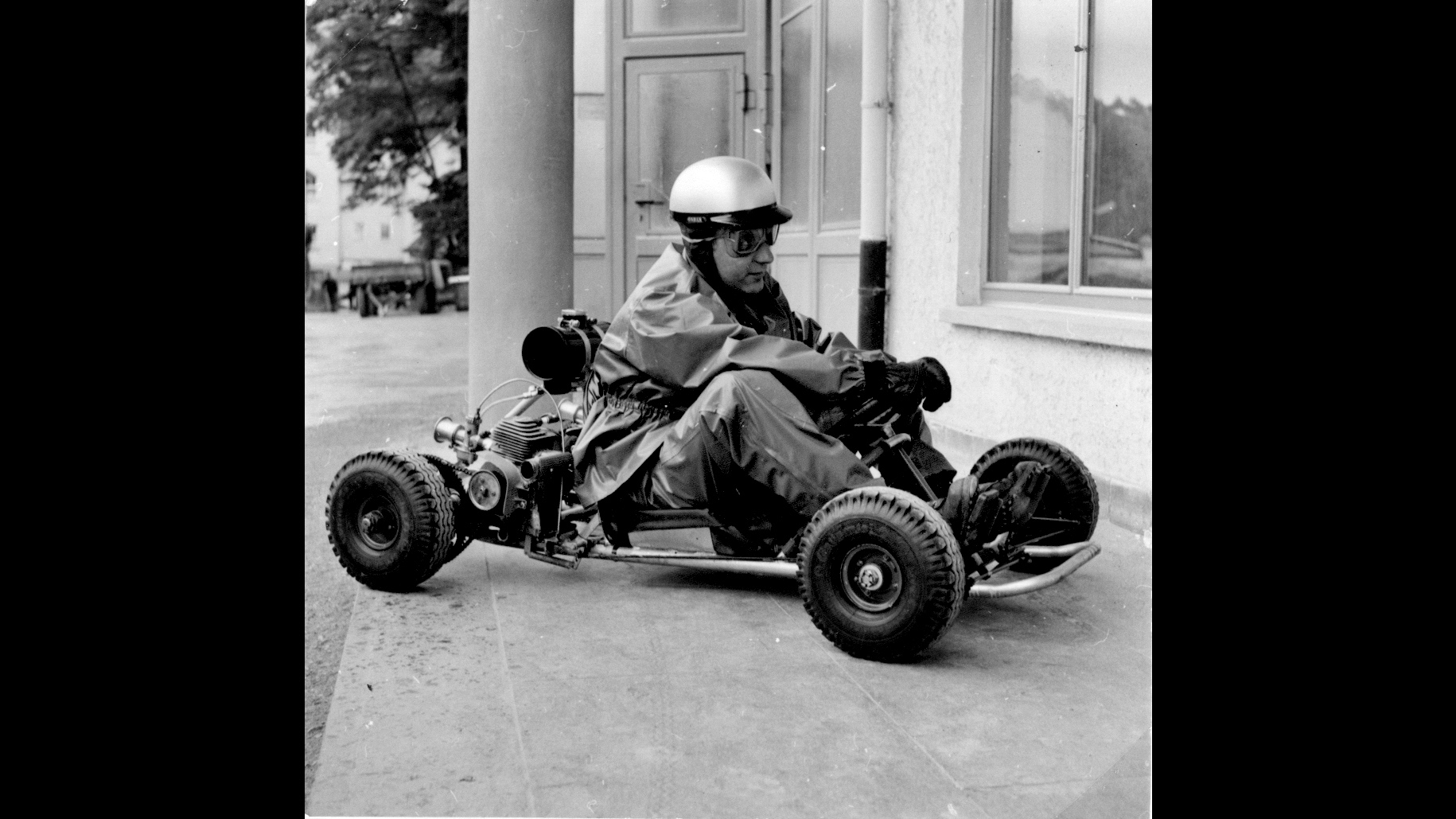
A brief but glorious chapter: STIHL’s go-kart era lasted from 1959 to 1963.
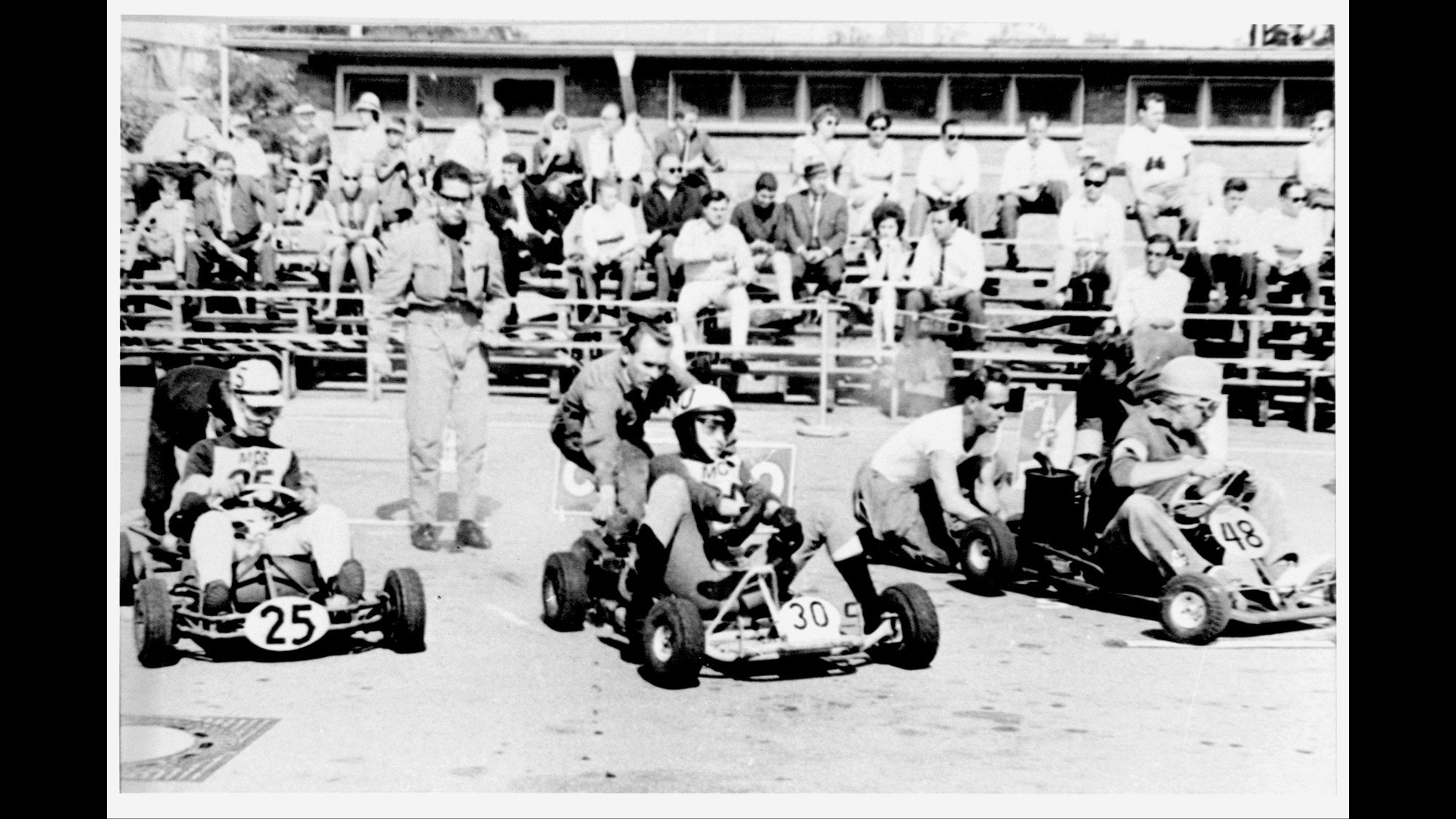
Ready, set, go: Cheers erupt at the start of a go-kart race.
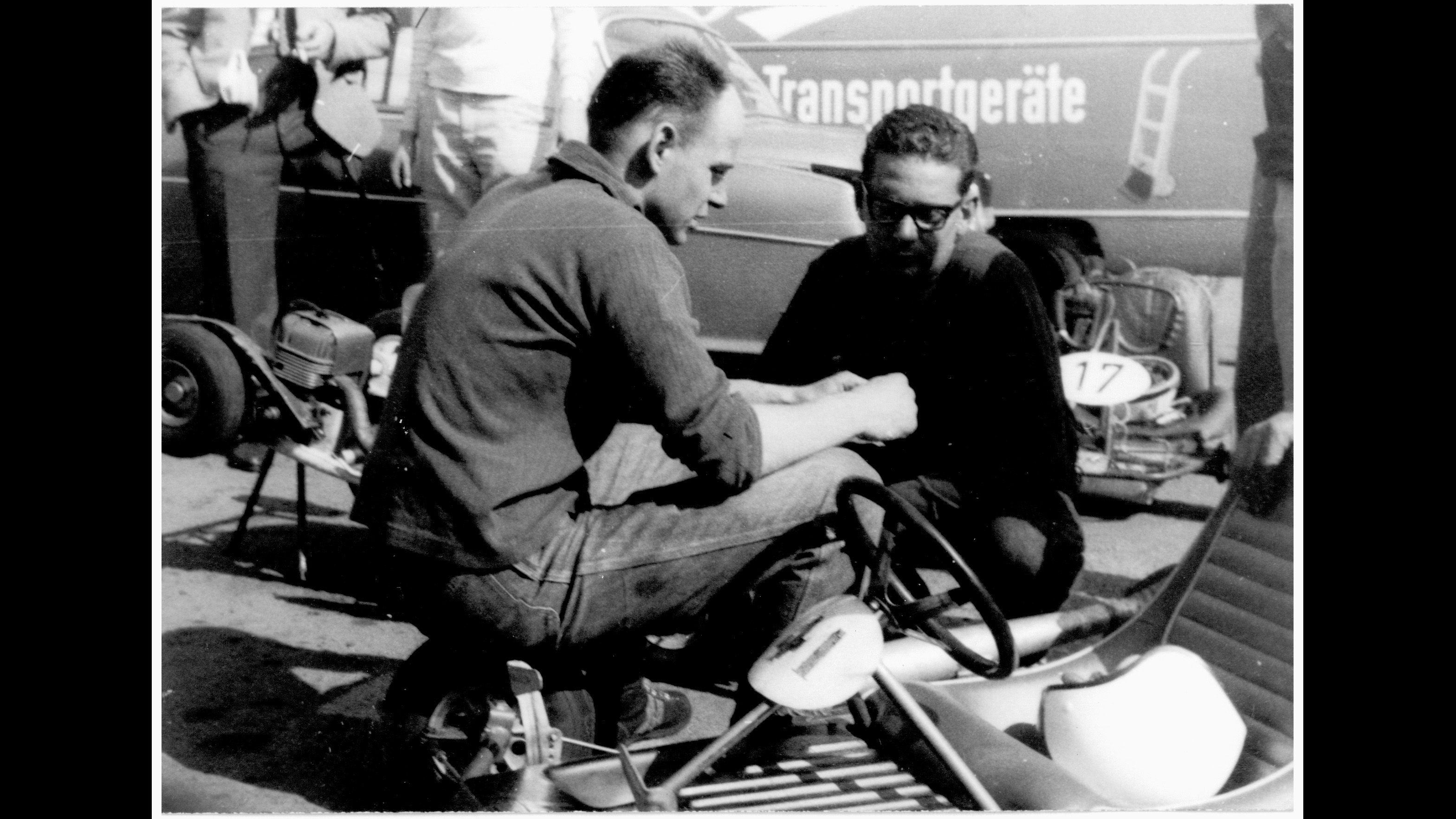
Expert talk with a legend: Go-kart star Willy Schetter (left) in conversation.
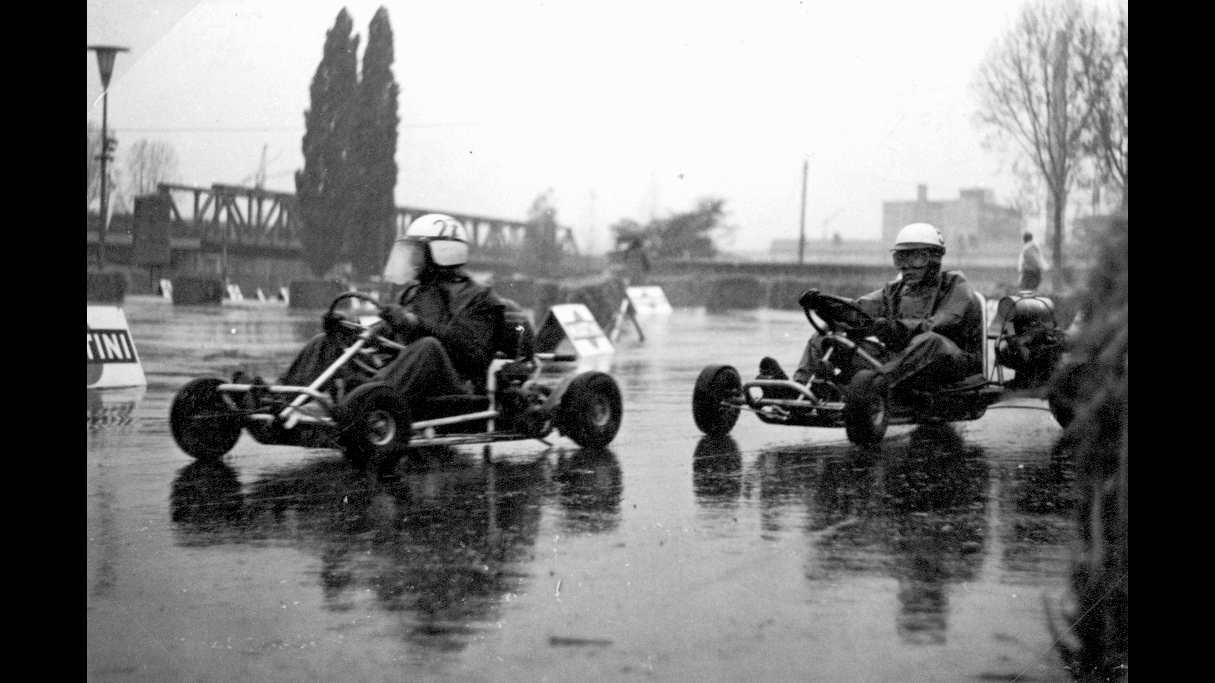
Thanks to STIHL engines, the go-karts stay in the race even on rain-soaked tracks.
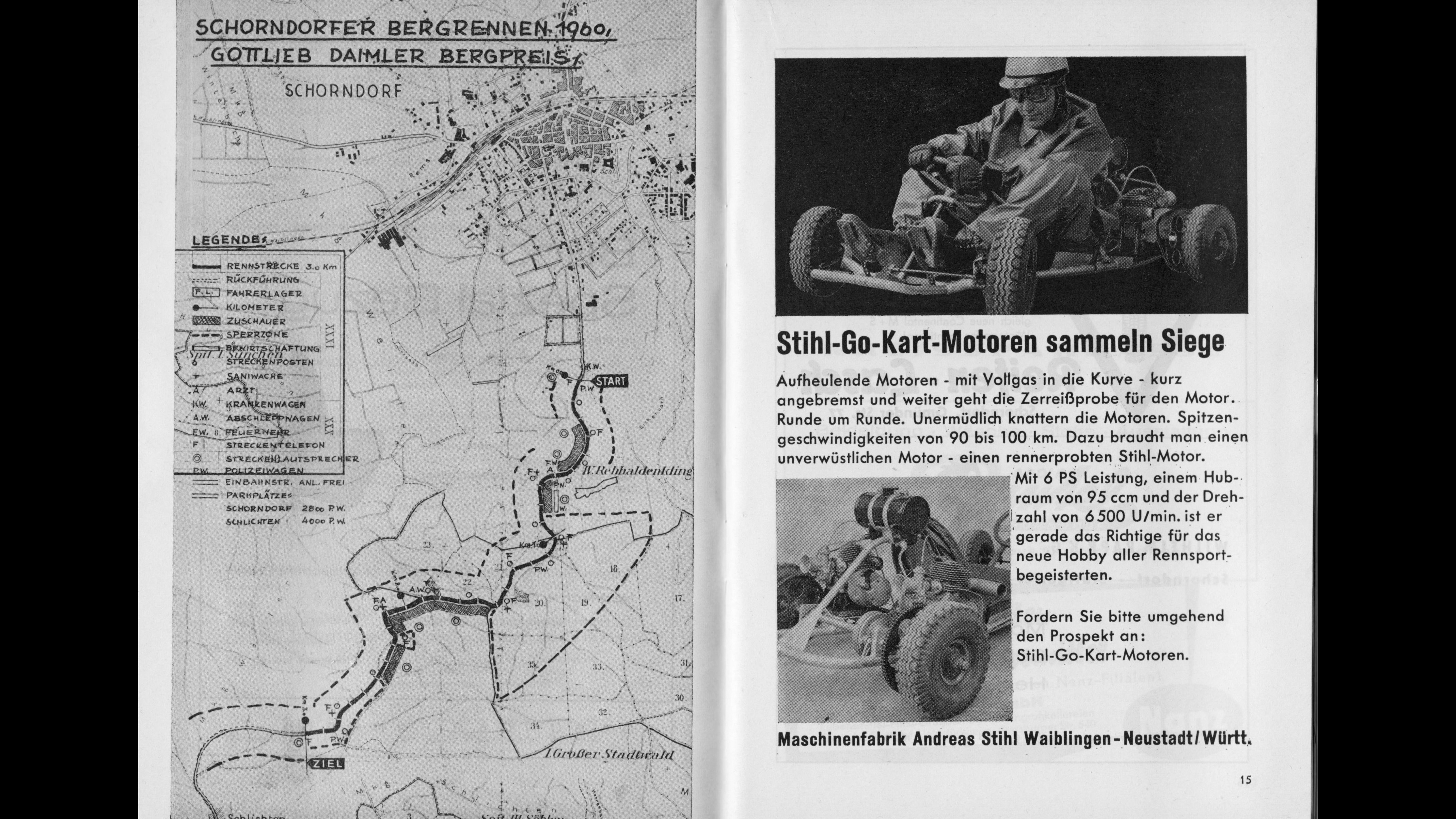
A 1960 magazine shows the route of the Schorndorf hill climb. Next to it, STIHL promotes its 6-hp go-kart engines.
Helper in the ice
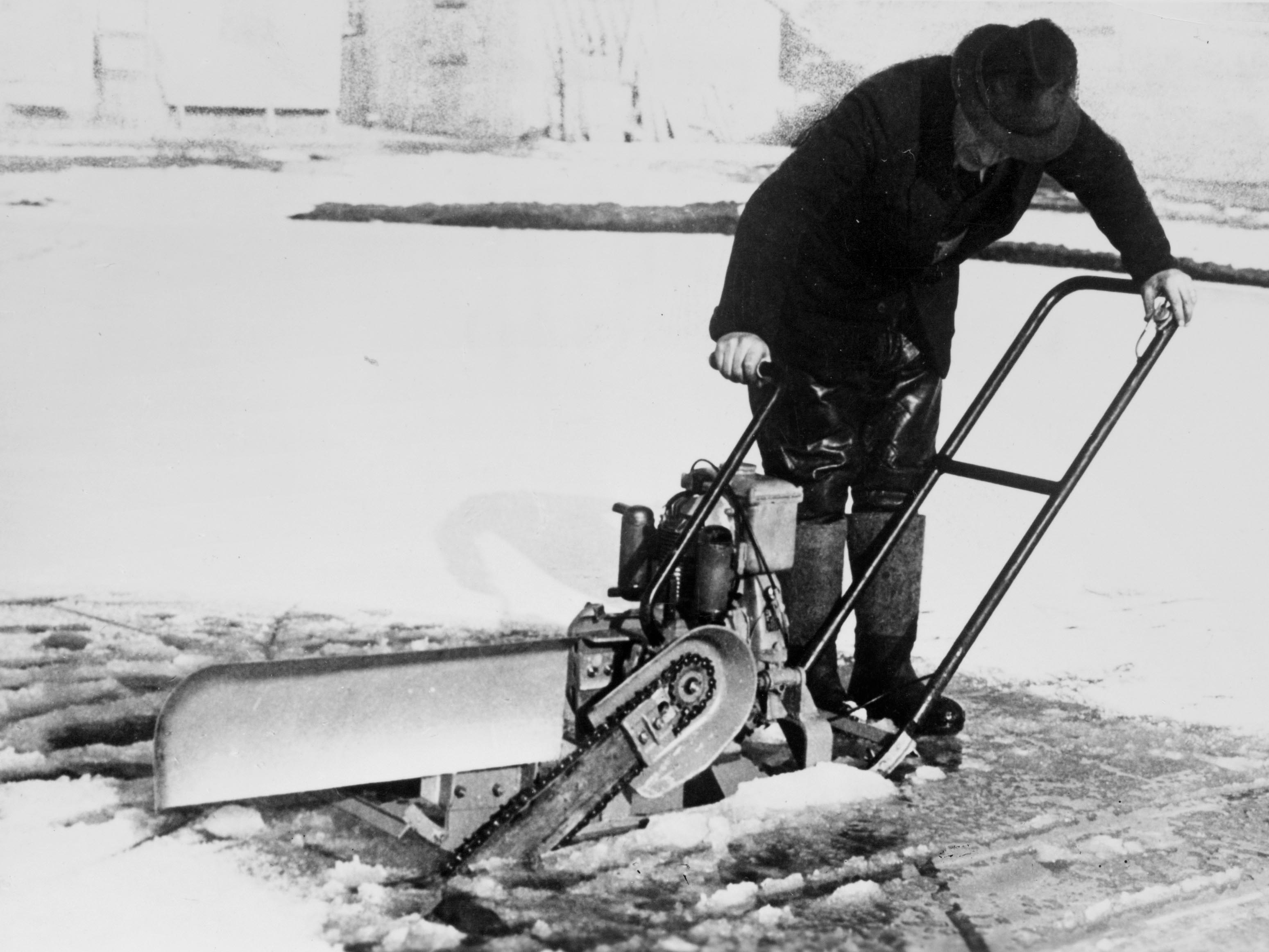
Meet the ice saw. A very handy tool if you want to obtain ice sheets from a frozen lake – whether for building a bobsleigh track, cooling beer or even to free ships frozen in place. The gasoline-driven ice saw can be easily pulled or pushed over ice by means of a sled. The promotional brochure states that the chain can cut through ice up to 60 centimeters thick “in just a few seconds.”
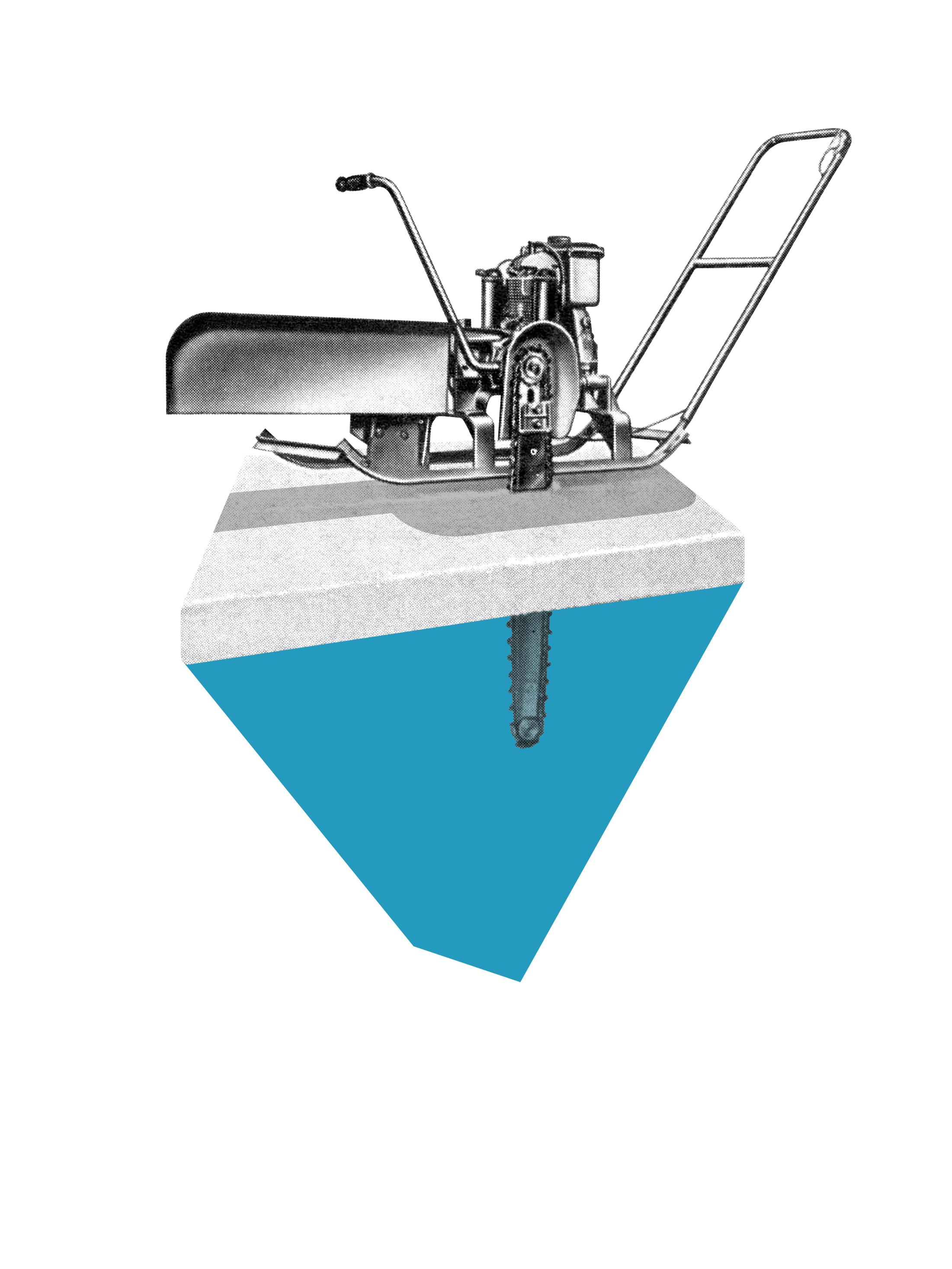
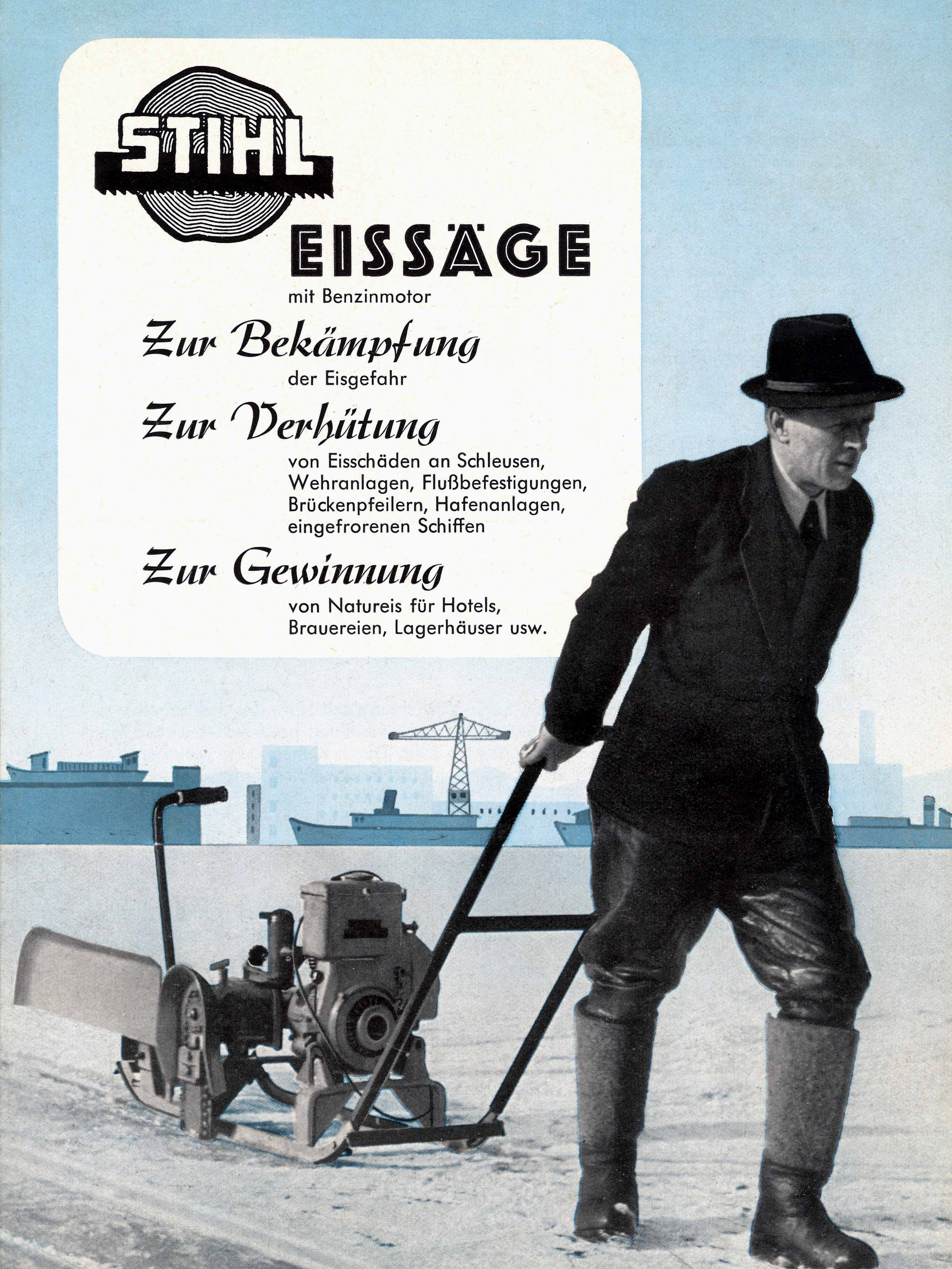
The STIHL ice saw is also a valuable helper in port facilities. With just a few simple steps, it can be shifted from horizontal transport position to vertical sawing position (around 1950).
Convenient operation
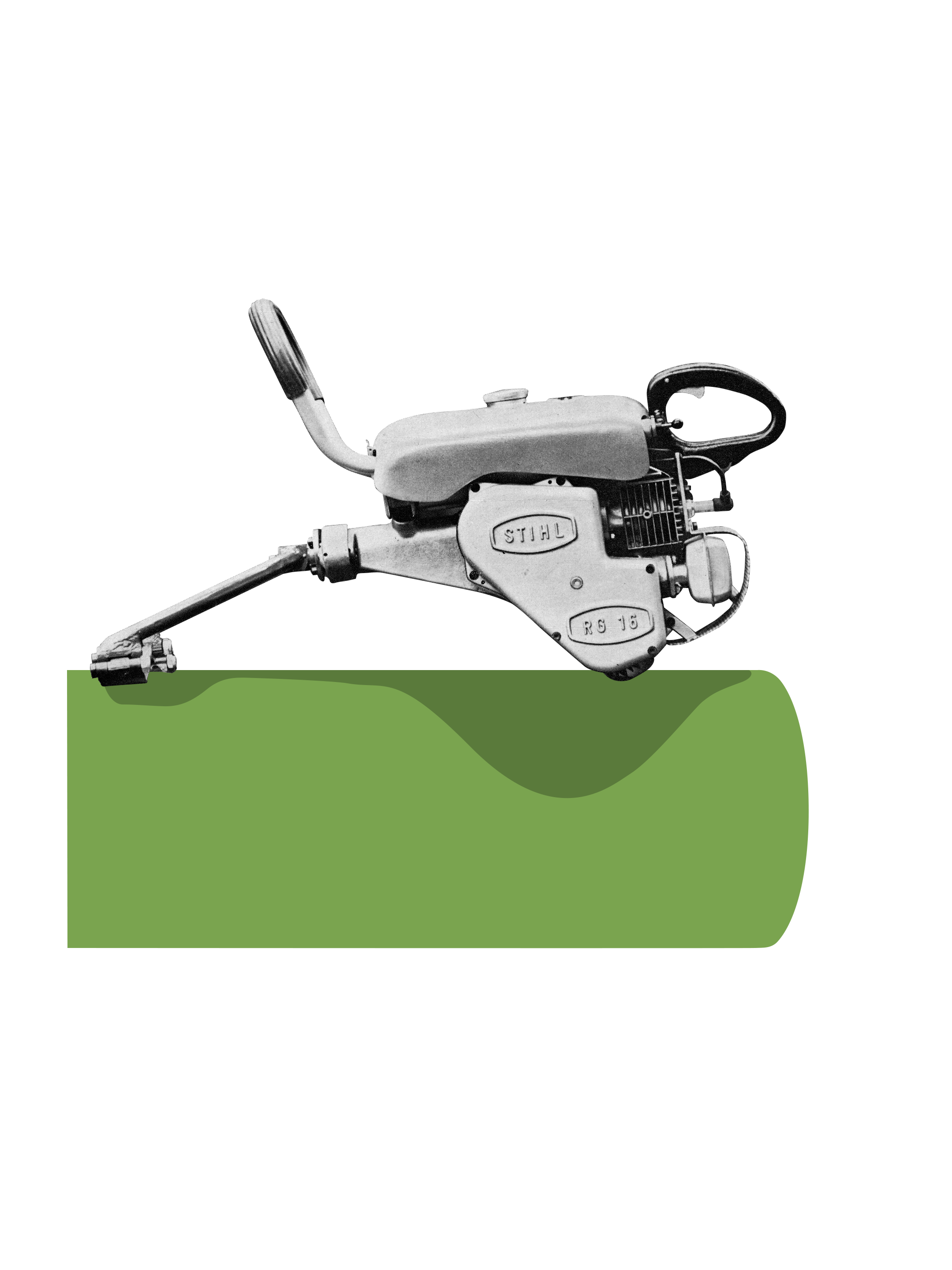
The STIHL RG 16 portable one-man debarking tool has not survived into the current portfolio either. A brochure declares that it makes debarking “almost as easy as using a chainsaw.” The machine moves itself on the trunk and peels the bark in wide strips.
Despite its convenient design, the STIHL RG 16 was discontinued after just four years, in 1972.
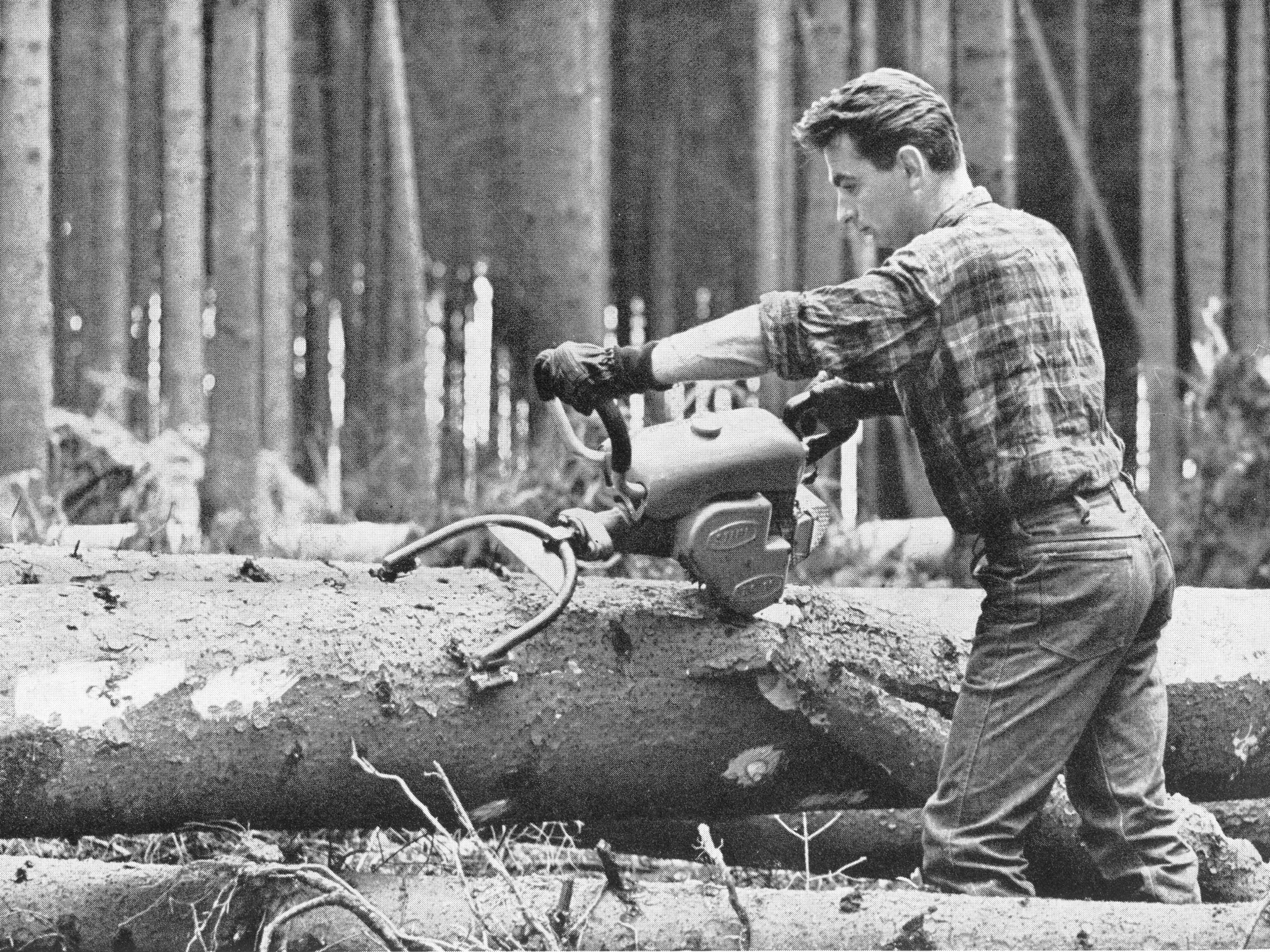
According to advertisements from 1970, the debarking machine is “very close to the ideal requirements of forest workers.”
The new STIHL RG 16 one-man debarking tool Excerpt from advertising brochure“The operator only needs to hold and steer the tool – nothing more.”
These are just a few of the more unexpected niche developments in the history of STIHL. We take a moment to honor them here. They all represent entrepreneurial ingenuity, experience from challenging and joyful times, with a few missteps and unsuccessful endeavors included. Sometimes knowledge is won only by trying – and failing. For example the understanding that focusing on core capabilities can be a real strength.
Which tool or equipment is shown? Click the orange button to reveal the next tile. The fewer clicks you need to recognize the STIHL tool, the better.
0%