

The Pioneer Ambassador
From the very beginning STIHL takes a very personal approach to gaining an international footing. Certainly company founder Andreas Stihl gets an early start on traveling for business, and his children Hans Peter Stihl and Eva Mayr-Stihl go on to set the right course for a worldwide presence. But individual employees also contribute to the company’s international profile. Most prominently Chief Instructor Julius Wörz, a former brand ambassador who took the chainsaw to the world.
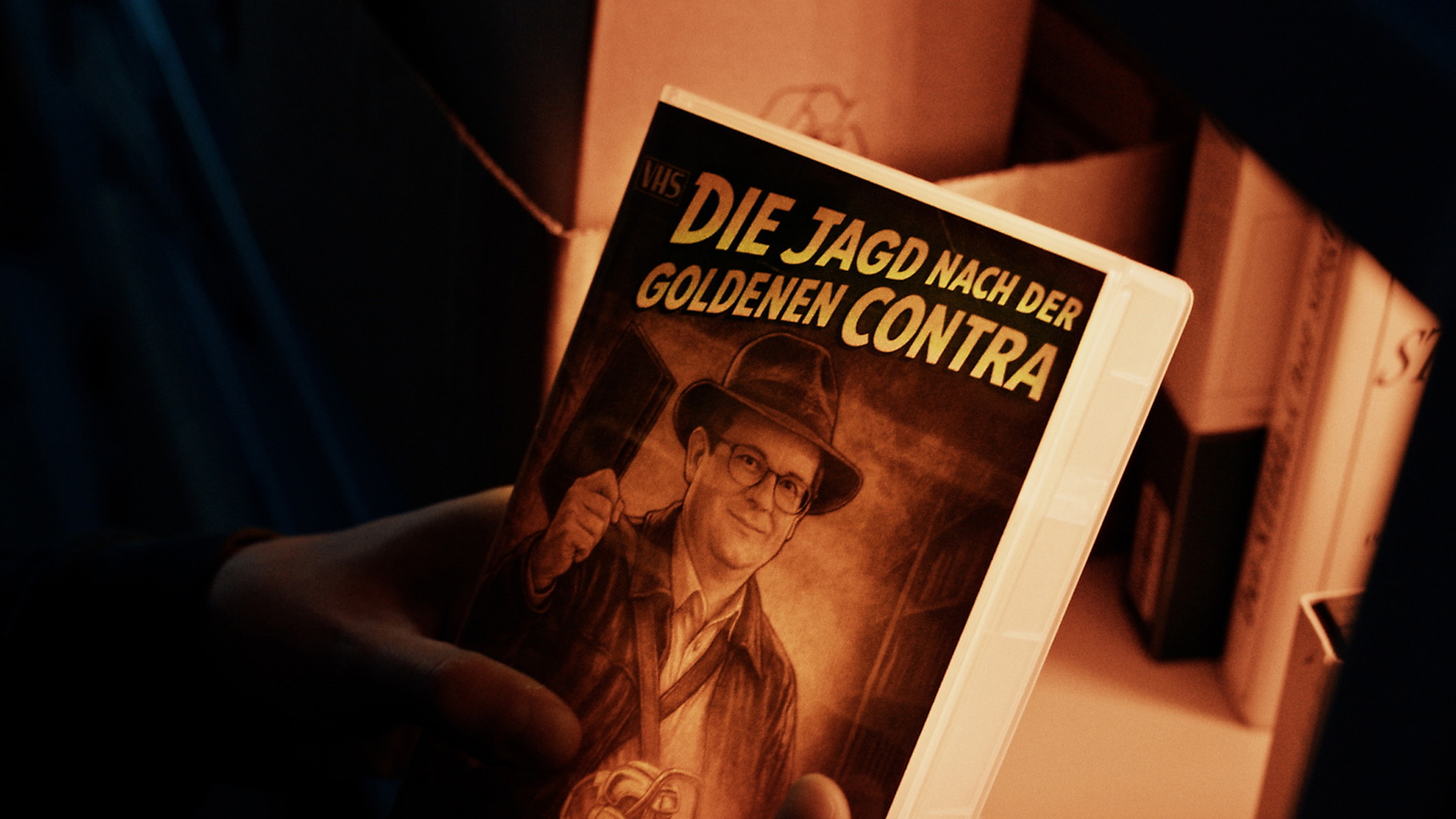
One chainsaw and one man who knows how to operate it: It doesn’t take much to convince people that this tool is exactly what they need. The man is called Julius Wörz, and the chainsaw is usually referred to as the “STIHL Contra”. From the 1950s to the 1980s the Chief Instructor at STIHL demonstrates it to anyone who wants to see it – anywhere in the world. What better way to captivate them? Convincing by demonstrating: This simple principle has been – according to Jochen Bürkle, Head of STIHL Brand World – an important ingredient in the recipe for successful internationalization of STIHL: “It was important to send someone to the most far-flung corners of the world. Not just the product, but a person to talk to, that I can ask questions of, someone who demonstrates and explains the tool to me. It meant people could associate a face with the tool.”
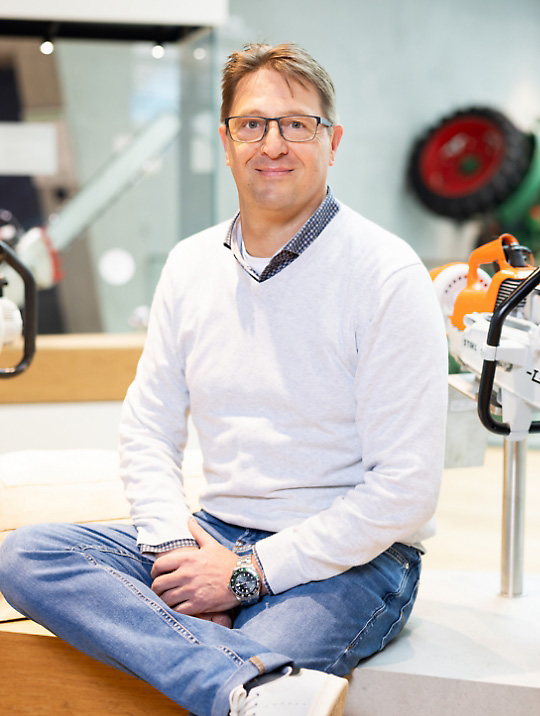
Jochen Bürkle Head of STIHL Brand World and grandchild of Julius Wörz“By making these journeys Julius Wörz gave the company access to new markets and helped to promote the STIHL brand.”
Courage, confidence and a love of improvisation
That face is one that Jochen Bürkle is very familiar with: Julius Wörz was his grandfather. There is plenty to tell about him. For example the fact that Julius Wörz takes a crash course in English in preparation for his first overseas trip. His travels to far-flung corners of the world are more than just jumping in at the deep end; his pioneering approach requires the Chief Instructor to draw on a good deal of courage, self-confidence, and a willingness to improvise. “Imagine,” says Jochen Bürkle, “he simply travels with his chainsaw to an unknown place, like Asia or Africa, talks to a contact he has never met in person before, and then spontaneously ventures into more remote areas.” In an era before mobile phones this all happens entirely without external contact, relying solely on the people who are there in person. Sometimes Julius Wörz travels by ship, sometimes by train – on occasion he has to wade through a river full of leeches. And sometimes he is turned back and has to go to another country to apply for a visa that gets him to his destination.

All paths lead to the world: In 1965, for example, Julius Wörz stopped off in Auckland, New Zealand.
Direct line to retail
Company founder Andreas Stihl also has no fear of unfamiliar terrain. By the 1930s, he has already traveled abroad to win customers, including to the Soviet Union and the USA. On these journeys he also sets up contacts which will be useful for distributing his chainsaws. There are already efforts in progress to sell the German-made chainsaws abroad, though the international business does not really pick up speed until the 1970s. A key step towards export success is taken in 1966, with the establishment of the company’s own sales office in Vienna. This creates a foundation on which to build a worldwide sales network. Having its own sales companies enables the business to directly cooperate with retailers, with no additional intermediaries involved. This not only reduces costs, but above all facilitates close contact with the market and customers. Being able to respond to customer needs is integral to STIHL becoming the world’s best-selling chainsaw brand in 1971 – and it remains so to this day. The company continues to establish sales subsidiaries over the decades, and there are now 44.
The carefree adventurer
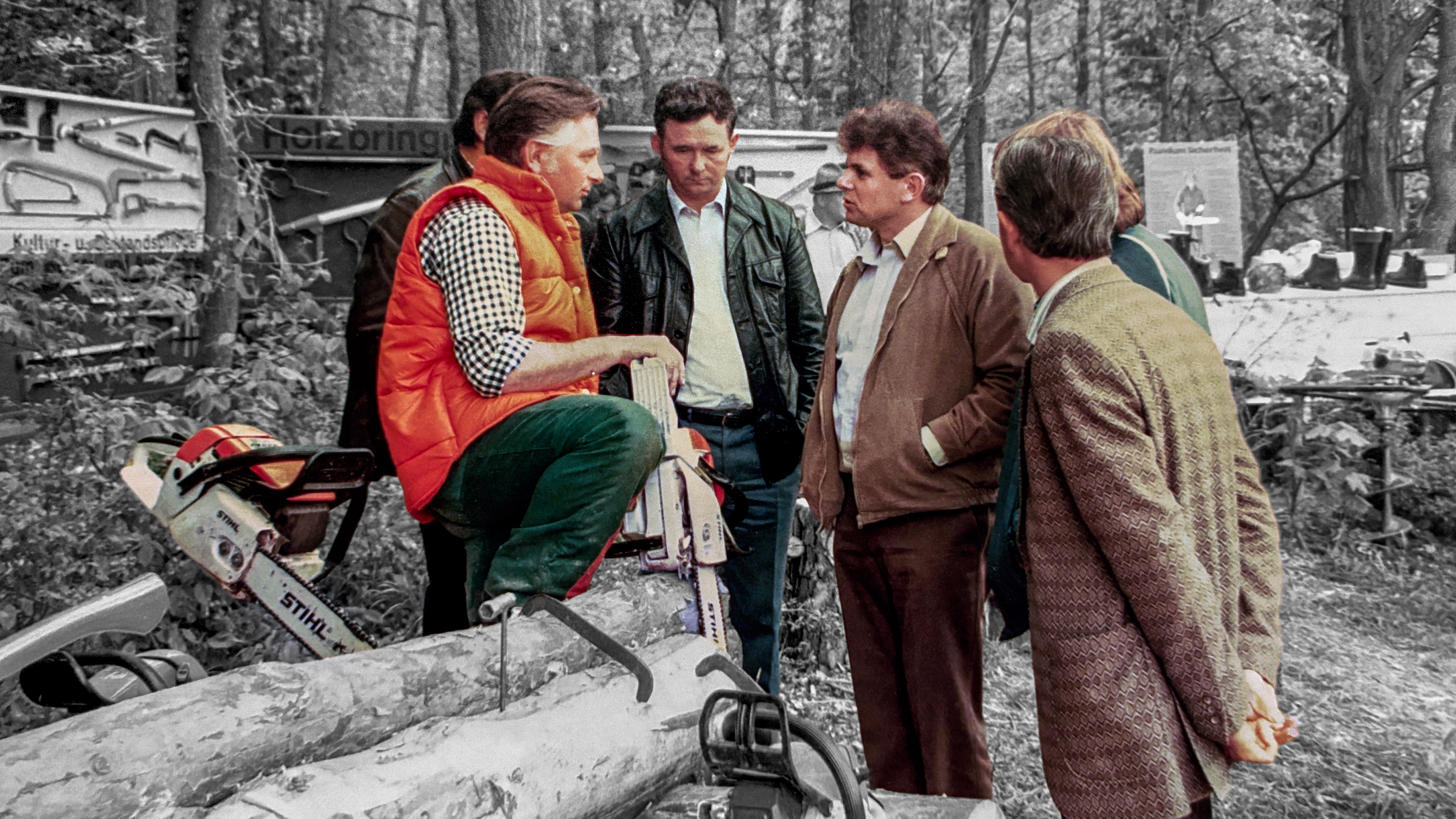
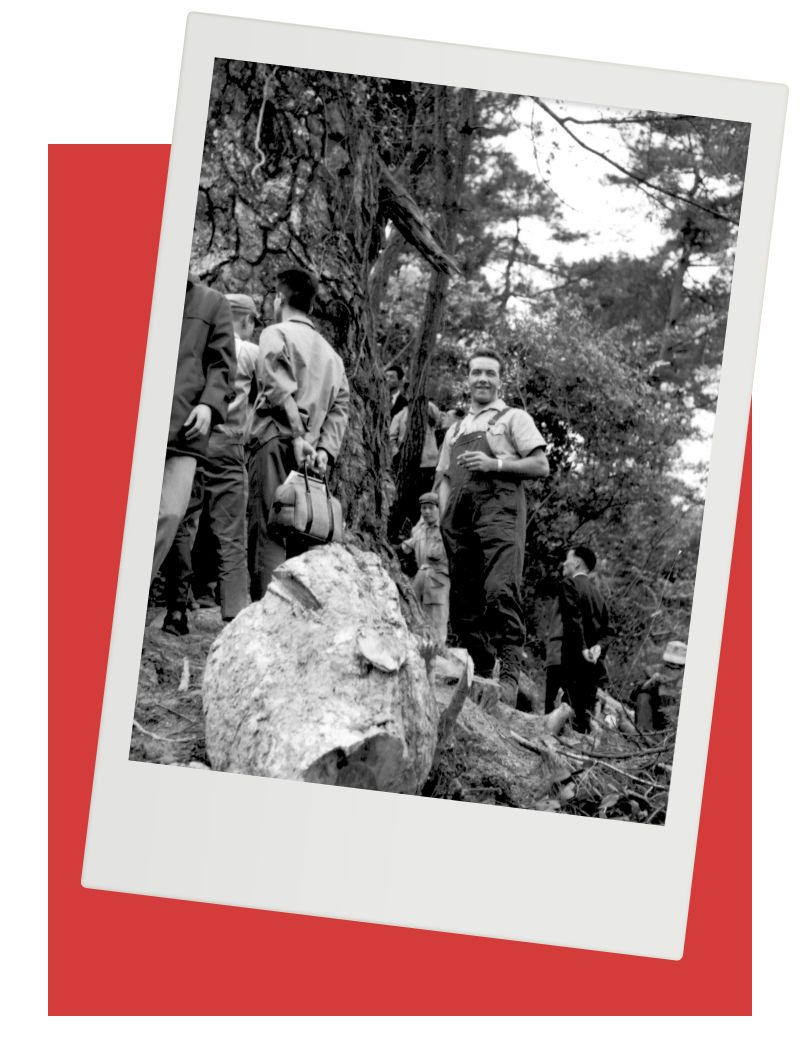
Even though he sometimes has to take the long way round, Julius Wörz always makes it to wherever there are people who work with wood. He demonstrates the chainsaw to them – usually by cutting down a tree – and explains its operation, maintenance, and care. And Julius Wörz makes an impression. “Once, in Japan, he was called to cut down a tree that was leaning over the roof of an old temple. No one had dared to remove the tree because they feared it might damage the temple. So now my grandfather should give it a go. It went well, but he approached it very respectfully, as he told me later.” Jochen Bürkle knows a lot of anecdotes like this. There are stories of his grandfather falling ill with a tropical pathogen; or barely escaping an aircraft accident because he returns to the hotel to retrieve a forgotten ring bought for his wife and therefore takes a later flight. “My grandfather was never worried that something might happen. He was always carefree and cheerful,” Jochen Bürkle recalls.
Julius Wörz on assignment in Japan in 1965.
His trips included a little sightseeing – here in Beijing, China, in 1975.

Adventure on the Mekong
Julius Wörz describes his adventurous spirit in his own words in his memoirs. He also talks about some unexpected or dubious situations. In Thailand, for example, he is regularly training young forestry officials at a forestry school. On one occasion he accompanies a chainsaw sales representative to Laos – traveling by boat across the Mekong River – to cheaply purchase wood for her sawmill; the representative wants to pay for the wood with chainsaws. Julius Wörz is a bit uneasy because he doesn’t have a visa for Laos. “The thought that the STIHL Lightnings [Editor’s note: the US name for the STIHL Contra] wouldn’t last long with the Laotians unless they were appropriately instructed compelled me to join.” The situation turns out fine, although Julius Wörz is briefly unsettled by a couple of woodcutters in uniform. The people he meets are “exceptionally kind and polite. And surprisingly, they are well informed about our chainsaws,” he writes. He nonetheless delivers a “short lecture on assembling the chainsaw and getting it ready for operation” - and looks on as wood is exchanged for STIHL power tools.
First-hand experience
STIHL begins demonstrating to customers back in the 1930s. It is a time-intensive but reliable way to ensure users can handle the equipment and be quickly taught how to care for and maintain it. In 1939 Julius Wörz starts his apprenticeship as a mechanic at STIHL at the age of 15, then remains with the company for 50 years. He is tasked with supporting the sales representatives as a demonstrator during the immediate post-war period. Soon these demonstrations and training become his main task. First he gains a lot of experience in this role within Germany. As Chief Instructor he is the first to instruct users abroad; in Europe from 1951, and overseas from 1960 – often in areas where a chainsaw has never been used before, such as in the Philippines. As such, in many places STIHL is the first chainsaw brand people encounter.
In the right place at the right time
Julius Wörz is successful at what he does. Perhaps that is down to his intrepidness and friendly, open manner, or perhaps because of the quality equipment he brings, handles expertly and presents with confidence. He is probably also assisted by the fact that he is often showcasing the chainsaw against no competition at all. “I think it’s most likely a combination of everything. He was simply the right person at the right time in the right place,” concludes Jochen Bürkle.

Over time, an increasing number of specialized dealers begin selling STIHL power tools and providing services abroad, such as in Nigeria, where Julius Wörz traveled in 1978.
“A STIHL man through and through”
“Even as a young boy I was captivated by my grandfather’s tales about his travels,” says Jochen Bürkle. “He had a deep connection to the brand and the company; he was a true ‘STIHL man’ through and through.” The bond with the employer gets passed to the grandson, who has now worked at STIHL for almost 40 years himself. For two years they actually both simultaneously worked at STIHL, before Julius Wörz retired in 1989 after exactly 50 years of service.
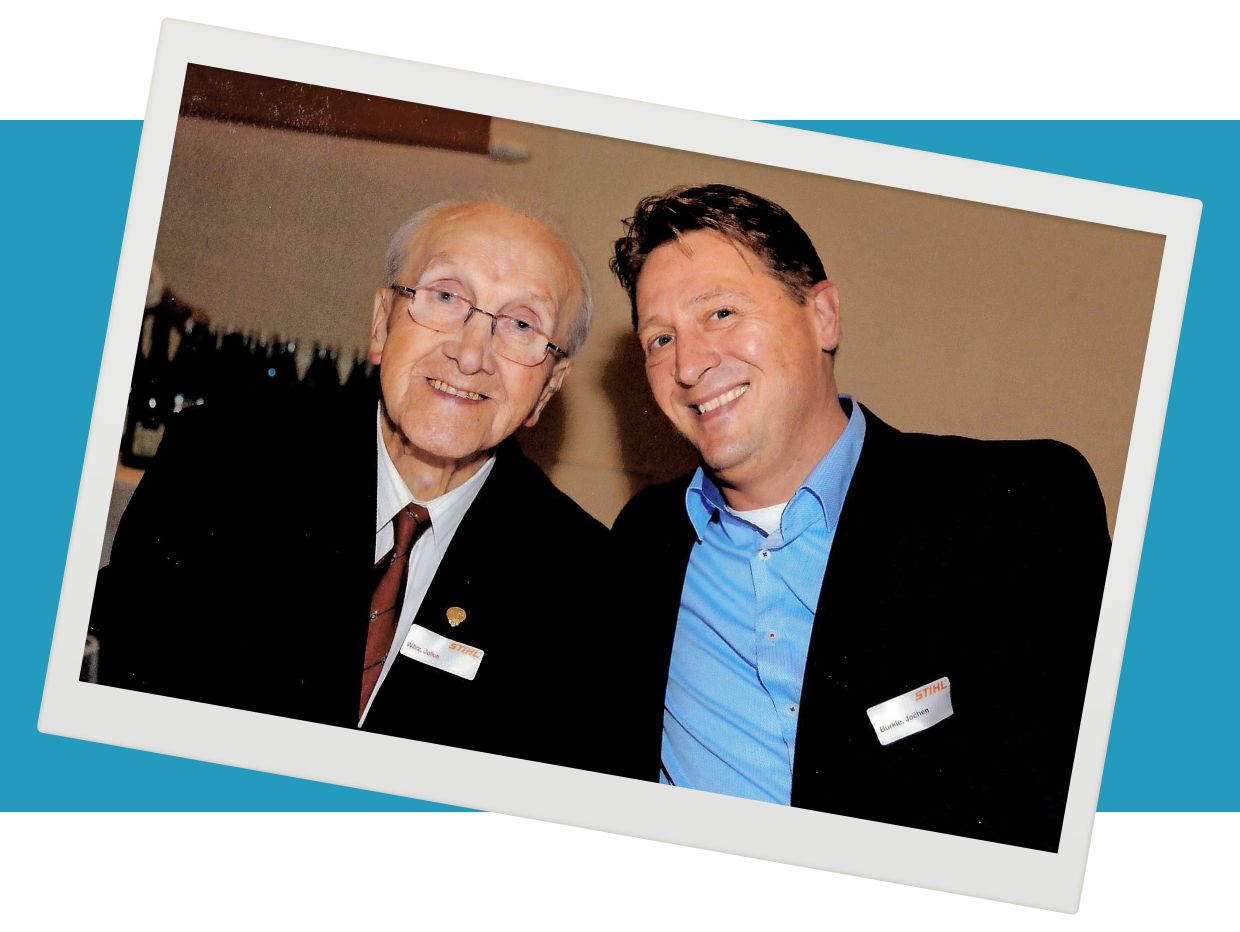
In 2017, Jochen Bürkle and his grandfather were still attending retirement celebrations at STIHL. The following year, Julius Wörz died at the age of 93.
Jochen Bürkle Head of STIHL Brand World and grandchild of Julius Wörz“There aren’t many people at STIHL who have experienced bigger adventures in the course of their working lives.”
Overseas production
STIHL sets up a production and sales company in Brazil in 1973. It is the first production site outside Germany. A year later there follows a saw chain factory in Wil (Switzerland) and a production site in Virginia Beach (USA). The foreign production facilities are of central importance for the company’s development, in part because they mitigate price pressures from wage costs, currency fluctuations and tariffs. Without overseas production, STIHL would perhaps not have achieved world market leadership in 1971. Hans Peter Stihl and Eva Mayr-Stihl spearhead an ambitious expansion project in the early 1970s. The siblings have just taken over the company management from their father Andreas Stihl. While Hans Peter Stihl initiates the expansion strategy, CFO Eva Mayr-Stihl understands how to maintain financial prudence amidst all kinds of risks. They begin on a small scale, but soon start investing boldly when market opportunities present themselves. Today, STIHL manufactures products in nine countries around the world.
Hans Peter Stihl, 2006 Former STIHL Managing Director and Honorary Chairman of the STIHL Advisory Board and Supervisory Board“We cannot supply the whole world from Germany.”

Julius Wörz (left) with Hans Peter Stihl at a 2017 retirement celebration.
A calling
Julius Wörz’s enthusiasm for STIHL saws and their unparalleled reputation is certainly cemented beyond Germany’s borders. Traveling and being an ambassador for STIHL is a passion for Julius Wörz – his calling. “It wasn't always easy for the family, especially my grandma, that we saw him so infrequently,” recalls Jochen Bürkle. His grandfather is sometimes away for up to three months at a time with no one being able to reach him or knowing exactly where he is. “But my grandmother accepted it and never questioned it.” She loved being in contact with people from all over the world, and it was not uncommon for friendships to develop from Julius Wörz’s professional acquaintances. Some of these are still nurtured by Jochen Bürkle’s grandmother today, even a few years after her husband’s death in 2018.
Jochen Bürkle frequently encounters indications that his grandfather is not forgotten. For example when partners from all over the world visit STIHL Brand World and appreciatively recall Julius Wörz in conversation. Within STIHL too, the globetrotter’s reputation precedes him – even though many employees never met him personally. “He was always out and about,” says Jochen Bürkle with a smile.