
A look at our roots
Even the mightiest tree was once a seedling. STIHL started small too, as a one-man operation in the heart of Stuttgart. From that base the company expanded its reach further and further. These historic images take a journey into our origins and visit the birthplace of the STIHL chainsaw – with some paths continuing right up to the present day.
Not many people realize it, but STIHL was in fact not founded in Bad Cannstatt. The first company headquarters was actually located in the heart of downtown Stuttgart. That is where the journey starts – where it all began...
The foundation site
Andreas Stihl starts an engineering firm in 1926, operating as a one-man company. It is located on the fourth floor at 43 Rotebühlstraße, in the center of Stuttgart. At this address Andreas Stihl starts out designing and building low-pressure steam boilers and working as a dealer of woodworking machines from Teichert & Sohn. He also serves as a representative for Berlin-based company E. Ring & Co., manufacturer of the “Rinco pruning and felling machine.” On the side Stihl is developing his own design for a chainsaw, working on an idea he has been considering since 1923.
In 1928 and 1929, 43 Rotebühlstraße is also the home address of Andreas Stihl. It continues to be his company office location until a move to Cannstatt in 1930.
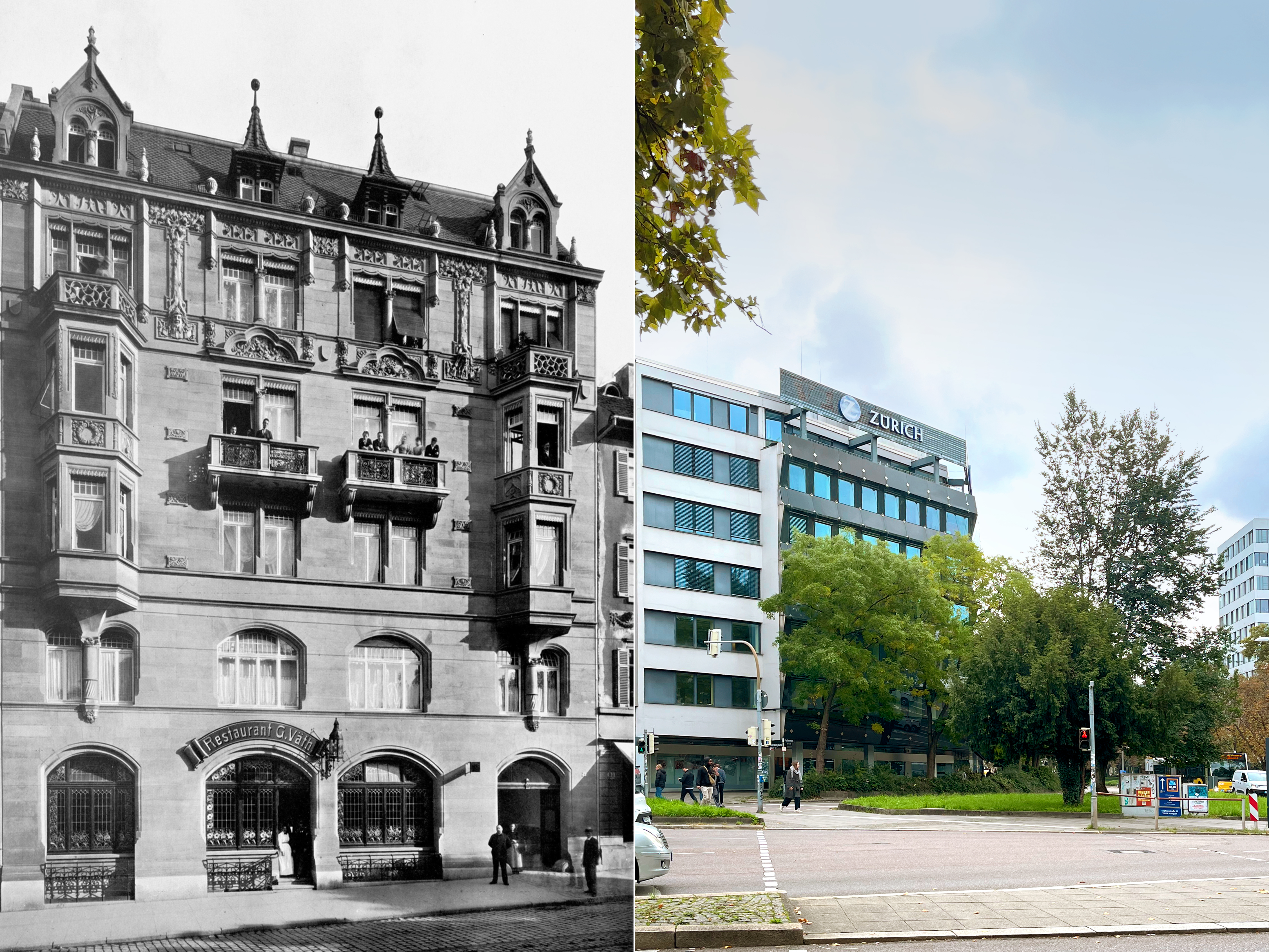
Left: Andreas Stihl‘s first office was at 43 Rotebühlstraße in Stuttgart (around 1898).
Right: Traffic now flows where the building used to stand.
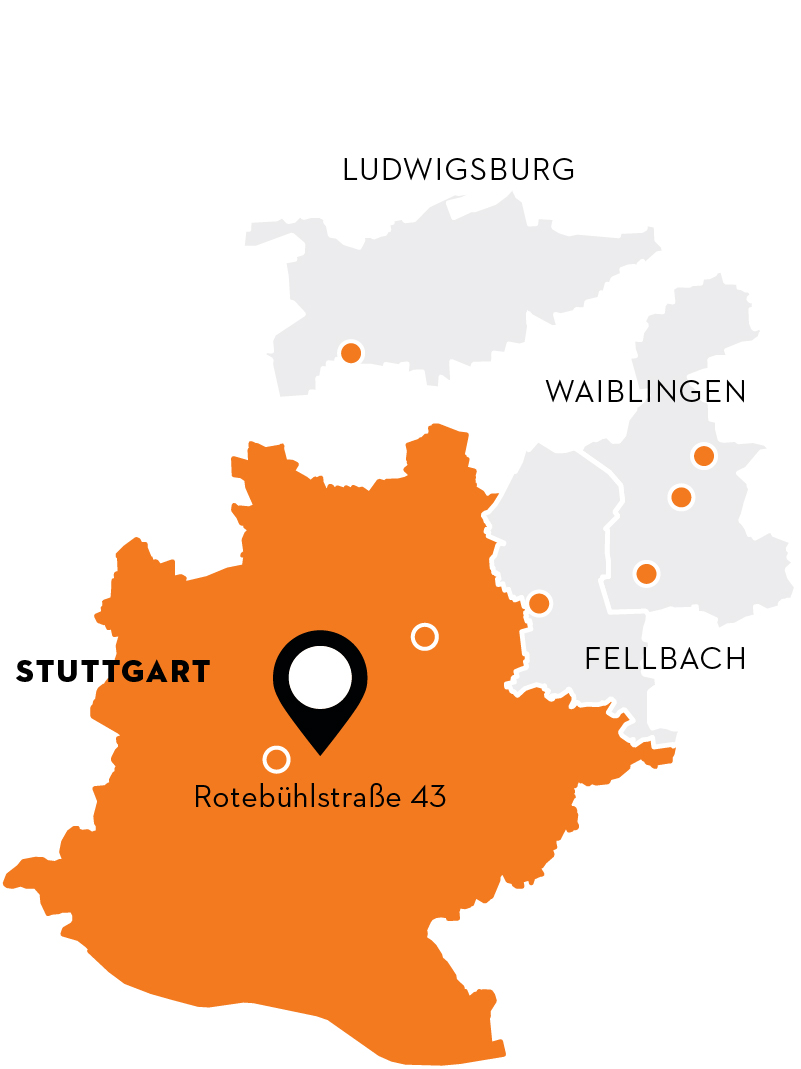
1926 – Rotebühlstraße 43, Stuttgart city center
From office building to street
The building on Rotebühlstraße was completely destroyed by air raids on September 12 and 13, 1944, and it was not rebuilt. The site is now dominated by roads: There is a green traffic island where the building used to stand.
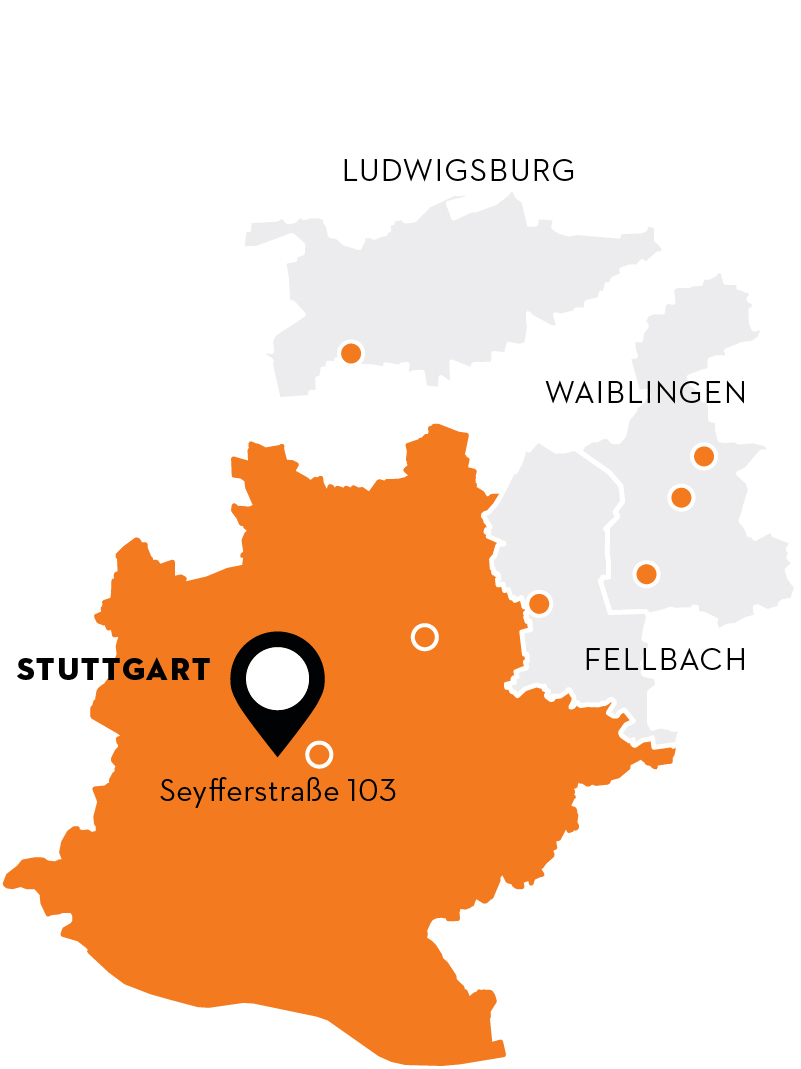
1927 – Seyfferstraße 103, Stuttgart city center
Where the chainsaw was born
Andreas Stihl needs a workshop in which to manufacture his own chainsaw design. It happens in 1927, when Stihl takes on a courtyard building at 103 Seyfferstraße. The workshop is on the first and probably second floors.
Though the young engineer has previously rented a workbench in a locksmith shop on Marienplatz, the first chainsaw is built in his own workshop on Seyfferstraße. This address is also the birthplace of the first portable gasoline chainsaw from STIHL, which was produced in 1929.
Left: The first STIHL in-house workshop was located at 103/1 Seyfferstraße in Stuttgart-West (undated).
Right: The building still stands, in the courtyard of a residential block.
The first employees stay until retirement
When Andreas Stihl starts manufacturing tools himself in 1927, he quickly needs support. The first employees he takes on are Alwin Fauser and Karl Gutjahr – both will remain with the company until retirement. Because of strong demand, the workforce swells to eight people within the year.
STIHL becomes a “machine factory”
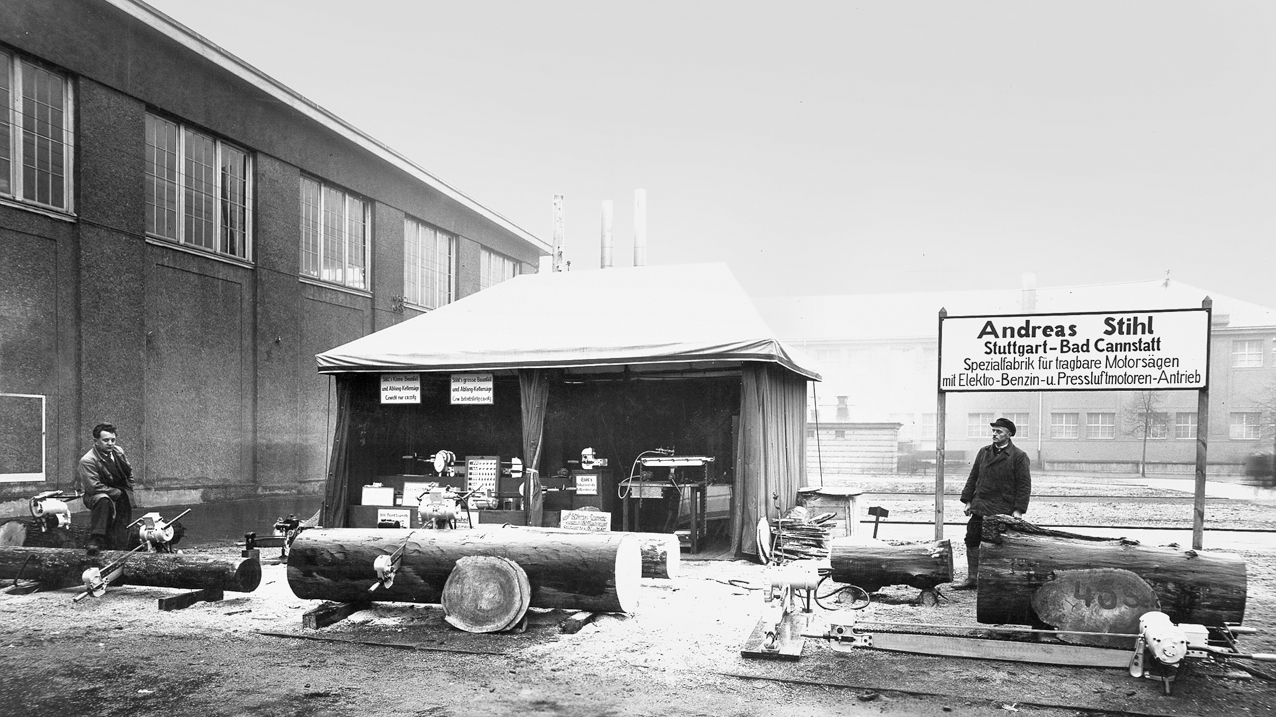
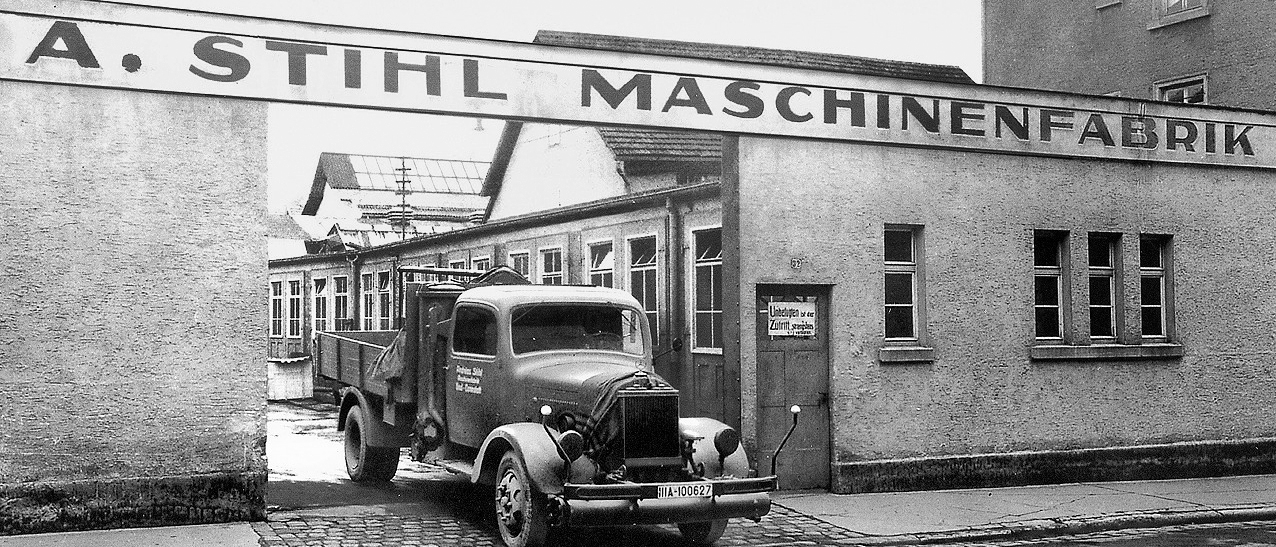
The company now employs 25 people, and is renamed “A. Stihl Maschinenfabrik” in 1929. The chainsaw business is going so well that more production space is needed. As STIHL expands, it establishes a new base in the Stuttgart district of Cannstatt (named Bad Cannstatt from 1933 onward), and the office and workshop relocate to 65 Hallstraße in 1930.
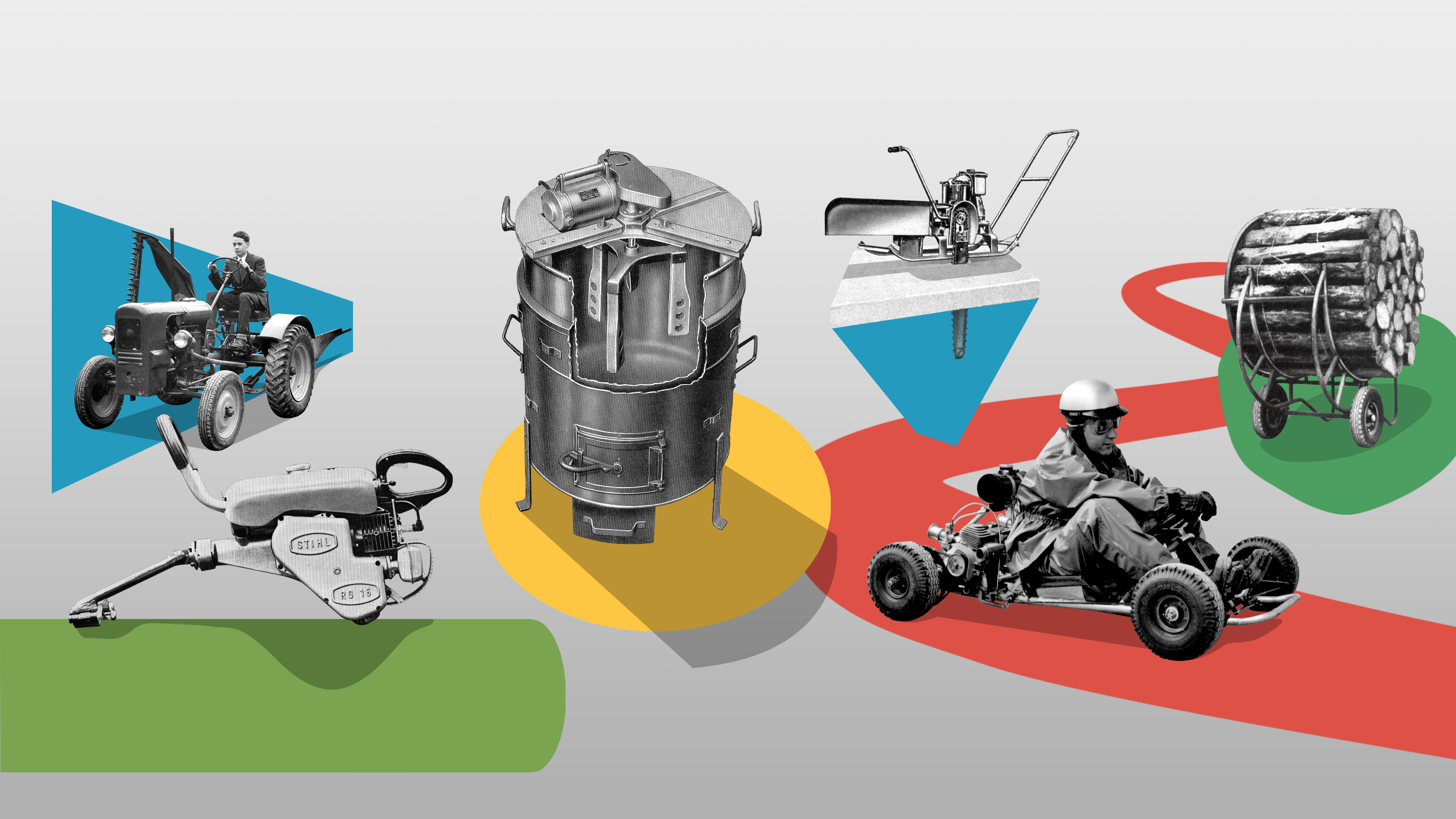
Andreas Stihl initially leases the premises from road roller manufacturer Seitz; that company goes bankrupt in 1932 and Stihl purchases the property along with machinery and technical equipment – a decision that is accompanied by some financial risk. With the economic crisis in flow, STIHL even spends some time manufacturing washing machines in order to stay solvent. This is an early example of the agile inventiveness, entrepreneurial spirit and willingness to try new things which will help the company successfully navigate through economic crises on multiple occasions.
On-side with the bank
The purchase of the Seitz property is also appreciated by Cannstatter Volksbank, which would otherwise have to take over the estate. In return the bank supports STIHL during periods of financial difficulty.
As well as STIHL tools, from 1943 the Bad Cannstatt factory also manufactures KS 43 unit chainsaw components for the Wehrmacht. In summer 1944 the factory is so severely damaged by a bomb attack that all production is relocated to Neustadt near Waiblingen. STIHL has already acquired a former paper factory there in 1938. The Bad Cannstatt premises are sold in 1950 and close one year later.
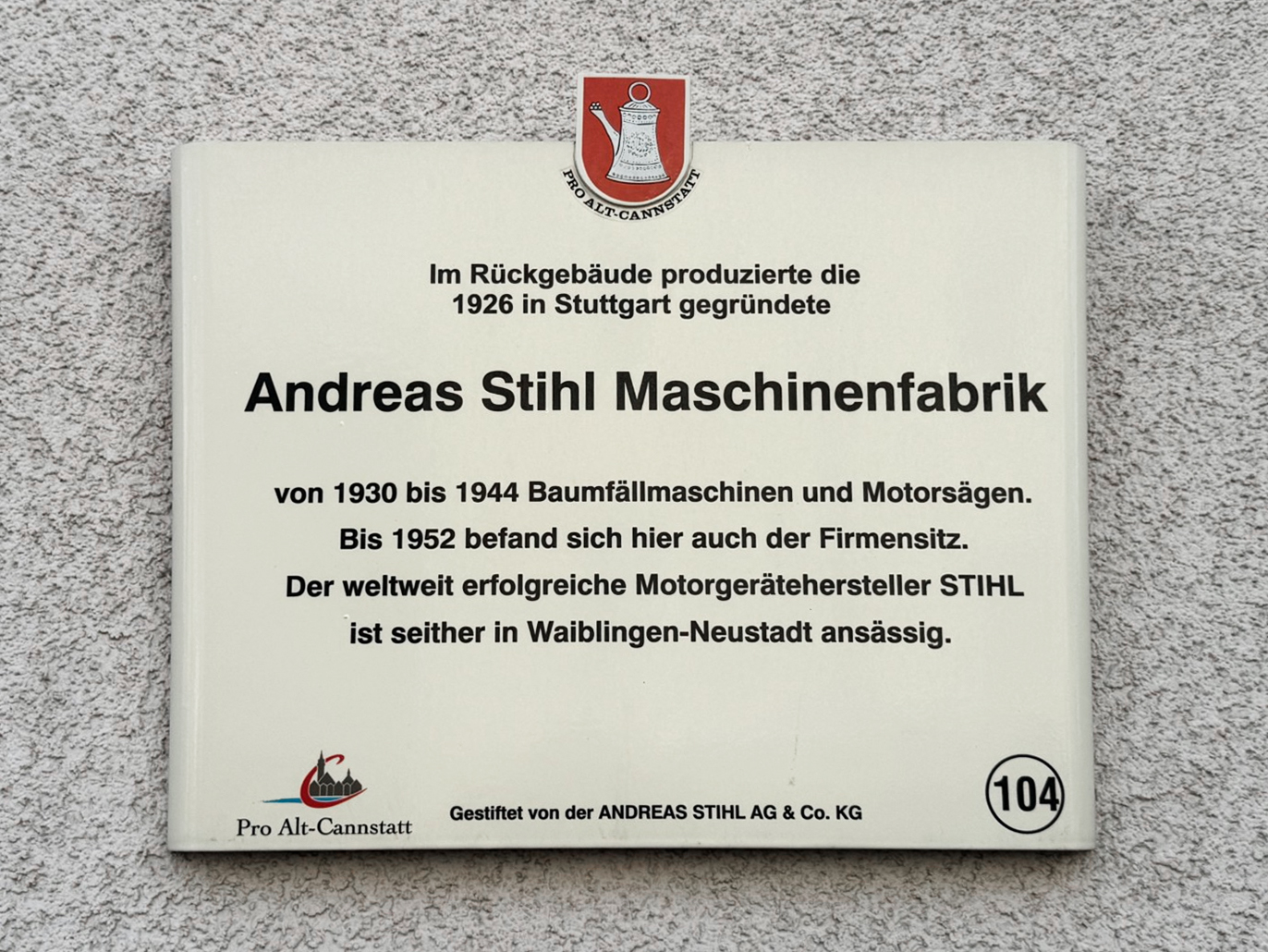
There is a commemorative plaque at the current building at 65 Hallstraße.
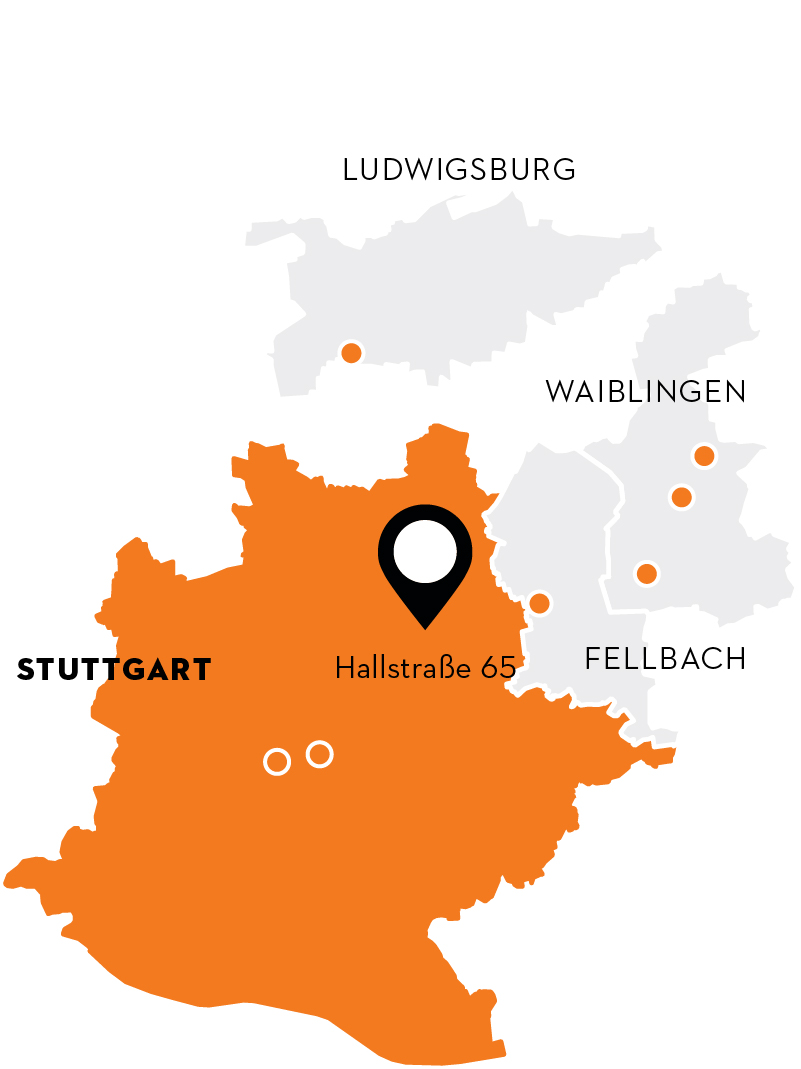
1930 – Hallstraße 65, Bad Cannstatt
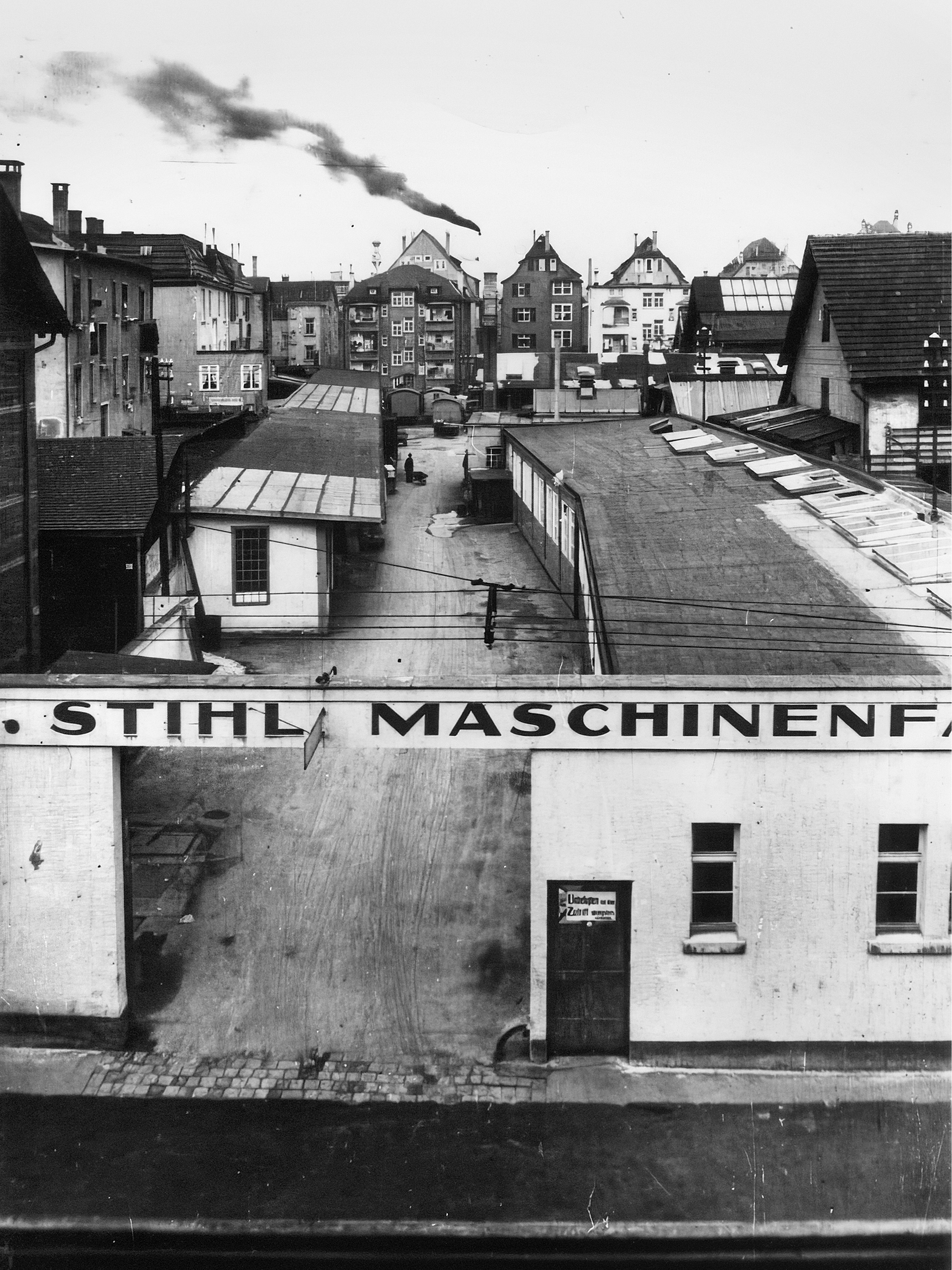
In 1930 STIHL opened its “machine factory” in Cannstatt (undated).
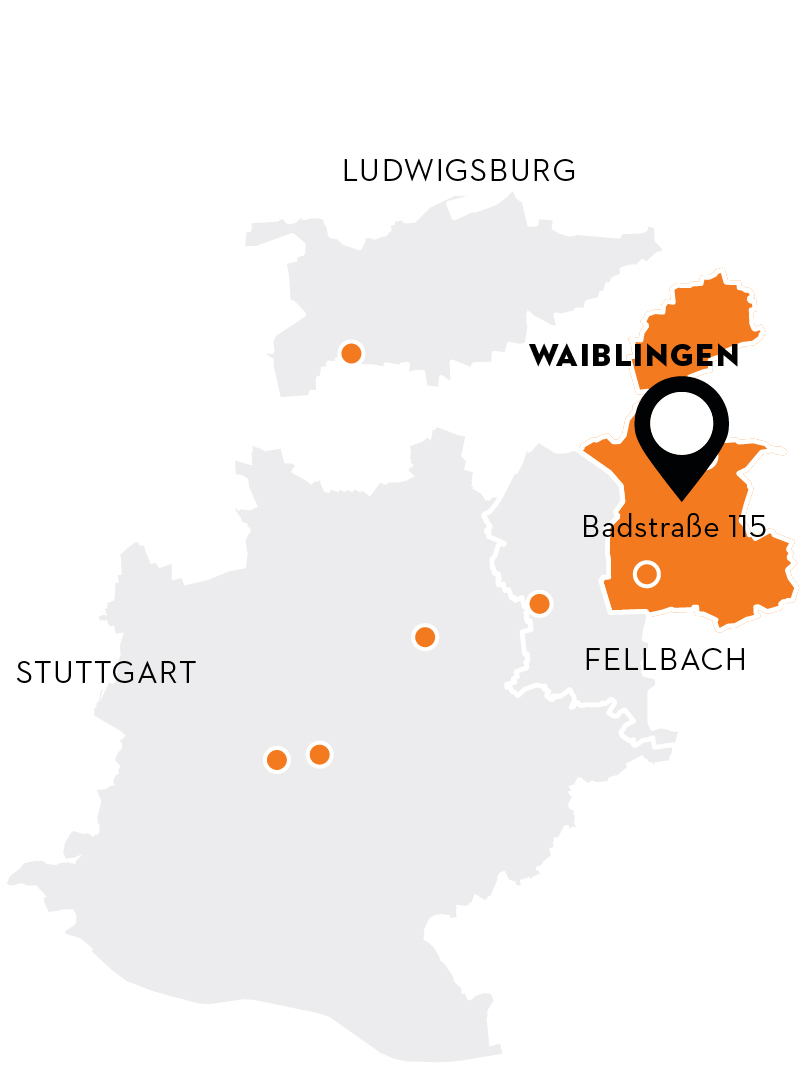
1938 – Badstraße 115, Neustadt (since 1975 Waiblingen-Neustadt)
Second site becomes head office
STIHL produces more and more types of chainsaws in the 1930s. With an increasing need for storage space, the company acquires several barns and stables close to the factory in Bad Cannstatt. Andreas Stihl expects that the company will continue growing and so he looks for a second site. In 1938 he finds it, at 115 Badstrasse in Neustadt (Waiblingen-Neustadt from 1975). Engine brake stands are manufactured here initially. The engine test bench and electric motor winding facility are also located in Neustadt.
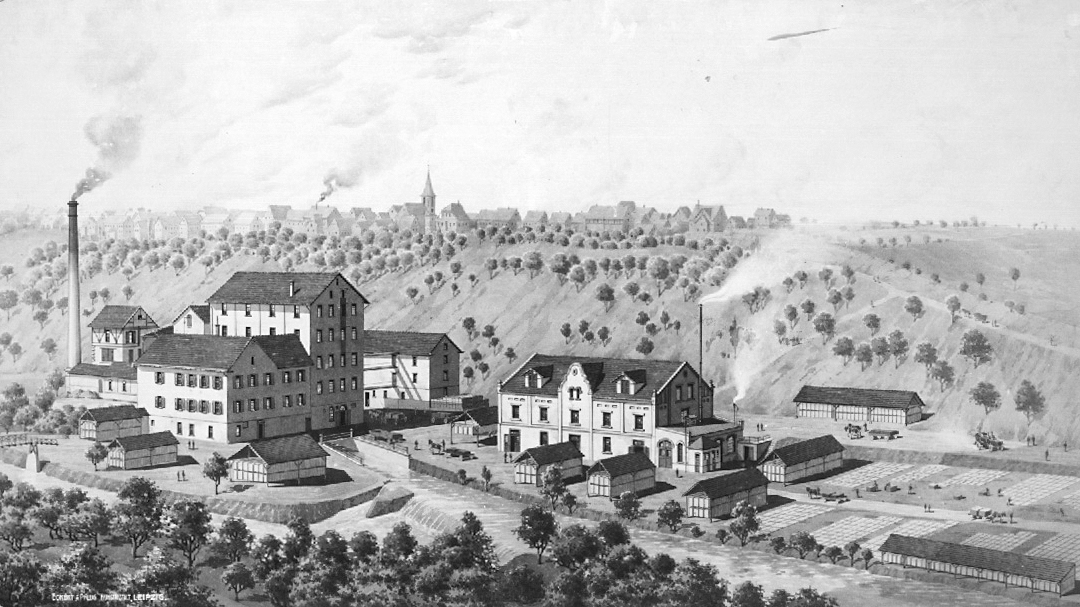
From paper mill, shown here in a drawing from 1938, to company headquarters: The Neustadt-Waiblingen site has changed considerably over the years.
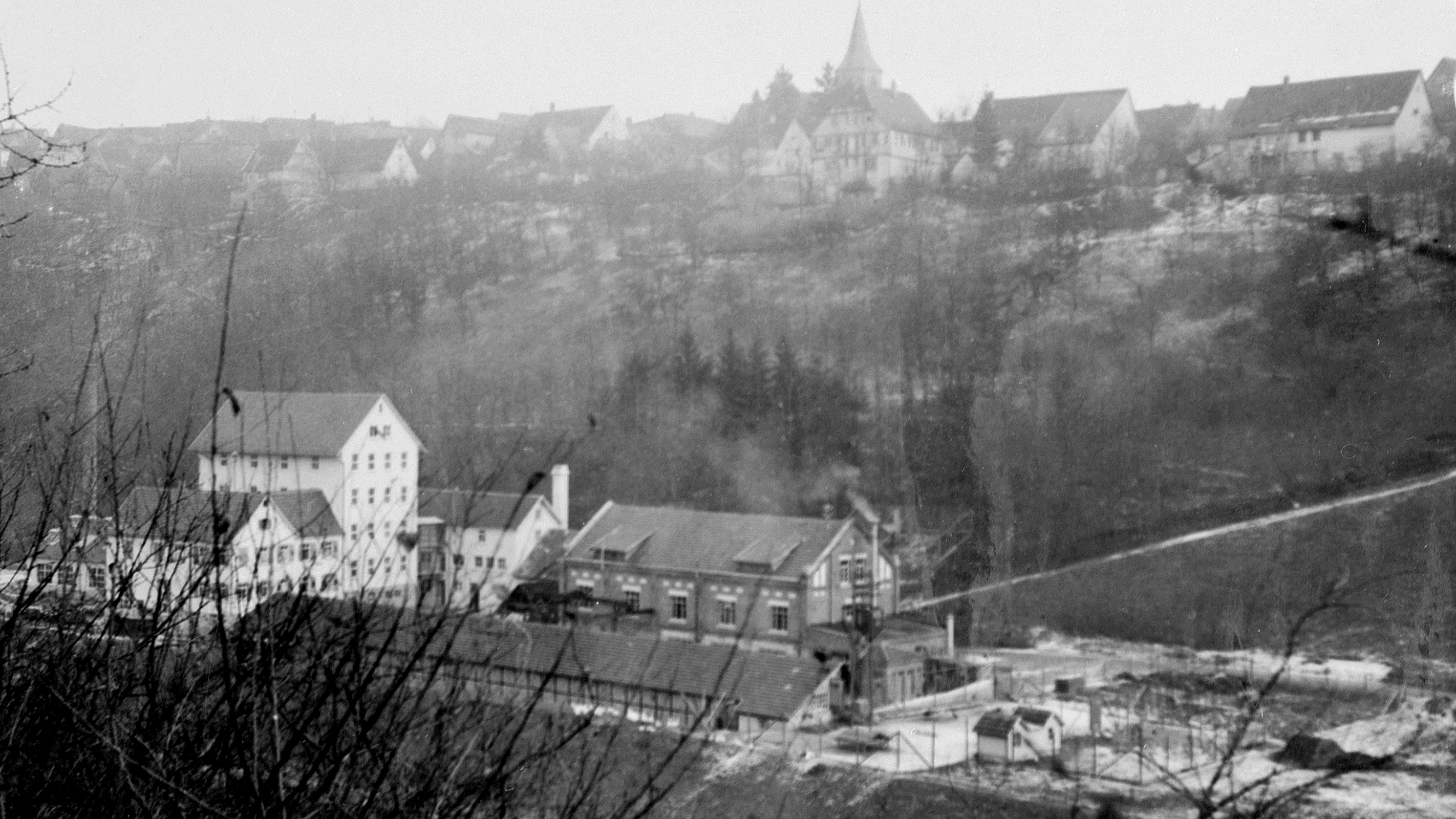
Here is a photo of the Neustadt plant in 1944.
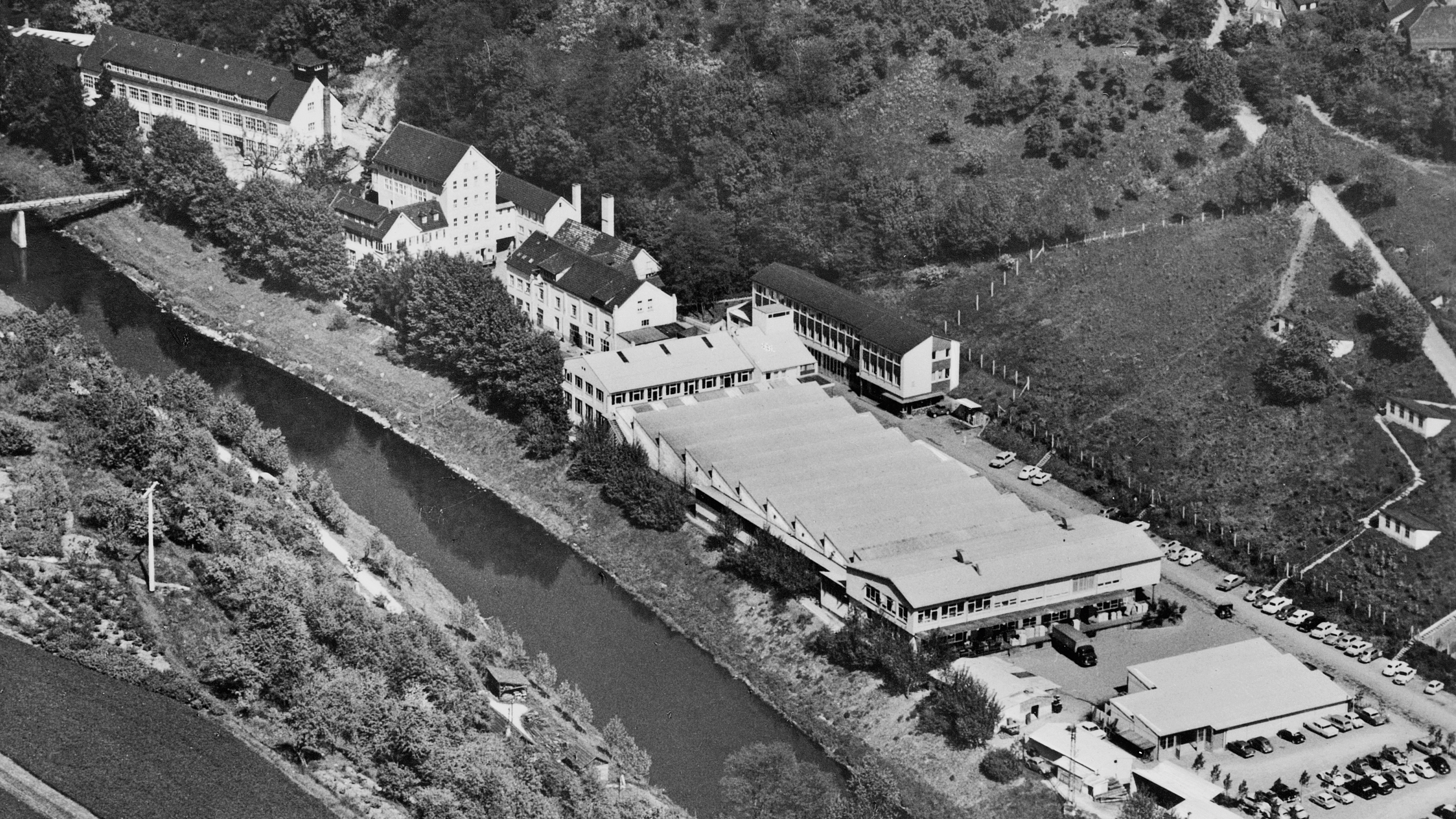
Things are changing: Aerial view of the new head office in 1960…
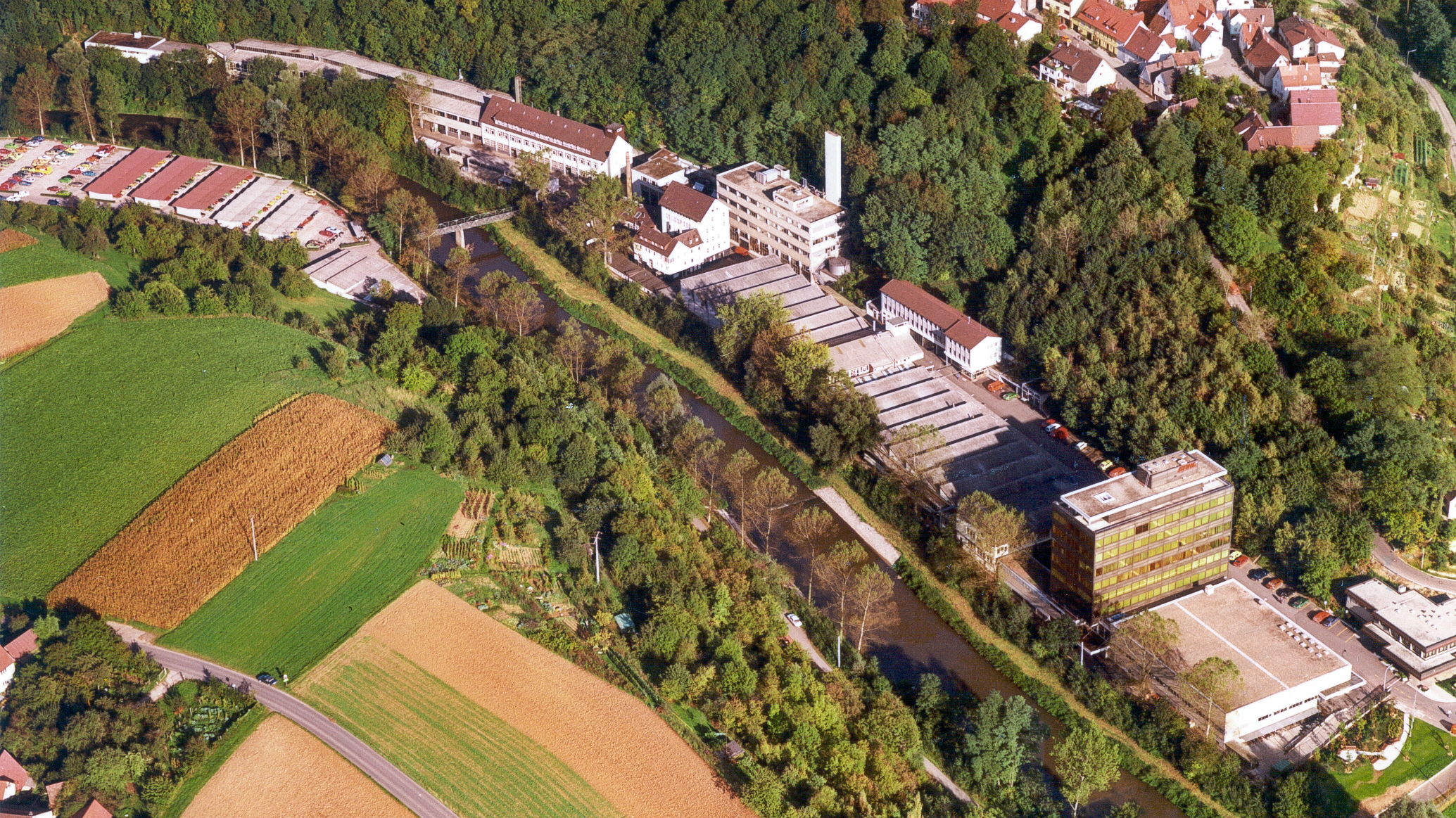
…and in 1985.
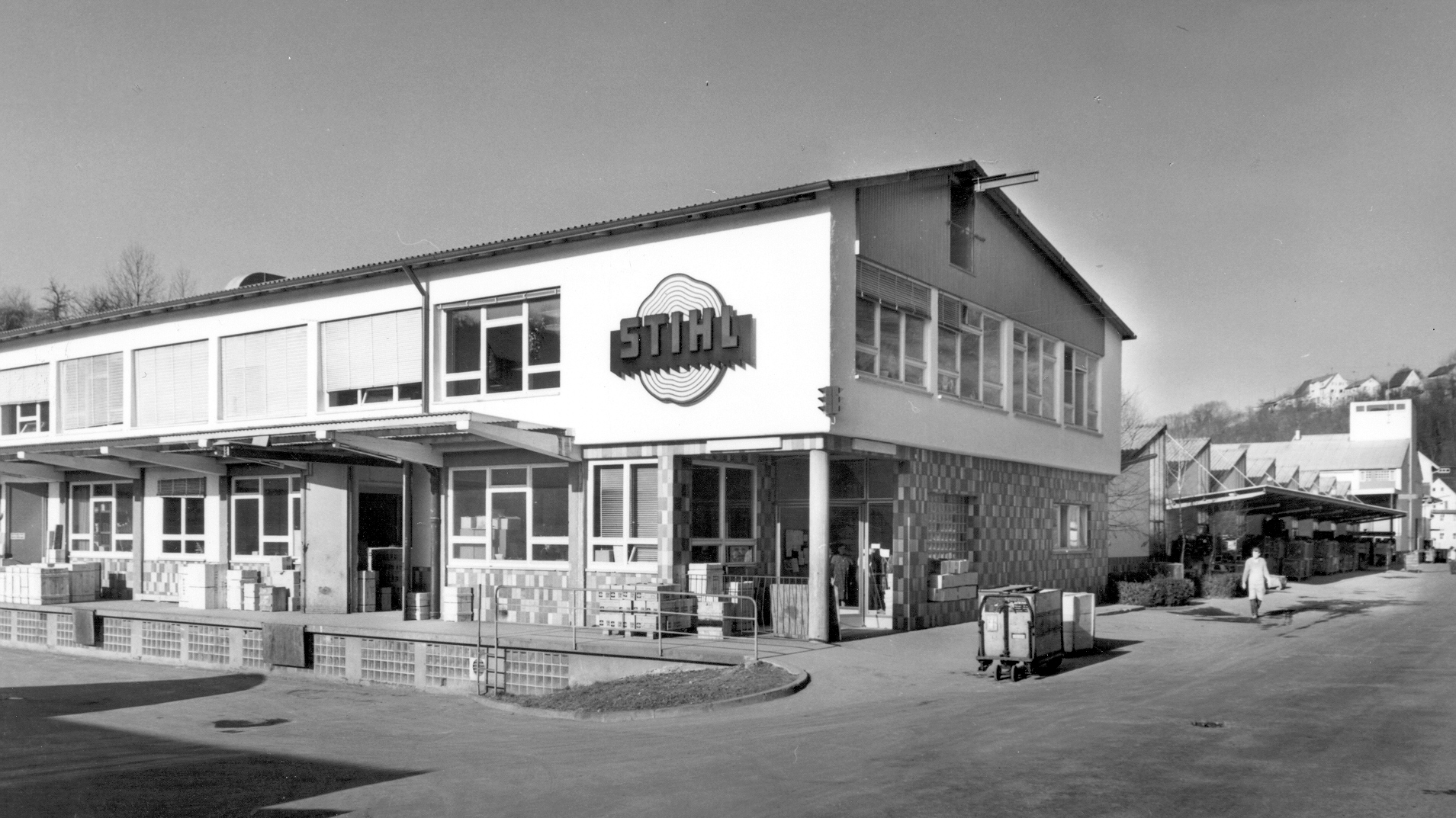
The administrative building also expanded; this is Plant 1 in 1960.
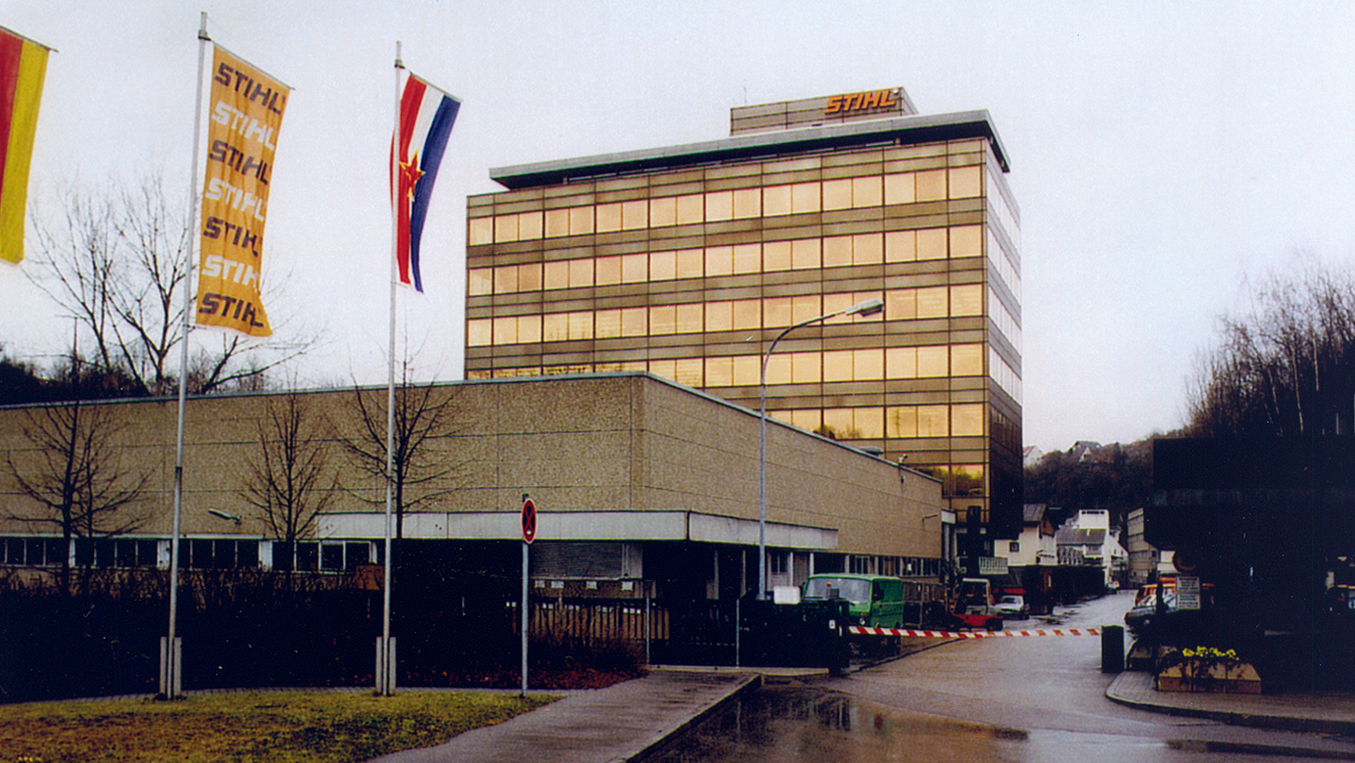
By 1970 it is in the shadow of the towering new administrative building.
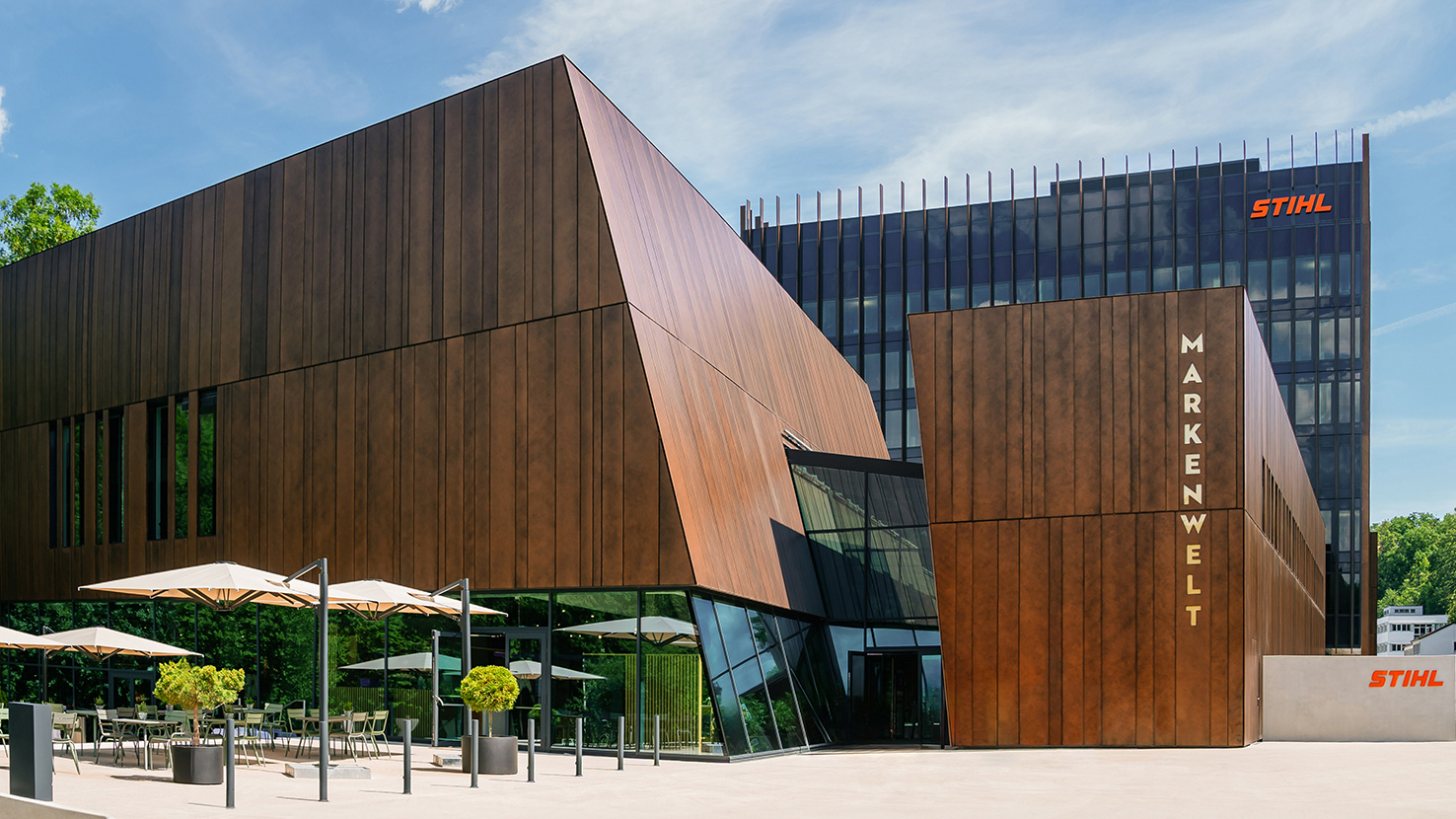
STIHL Brand World arrives at the Neustadt-Waiblingen site in July 2023.
Acquiring the second site at the former paper mill proves to be a fortunate choice, as it means that when the factory in Bad Cannstatt is destroyed STIHL already has replacement premises. The entire company moves to Neustadt. The plant is expanded in 1947, and in 1948 an assembly building for STIHL tractors is built there. After the factory in Bad Cannstatt is sold, in 1951 Neustadt becomes the new STIHL head office – as it has remained ever since.
Deep roots in Swabia
STIHL remains loyal to its Swabian origins even though it has expanded abroad. Today, three of the company‘s eight German plants have a Waiblingen postal code, and the Ludwigsburg and Fellbach sites are also in the Stuttgart area. Nonetheless, STIHL is an international company which is at home all over the world.
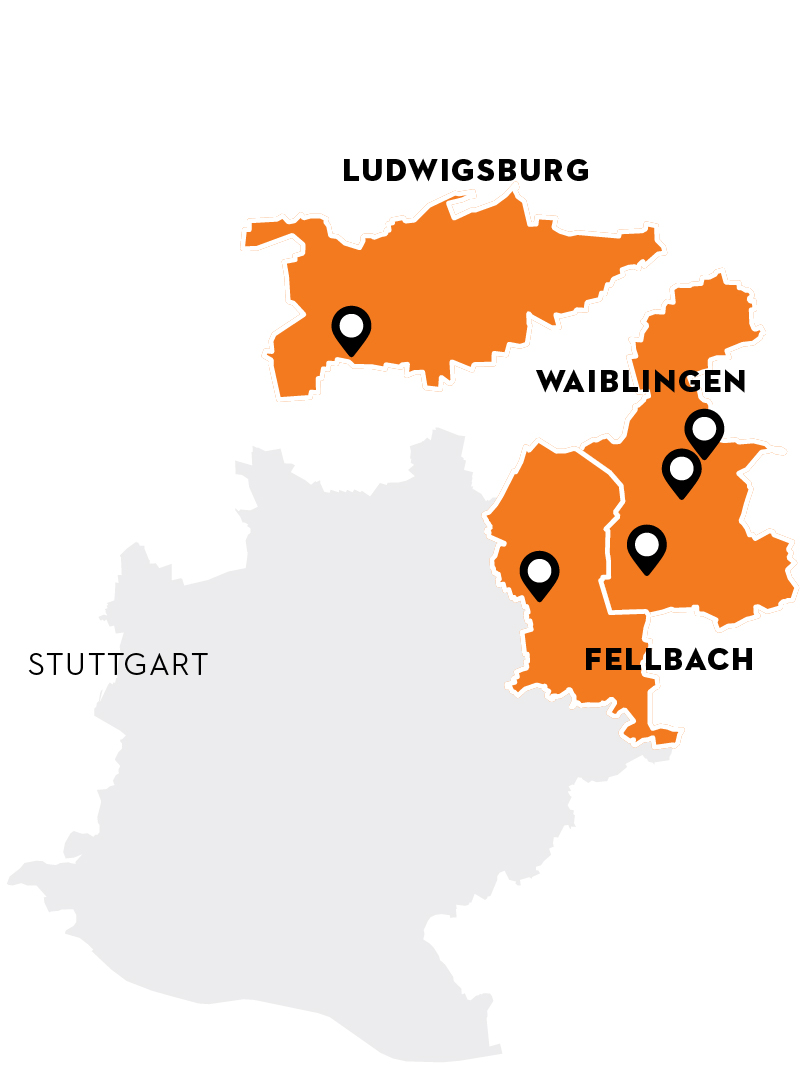
Today – The STIHL locations in Waiblingen and surrounding areas.