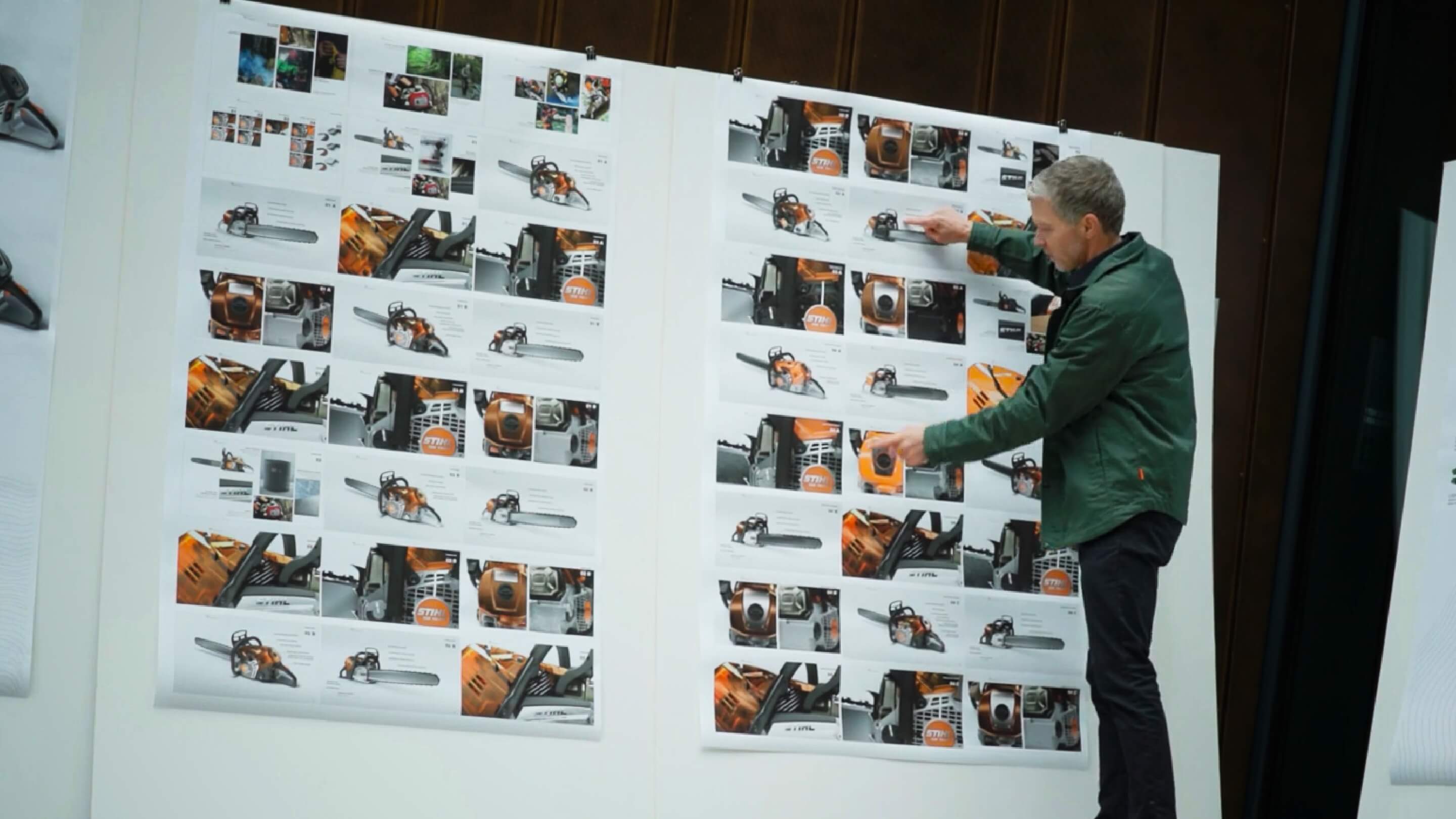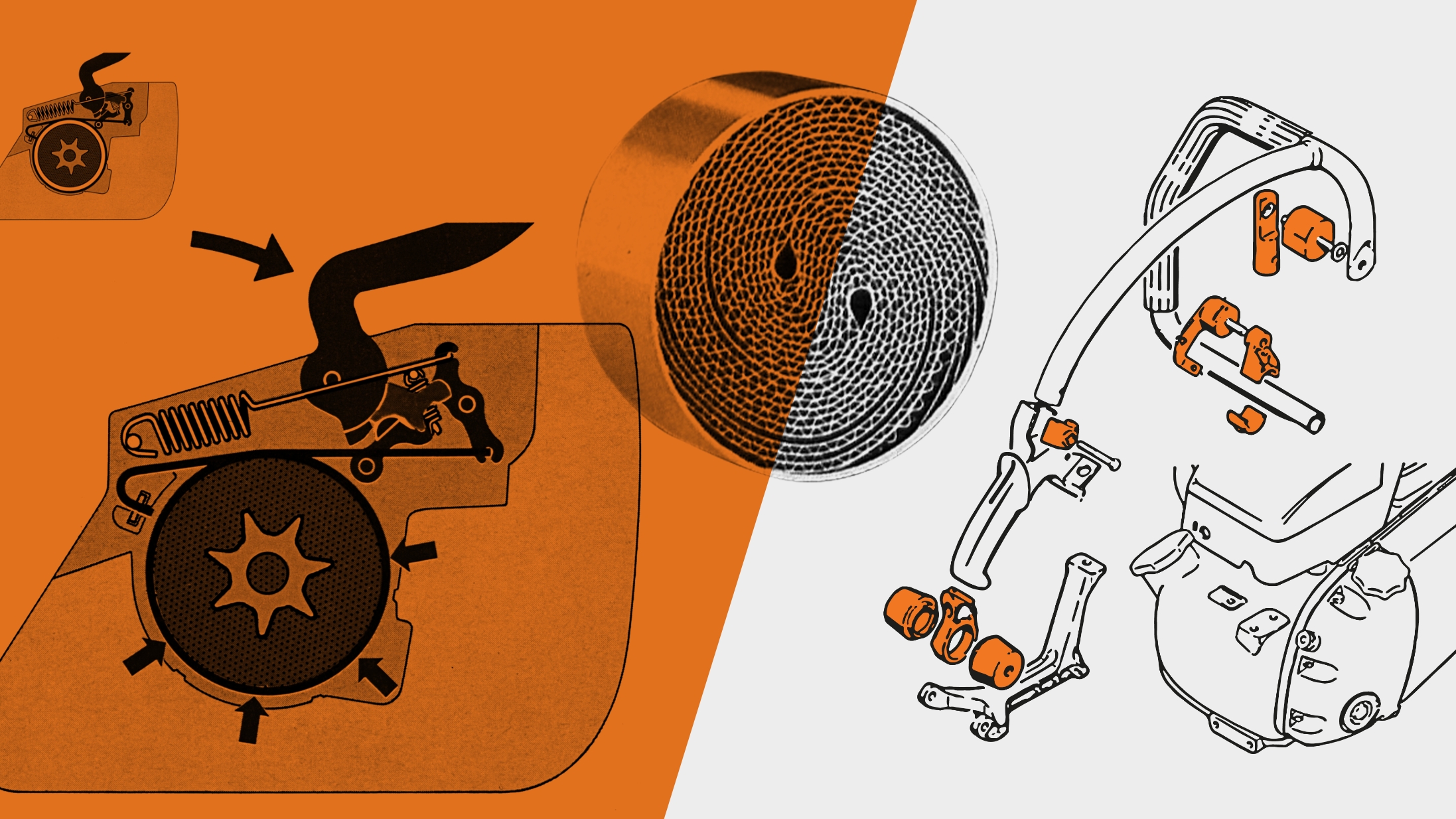

There’s so much to do! Fortunately our STIHL power tools make the work easier. But which tool should you use for each task? Take the challenge: Quickly select the right tool for every job. The clock is running.
Uncharted Territories
Forest, construction and garden: These are places where STIHL equipment usually reaches its full potential. But there are also areas that require the use of special machines. A journey into rough terrain.
Sometimes, life is really tough, and work can be tedious and time consuming. In those moments, don’t we all wish for a tool that takes the work off our hands – or at least makes it easier and shortens our working hours? That is exactly what STIHL products are known for. Even more surprising is how precisely STIHL adapts its machines to meet the challenges of a wide variety of work environments.

Choose your STIHL tool
Which is the most suitable STIHL power tool for each task? Challenge yourself and play the game!
More than just a leaf blower
Quite a cool way of getting the job done, isn’t it? The commercial from the 1990s reveals how limiting everyday language can be: blowers are not just “leaf blowers”, as they are often called. With these tools, not only streets and parks can be freed from leaves, but also sports stadiums cleared of plastic and paper waste. STIHL’s first handheld “air broom”, the blower BG 60, was launched in 1983.
Power tools for the garden
In the 1960s, STIHL streamlined its product portfolio, focusing entirely on chainsaws – only to expand the portfolio again around a decade later, bringing back motorized tools designed especially for the use in the garden. In 1977, STIHL introduced its first brushcutter for private use. Hedge trimmers, blowers and a wide variety of other power tools followed – catering to both professionals and hobby users alike.
A record-breaking drilling
STIHL drilling tools are usually found in the garden as well, creating holes for trees and fences, for example. But STIHL earth augers have also been used to dig much larger pits.
Holes for plants since 1953
The first opportunity to drill with STIHL was the BL 241 attachment launched in 1953. With
this add-on, the engine unit of the saw could be converted into a “planting hole device”.
Two people were required to operate it.
That’s something to marvel at, isn’t it? Incredible what you can discover in the STIHL archives… The STIHL KS 244 horizontal earth drill was put to use at Frankfurt Airport in 1962. At 87 meters, the underground bore set a record for the longest horizontal drilling at the time. It was needed to lay cables for air traffic control beneath the runways – without interrupting flight operations. By this, tearing up the 75-centimeter-thick concrete runway could be avoided.
Until the 1970s, STIHL claimed market leadership in Europe for large earth auger machines. However, these devices were not suitable for mass production as they often had to be manufactured as custom-made products to meet specific customer requirements. At the same time, the chainsaw business required more capacity, so production of large earth augers was discontinued in 1978. Small drilling devices remain in the product portfolio to this day.
Beer: ice-cold
Pretty cool, this earth auger. But even cooler (literally) is the operating site of the ice saw, another special STIHL device. The 67-kilogram, gasoline-powered machine glides effortlessly over the ice and easily cuts large blocks from frozen lakes. But watch out – slippery surface!
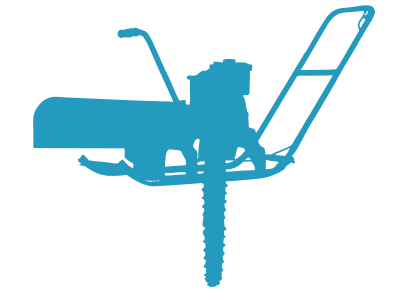
In the 1950s – the golden era of the STIHL’s ice saw – breweries and warehouses still used natural ice for cooling, which was mostly harvested from frozen lakes. The device was also advertised as a way to prevent ice damage to locks, bridge piers or port facilities by quickly cutting them free. In 1953, the ice saw was even used for sporting purposes: ice slabs for the tracks of the bobsleigh world championship in Garmisch-Partenkirchen were cut from Lake Riessersee using the saw. After just a few years, the ice saw disappeared from STIHL’s product range – just like frozen lakes started to become increasingly rare in winter.
60
centimeters of ice can be cut through with the ice saw.

Drag the correct tool to the area of use.
00:00
Click on the correct device and confirm your answer by clicking on the button.
00:00
Correct!
Your time: 00:00