
Diversity sets the tone
Between asphalt and concrete, plants, water and animals create a pleasant environment. Nature tells us a lot about its condition – if we listen carefully. With the help of sound sensors on STIHL grounds, biodiversity experts can determine how these locations can become better habitats.
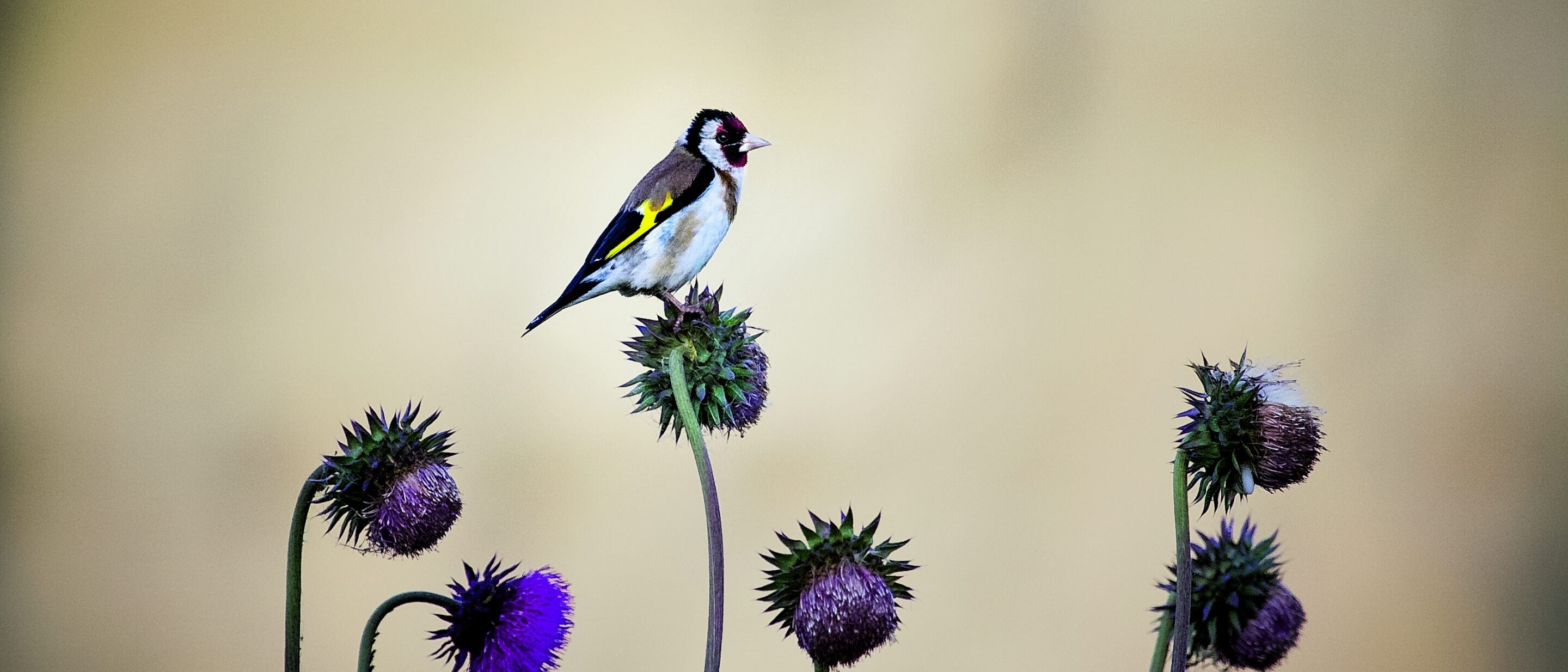
Directly in front of the STIHL Brand World stands a lamppost with an inconspicuous little box and a solar cell attached to its pole. The device records ambient sound. If you're picturing spy movies right now: Don't worry, the sensor is programmed so that human voices cannot be analyzed. The microphones are specialized for wildlife, especially bird songs. After all, research shows that birds are vital indicators of an ecosystem's condition. Observing them reveals a lot about their habitat.
And what better way to observe birds than through their chirping, singing, and calling? During acoustic biodiversity monitoring on STIHL grounds, their songs are both recorded and evaluated. All information from the sensors is gathered on a central platform. Since March 2026, this data has tracked the status of biodiversity on company grounds. This enables targeted measures to improve biodiversity.
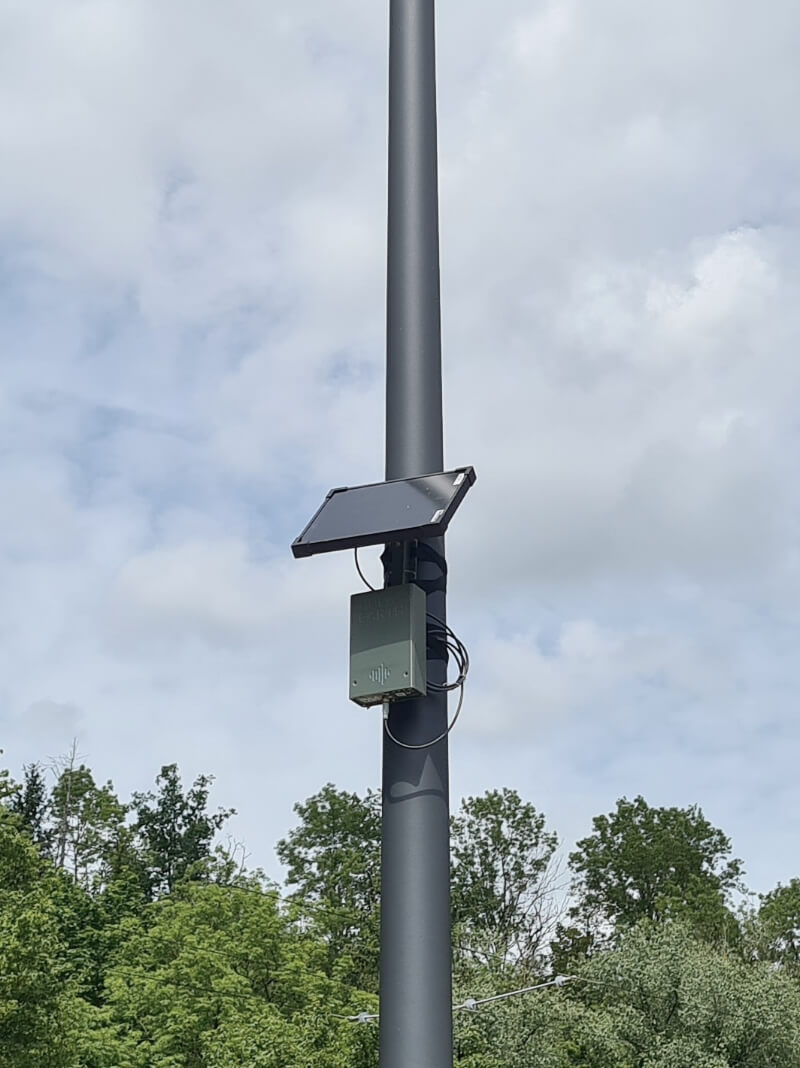
The sensor on the lamppost at the STIHL Brand World captures not only sounds, but also data such as temperature, humidity, and air pressure.
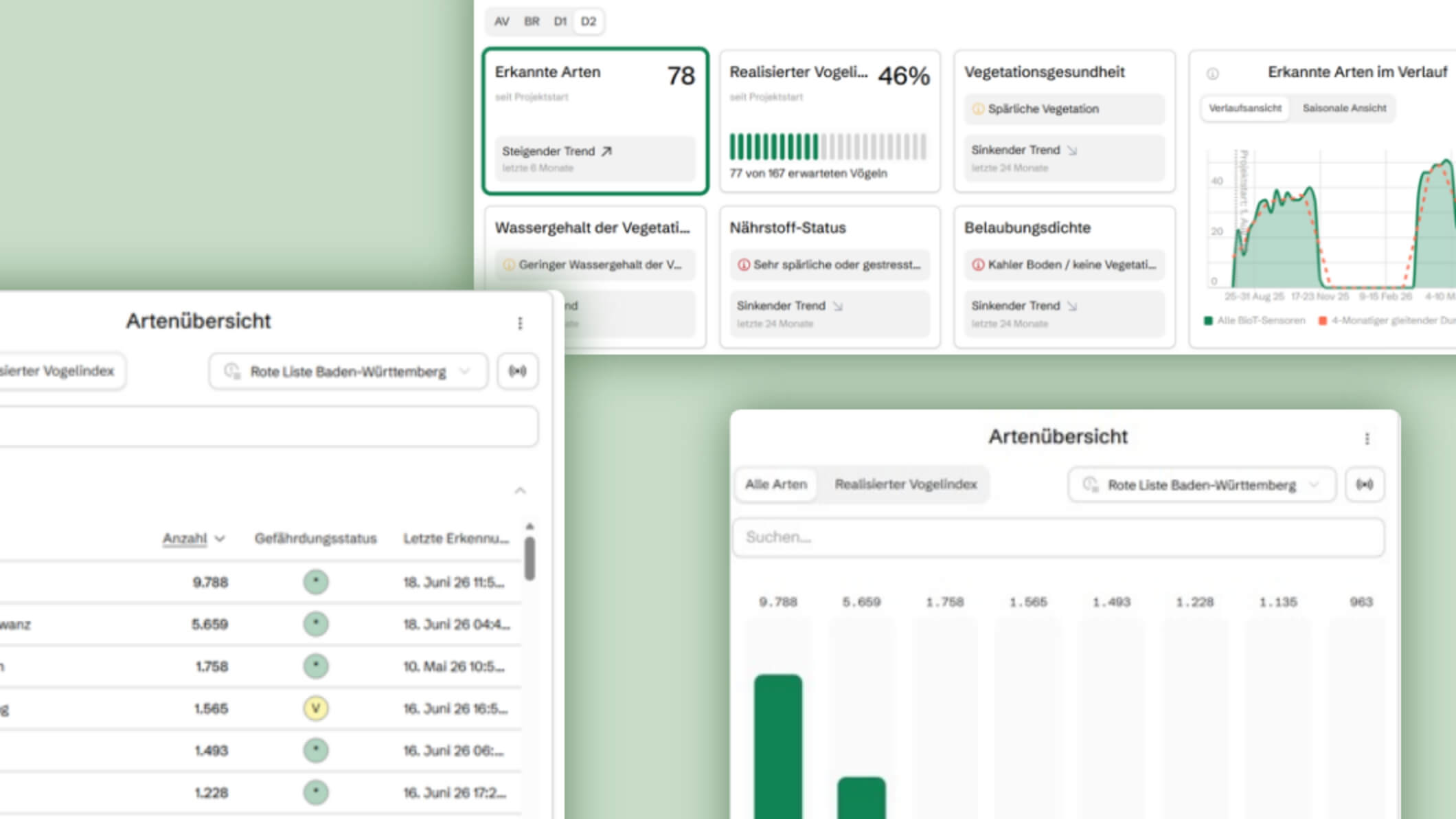
The charts on the dashboard provide information about the different bird species heard by the sensors at STIHL Plant 2 (as of: June 18, 2026). The timeline also includes the pilot project from Fall 2025. There is a separate overview for each location on the monitoring platform.
Pioneering role: First measurable metric for biodiversity
As part of its sustainability strategy, STIHL focuses heavily on ecosystem biodiversity as it is the foundation of life. “To learn about the condition of our company grounds and possible changes, we first need to measure biodiversity. But how?” Dr. Friedemann Stock, Sustainability Officer at STIHL, faced this problem. Searching for a meaningful methodology, he came across the acoustic biodiversity monitoring by Hula Earth. Inspired by STIHL, the Munich-based startup defined the “Realized Bird Index” (internationally: “Biodiversity Richness”) as a measurable indicator to compare biodiversity. “We are playing a pioneering role in this area,” says Dr. Friedemann Stock. Across all Hula Earth monitoring projects, the indicator can now provide information about how rich the biodiversity in the surveyed area actually is, and how much greater it could be in comparison.
More and more urban ecosystems
Animals enable and regulate many ecological processes: They pollinate plants, disperse seeds, and decompose plant material. When there are many different plants and animals in an area, the local climate improves, making a balanced life cycle possible. Cities and industrial areas are no exception – on the contrary: “Greater biodiversity can enhance urban and industrial areas,” says biologist Peter Endl. “In addition to positive climate effects, it also improves people’s quality of life.”
is the current bird index achieved so far at STIHL Plant 1 in Waiblingen (as of: June 18, 2026). This means that 51 species of birds have been identified so far, compared to 163 species typically expected in the Rems River floodplain.

Peter Endl Biologist, biodiversity expert“Bird songs and calls provide information about biodiversity, how common a species is, and the activity patterns of bird species.”
Urban ecosystems – city and industrial habitats – are becoming more and more common. Between asphalt and concrete, green spaces help lower temperatures, improve air and water quality, reduce noise pollution, and provide areas for relaxation. Accordingly, their importance for biodiversity, climate resilience, and climate regulation is growing. Biodiversity is defined by genetic diversity, species diversity, and habitat diversity.
Habitats need to be connected
A common problem in urban and industrial areas is that green spaces are too small, isolated, and lack species diversity and ecological connectivity. “Industrial areas, in particular, are often so large that they hinder or prevent habitat networks. Alongside species richness, this network connectivity is essential for maintaining biodiversity and an intact natural environment,” explains landscape architect Ines Mändle. An ecological network forms when several habitats are spatially interconnected, allowing genetic exchange between species. “From a biological perspective, the most critical measure for increasing biodiversity would be to connect the existing natural habitats and enhance as many green spaces as possible,” Peter Endl agrees.

Ines Mändle Landscape architect, biodiversity expert“As biodiversity is declining everywhere, a functional habitat network is essential to sustain species diversity and consequently our own livelihoods.”
Ines Mändle further explains that the lack of interconnected urban green spaces stems from competing land-use pressures, high property costs, and mandates to conserve space. “Due to the high population density, conflicts of interest arise over almost every available space in cities.” At the same time, there are numerous ways to create more species-rich green spaces that perform climate-regulating functions. These include depaving sealed surfaces and greening roofs and facades. “In some areas, reducing maintenance intensity can increase biodiversity,” says Ines Mändle. Low-maintenance perennial beds instead of manicured lawns are also better for insects – which in turn provide food for many birds.
Biodiverse meadow orchards at STIHL
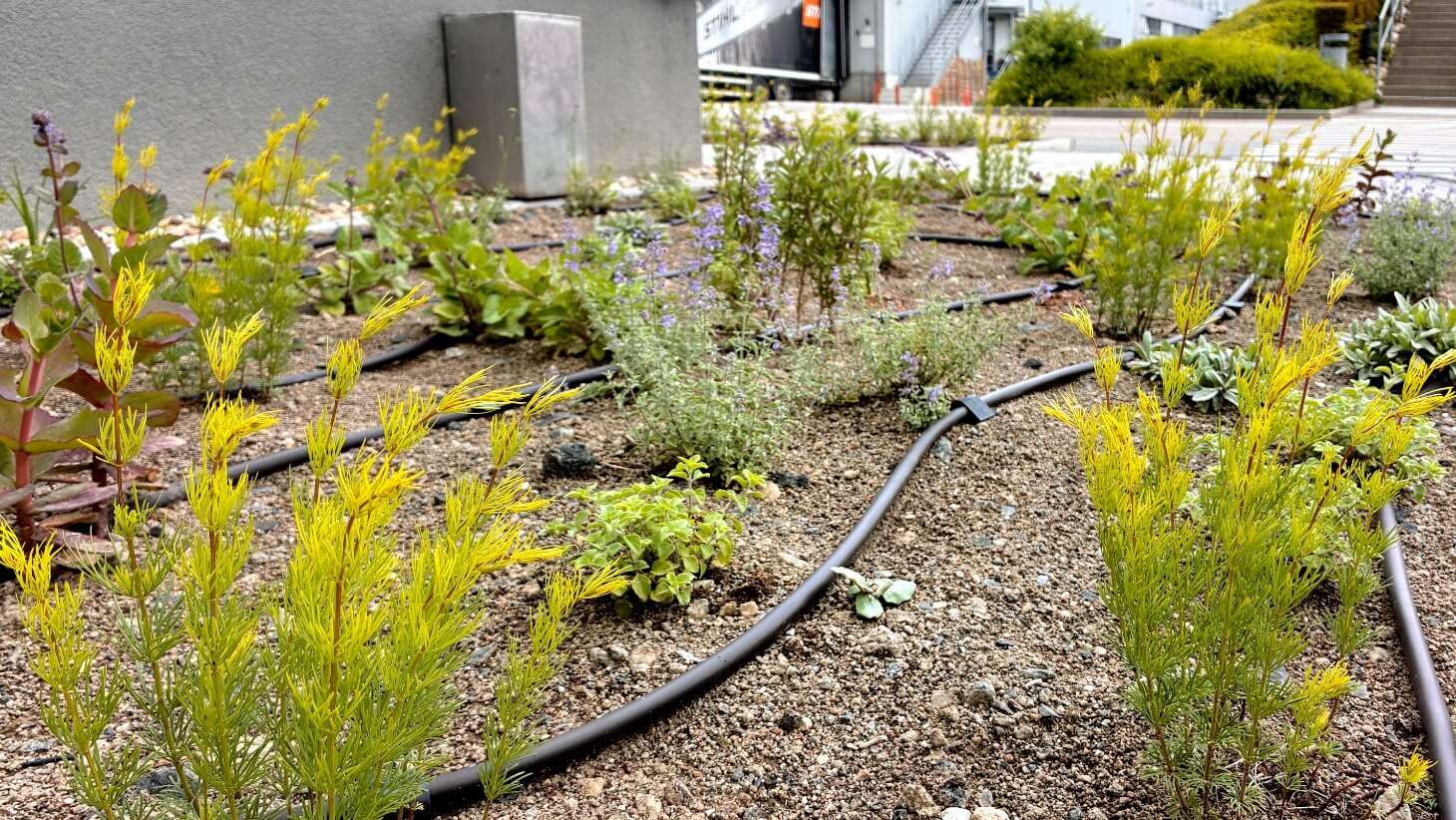
“Biodiversity experts Ines Mändle and Peter Endl provide consultancy services for STIHL acoustic monitoring. The biologist explains the underlying principles of bird monitoring: “In acoustic monitoring, ecosystem health is assessed by tracking indicator species. These are species that we know a lot about in terms of their distribution and habitat requirements.” Bird species such as the Eurasian Wryneck, Common Redstart, and Collared Flycatcher are key indicator species for native meadow orchards, Peter Endl adds. Their presence indicates mature tree stands with many nesting cavities and a strong food supply. A traditional orchard is located at STIHL Plant 2 in Waiblingen, where one of the acoustic sensors is positioned. To date, species observed here include the Common Redstart, Black Redstart, Spotted Flycatcher, and European Pied Flycatcher. And measures have been taken to increase biodiversity. For instance, bushes were removed, new fruit trees were planted, and nesting aids for birds and bats were installed. Another meadow orchard was newly created. Additionally, planting new, insect-friendly perennial beds on the grounds of Plant 2 has improved the connectivity of the green habitats.
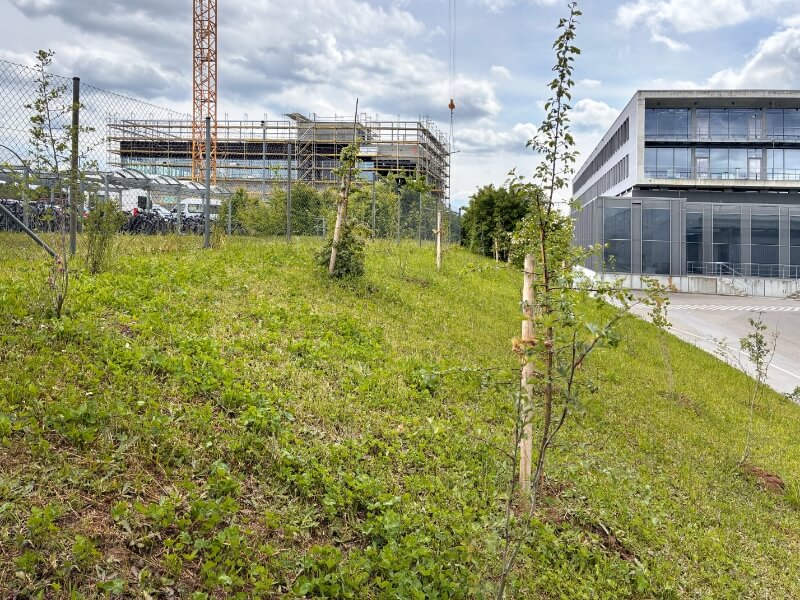
The replanting of fruit trees (top) and the creation of perennial beds are among the first measures to increase biodiversity at STIHL Plant 2 in Waiblingen.
Meanwhile, at Plant 1, non-native spruce trees were felled in accordance with the specifications of the nature conservation authority, and planting was carried out to match the ecosystem of the local river floodplain. Bird species that nest in buildings, such as the Black Redstart, House Sparrow, Eurasian Jackdaw, and Common Kestrel are well represented across the entire STIHL grounds. Nest boxes were installed on the buildings to accommodate them. Continuous monitoring will now be used to observe which measures actually achieve the desired effect.
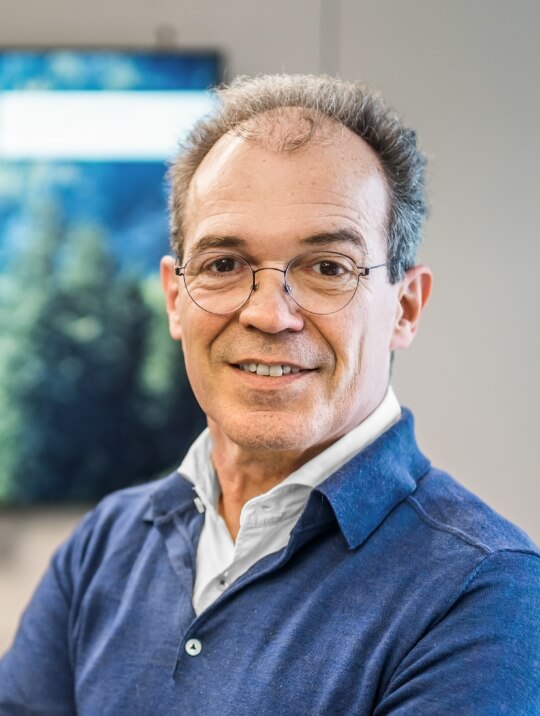
Dr. Friedemann Stock STIHL Sustainability Officer“If you want to promote biodiversity in a targeted manner, you must first be able to measure it. We have laid the foundation for this.”
For Dr. Friedemann Stock, Sustainability Officer, STIHL’s corporate locations are ideally suited for the ecological enhancement of their green spaces. “There are many small green corners where people rarely step. If we connect them with one another, a vast habitat can be created.” He is having the locations systematically evaluated to determine how the different green spaces can be better interconnected. Currently, the two aforementioned locations in Waiblingen and one in Austria are being monitored acoustically, with an additional site in Brazil to be added soon. Dr. Friedemann Stock: “This allows us to monitor the development of biodiversity globally in a transparent manner and raise awareness of it. Comparing the different locations might even spark a friendly competition.”